
Why Doesn't My Cat React to Catnip? 7 Reasons and What to Try Next
LitterBond Team
By the LitterBond Team · Researched against iCatCare and ASPCA guidance · Last updated: September 27, 2026
You bought the catnip. You opened it with a little ceremony. Your cat sniffed once, blinked, and walked off to the hallway.
So why doesn't my cat react to catnip? Most often, it's her genes. A 2017 study in BMC Veterinary Research tested 100 cats. One out of every three cats did not respond to catnip. Nothing is wrong with those cats.
Below are seven reasons a cat ignores catnip. The first ones you can't change. The last ones you can fix tonight. Then comes the part most guides skip: what to try next, and how.
It's in Her Genes
Some cats are simply born without the catnip response. International Cat Care calls it hereditary. It is a trait passed down from a cat's parents.
How many cats have it? That depends on who you ask.
- PetMD: about 50 to 70 percent.
- International Cat Care: around 70 to 80 percent.
- The 2017 study: 68 of 100 cats.
Whatever the exact number, lots of healthy cats never react. That explains the home where one cat rolls on the rug and the other yawns. Same catnip, different genes.
If that's your cat, nothing needs fixing. The last section covers what to try.
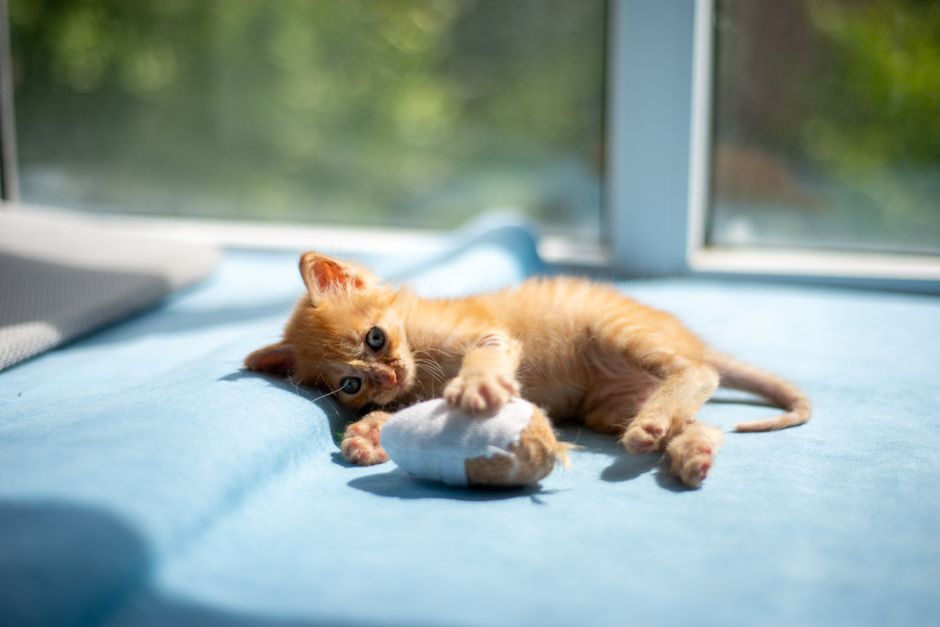
She's Still a Kitten
Young kittens usually don't react to catnip yet. International Cat Care says catnip has no effect until a kitten is over three months old. If a young kitten ignored it, the group says to try again later.
Many kittens take longer than that. Cat behavior consultant Pam Johnson-Bennett writes that many kittens don't respond until they are almost six months old.
Your kitten will still pounce and chase toys with no catnip at all. Write down the date. Then offer catnip again in a few months.
The Catnip Has Gone Stale
Dried catnip loses its punch over time. PetMD says it loses potency. It should live in an airtight container. Small Door Veterinary goes one step further: an airtight container in the freezer.
Give the bag a sniff. Fresh catnip has a strong, green smell. If yours smells like dust, or like nothing, your cat probably agrees.
Catnip toys go stale too, on a store shelf or under your couch. An old toy may have little scent left.
Did your cat ignore the kind you just bought? Try a fresher batch before you give up on catnip.
The Form Doesn't Suit Her
Some cats care how the catnip reaches them. UrgentVet suggests a switch. If your cat ignores dried catnip, try fresh. Or try the other way around.
Four ways to offer it:
- Dried leaves: rub a pinch between your palms first. Pam Johnson-Bennett says this releases the oil that carries the scent.
- A fresh plant: let her sniff, nibble and rub on the leaves.
- A stuffed toy: works best when the filling is fresh.
- A spray: mist a toy or scratcher, never the cat.
Try one form per session, so you can tell which one she likes.
Skip strong catnip oils. Independence Veterinary Clinic warns that highly concentrated catnip oils can be overwhelming. Cats are sensitive to essential oils and strong scents.
She's Stressed or Settling In
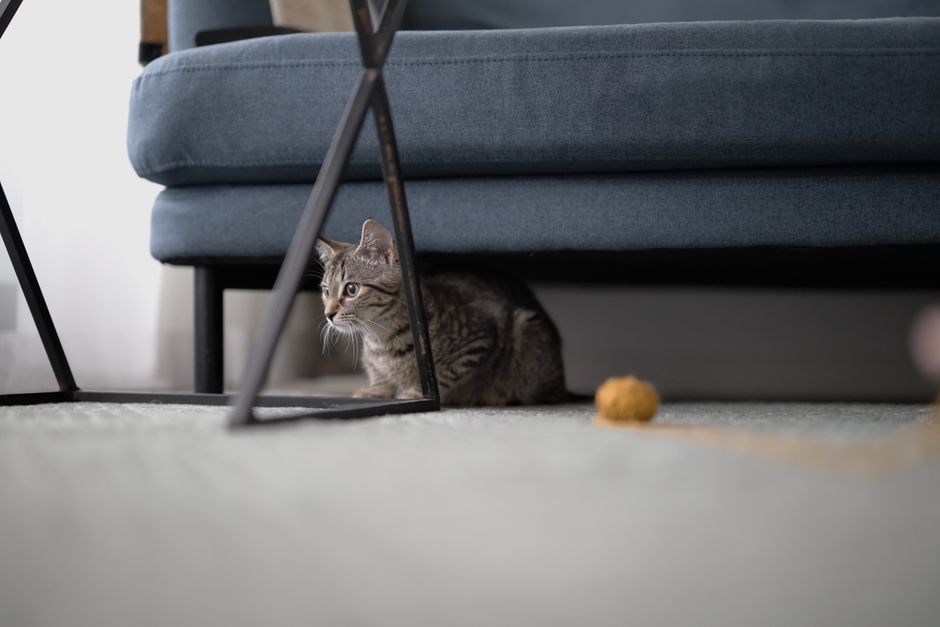
A cat who feels uneasy may not play at all, catnip included. International Cat Care lists playing less and hiding among the signs of stress in cats.
A new home can do it. So can a new cat, a move or a house full of guests. Did your cat arrive last week? Does she spend her days under the bed? Then catnip is not the test to run yet.
Let her settle first. Keep the house quiet. Try again once she explores on her own. Thinking about a plug-in diffuser? Read whether cat pheromone diffusers work.
Keep one vet line in mind. A cat who loses interest in play and food at the same time needs a vet check. International Cat Care says to call your vet if your cat isn't eating normally. Call urgently if her appetite has been low for three days or more.
She Gets It Too Often
Catnip that is always around stops being special. Pam Johnson-Bennett says not to leave catnip toys lying around the house all the time. She suggests catnip no more than once a week.
Independence Veterinary Clinic makes the same point. With too much catnip, the response gets weaker and shorter.
This is called habituation. A cat stops noticing something that is always there.
The fix is easy. Keep catnip toys in a sealed jar between sessions. Bring one out for playtime. Then put it back.
Her Reaction Is Quiet
Not every reaction looks like rolling on the rug. In the 2017 study, the typical response was sniffing, licking and head shaking. It also meant chin and cheek rubbing, and rolling.
Some cats only sniffed and licked, for more than 15 seconds straight. The study still counted that as a mild response.
Age plays a part too. The study split cats at about five years old. Among cats that responded to catnip, 35% of the older cats had mild responses. Only 12% of the younger cats did.
Some cats just go quiet. The ASPCA says catnip makes some cats sedated and others stimulated. A cat stretched out by the catnip, slowly licking it, may be reacting after all.
What to Try Next
If your cat truly ignores catnip, silvervine is the next thing to try. Here is what the research says.
Silvervine vs Catnip
Silvervine, also called silver vine, is a plant. PetMD says it grows in the mountains of China, Japan and Russia.
In the 2017 study, 31 cats did not respond to catnip. Of those 31 cats, 22 responded to silver vine.
How 100 cats in the 2017 study responded, plant by plant
Share of cats that responded to each plant. These are dried plants, not any product.
Among the 31 cats that ignored catnip: 22 responded to silver vine, 10 to Tatarian honeysuckle and 6 to valerian root.
A 2026 study offered 22 cats both plants' extracts at once. It came from Iwate University and Nagoya University in Japan. It appeared in the Journal of Chemical Ecology. According to the team's news release, here is what the cats did:
- Silver vine only: 15 cats.
- Catnip only: 3 cats.
- Both: 1 cat.
- Neither: 3 cats sniffed but did not rub or roll.
So silvervine vs catnip is not a contest one plant always wins. It is a second chance for many cats.
It is not a sure thing, though. In the 2017 study, 6 of the 100 cats responded to none of the plants tested. And these numbers describe plants, not any product.
Other Catnip Alternatives
The 2017 study tested two more plants: Tatarian honeysuckle and valerian root. Here are the catnip alternatives for cats worth a try:
🌿 Silvervine sticks or powder
Powder made from the dried fruit galls was among the most popular picks in the 2017 study. Sticks get chewed, and PetMD warns that small pieces can break off.
🪵 Tatarian honeysuckle wood
The study offered wood pieces and sawdust.
🌱 Valerian root
The study notes a strong smell that not everybody likes.
🪴 A fresh catnip plant
Worth it for a cat who ignored dried catnip.
Offer one new plant per session. Watch her closely the first time.
How to Use a Catnip Spray
A spray puts the scent right where you want play to happen. LitterBond's catnip and silvervine spray has both plant extracts in a 20 ml glass mist bottle. Results vary from cat to cat. Some cats react right away. Others warm up over a few sessions.

If your cat ignores both plants, a spray made from them won't change that.
-
1
Mist a toy or scratcher lightly
Never spray your cat. Keep it away from her eyes.
-
2
Step back
Put the toy down. Let her come to it.
-
3
Try a few sessions
Use a different toy on a different day.
Got a new scratching post she ignores? A light mist of the spray on the post gives her a reason to go there first.
That first sniff-and-walk-away was not the end of the story. If your cat doesn't react to catnip, check the easy fixes first. Then give silvervine a fair trial, and let her show you what she likes.

Catnip & play
For the cat who shrugs at plain catnip
A 20 ml glass mist bottle with catnip and silvervine extracts. Mist a toy, scratcher or bed, never your cat, and let her investigate at her own pace. Results vary from cat to cat.
See the catnip & silvervine spray →Questions this guide did not cover
Can cats get addicted to catnip?
No. International Cat Care describes catnip's effects as harmless, nonaddictive and short-lived. Offering it now and then, not daily, keeps it fun.
Is it a problem if my cat eats catnip?
Too much can upset her stomach. PetMD lists vomiting, diarrhea, dizziness and trouble walking, and suggests just 1 tablespoon at a time. If she throws up after eating it, Independence Veterinary Clinic suggests spray only. Vomiting that keeps going is a reason to call your vet.
Will a kitten react to silvervine instead?
Usually not yet. PetMD says kittens under eight months, and pregnant females, typically don't respond to silvervine. Put it away and try both plants again when she is older.
How long does a catnip reaction last?
About 10 to 15 minutes, says Small Door Veterinary. After that, it can take 30 minutes to an hour before she responds again. So a cat who wanders off halfway may just be done for now.
Related reading
About this article
Researched and written by the LitterBond Team. Sources include International Cat Care, the ASPCA, BMC Veterinary Research, PetMD and Cat Behavior Associates. Reviewed and updated September 27, 2026. LitterBond does not employ veterinarians; for medical decisions about your individual cat, always consult your veterinarian.


