
Dry, Cracked Cat Paw Pads in Winter: Causes and Gentle Care
LitterBond Team
By the LitterBond Team · Researched against iCatCare, AVMA and VCA guidance · Last updated: December 18, 2026
Pads that feel like fine sandpaper when she stretches on your lap. A thin line across one back pad. A little flaking at the edges. The heat has been on for a month, and her paws look as dry as your hands feel.
In winter, a few things can dry out a cat's paw pads. Cold, dry air is one. Floor cleaners and de-icing salt are others. Most everyday dryness needs gentle, regular care, not a big fix.
Some cracks are not about dryness at all. Bleeding, deep splits, swelling, limping or a paw she keeps licking go to your vet. Below: what healthy pads are like, what dries them out, and a weekly paw check. Then gentle care at home, what never to use, and when to call your vet.
Learn What Healthy Pads Look Like
Healthy pads are thick and a little rubbery, with no open cracks. WebMD notes that these pads cushion your cat's feet. They also help shield her feet from very hot or cold weather.
Pads do more than cushion. PetMD says cats have sweat glands in their paw pads. A sweating cat can even leave wet paw prints on the floor.
Pad color varies from cat to cat. Some have pink pads. Others have black, gray or spotted ones. Get to know how her pads look and feel today. Then a change is easy to spot.
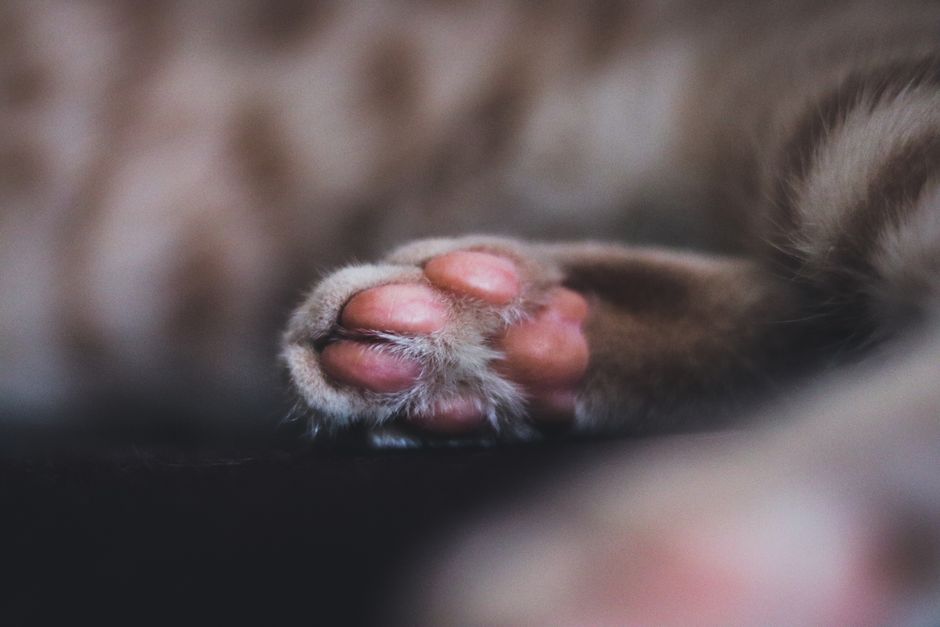
Dry pads look and feel different. The Hervey Foundation for Cats, a cat charity in Alberta, lists these signs of winter-chapped paws:
🐾 Everyday dry
Dry, flaky or rough pads. Small cracks or splits in the skin.
⚠️ Look closer
Redness or irritation. A lot of licking or chewing at the paws.
Find What's Drying Them Out
Winter brings a few things that can dry out pads: dry air, cleaners and salt. Frontier Veterinary Urgent Care, a vet clinic, says cold, dry winters can lead to dry and cracked paw pads. The Hervey Foundation agrees. It says cold, dry winter air can be tough on a cat's paws. Carpet and lots of activity add to the wear.
Floor cleaners count too. Frontier lists household cleaners, de-icing salts and lawn chemicals as irritants. Each one can irritate a cat's paw pads and dry them out. Think about her day. She crosses the kitchen floor you just mopped. Then she sits down and licks her paws clean.
Salt matters most for a cat who goes outside. Hervey names salt and ice melt as irritants for paws. An indoor cat can meet salt too, if it comes in on your boots.
Surfaces matter as well. WebMD says pads can get hurt on surfaces that are too hot or too cold. In winter, that can mean a cold balcony or a hot stove top.
Not every crack comes from the weather. Frontier also lists allergies and skin infections among the causes. Those are vet problems, and the last section covers them.
Check Her Paws Once a Week
A short weekly look helps you spot changes early. Frontier suggests checking your cat's paws regularly for dryness, cracks or irritation.
Pick a calm moment, like when she dozes on your lap. Hold one paw gently in your palm. Look at each pad, then spread the toes a little. A light press on the top of each toe pushes the claw out, so you can see it.
🐾 Weekly paw check, one paw at a time
- Pads: smooth, or dry, flaky and cracked?
- Between the toes: litter, grit, matted fur or redness?
- Nails: a normal length, or curling toward the pad?
- Her reaction: does she pull one paw away or flinch?
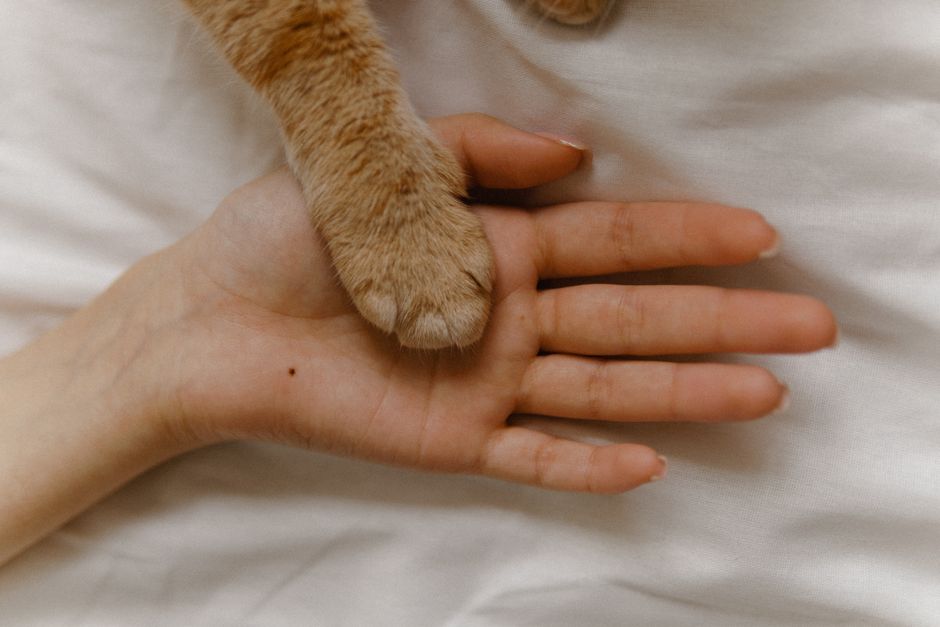
Nails need a close look, most of all in an older cat. International Cat Care (iCatCare) explains that older, less mobile cats may not scratch as easily. Their claws can overgrow and even grow into their pads. That is very painful.
iCatCare names one sign to watch for. You can see her claws while she rests with her paws relaxed. If you think they're too long, your vet team can trim them. They can also show you how to do it at home. iCatCare's guide to senior cats adds that overgrown claws can sometimes point to a health problem. Arthritis and an overactive thyroid are two it names.
Keep each check short. If she pulls away, stop and try one paw tomorrow. End with a favorite snack.
Wipe Off Salt and Floor Cleaner
If she walked through salt or wet cleaner, wipe her paws before she licks them. Hervey suggests a warm, damp cloth after time outdoors. Wipe each pad and between the toes, then pat the paw dry.
The American Veterinary Medical Association (AVMA) gives the same advice for pets coming in from the cold. Wipe down or wash the feet, legs and belly. That takes off de-icers and other chemicals, so less gets licked off later.
For a quick wipe without a bowl of water, LitterBond's tear stain wipes are another option. They are soft, pre-moistened cotton pads with no rinse. They're made for the face, and the product page lists paws too. If your cat is sensitive to smells, try one pad on her chin first.
If you notice redness, discharge, swelling, squinting or persistent scratching, stop and see your vet.
Then think about the floor itself. After a strong cleaner, go over the floor again with plain water. Keep her off it until it is dry. That leaves less on the floor for her paws to pick up.
Paws are only one spot that needs a wipe now and then. For the rest of her coat, here is how to clean a cat without a bath.
Moisturize Unbroken Pads Gently
Moisture comes back two ways: through the air, and through a thin balm. Start with the air. Hervey suggests a humidifier to help with dry indoor air. For the setup, see this guide to dry winter air and cat dandruff. Its tips on moisture in the air apply here too.
Then the pads. LitterBond's paw balm stick is one option. It's a 6 g twist-up stick, shaped like a lip balm, with argan, olive and grape seed oils. It moisturizes and helps soften dry, rough pads with regular use. Because it twists up, your fingers stay clean.
-
1
Pick a sleepy moment
Nap time works well. You can also wrap her loosely in a blanket on your lap.
Why: a relaxed cat lets you hold her paw a little longer.
-
2
Twist up a small amount
You only need a thin layer.
-
3
Glide it over each pad
Use gentle strokes, on unbroken pads only.
-
4
Hold the paw a moment
This gives it time to soak in. Then twist the stick down and put the cap back on.
-
5
Offer a toy
It gives her something else to think about.
-
6
Let her rest
Give her a while before she walks on hard floors.
Cats groom their paws, so some of it gets licked off. That is why it goes on when she is calm and sleepy. Stop using it if any irritation appears.
The balm fits one job: everyday dry, rough pads on unbroken skin. It is not an instant fix. Very dry pads need regular, steady care. It is not for pads that bleed, are deeply split, red or swollen. It is not for a cat who limps or keeps licking one paw either. Those go to your vet.
If you notice redness, discharge, swelling, squinting or persistent scratching, stop and see your vet.

Paw care
For dry, rough pads in a heated home
A 6 g twist-up stick with argan, olive and grape seed oils. Glide a thin layer over each unbroken pad at a calm moment, like nap time. It helps soften dry, rough pads with regular use; it is not an instant fix. If you notice redness, discharge, swelling, squinting or persistent scratching, stop and see your vet.
See the paw balm stick →Skip Human Lotions and Essential Oils
Your own hand cream is not for her paws. Frontier warns that human lotions or creams may contain ingredients harmful to cats. Whatever goes on her paws, she will lick some of it off.
Essential oils are a special worry. VCA Animal Hospitals explains that cats have fewer of certain liver enzymes needed to break down essential oils. Tea tree oil is on VCA's list of oils that are toxic to cats. Cats groom themselves with care, so oils on their skin often get swallowed. Cats are sensitive to essential oils and strong scents.
Zinc is another one to skip. VCA notes that diaper rash creams and sunscreen can contain large amounts of zinc. Licking some up once usually means an upset stomach. Licking it up again and again, over days or weeks, can cause poisoning.
Hervey adds two more to avoid: products with essential oils, and too much petroleum jelly. Its reason is simple. Cats groom often, so what goes on the paws goes in the mouth.
If she has licked any of these, call your vet or an animal poison control line, such as Pet Poison Helpline at (855) 764-7661 (a fee applies).
Call Your Vet for These Signs
Some pad problems are not dryness, and no balm is the answer. Call your vet if you see any of these:
⚠️ Call your vet if you see any of these
- Bleeding: a crack that bleeds, or spots of blood on the floor
- Deep splits: a crack that looks deep or raw
- Swelling: a puffy, red or warm paw
- Limping: she favors one foot
- Licking: she keeps licking or chewing one paw
- Smell or discharge: a bad smell, or fluid from the pad
- No change: cracks that stay after steady home care
- Nails: a claw curling into the pad
Frontier lists redness, swelling, discharge, a bad smell, limping and lots of licking. Hervey adds cracks that stay despite home care.
Your vet may check for a few named problems. One is pillow foot, also called plasma cell pododermatitis. PetMD describes pads that turn swollen, puffy and smooth. They can look deep pink or purple, with white streaks. It can affect more than one foot. The pads can break open and make a cat limp.
Ingrown claws are another. The CatWatch newsletter calls an ingrown claw painful. It also describes burns from jumping onto a hot stove. A cat can get chemical burns on her pads, too, by walking in something caustic like wet concrete.
CatWatch sums it up well. If her pads look hurt or abnormal, she should see her vet promptly. Don't wait to see if a balm helps first.
If you notice redness, discharge, swelling, squinting or persistent scratching, stop and see your vet.
If you do one thing this week, do the paw check. A few quiet seconds per paw, while she dozes on your lap. Wipe off salt or cleaner when she has walked through it. Keep any balm to a thin layer on unbroken pads. If you find blood, a deep split, swelling or a limp, skip the balm and call your vet.
Questions this guide did not cover
Should I keep my cat inside when it's very cold?
Yes, as a rule. The AVMA says cats can get frostbite and hypothermia, and generally should be kept inside. It adds that frostbite is hard to spot. It may not be fully clear until a few days after the damage.
What if she walks through spilled antifreeze?
Wipe her paws and call your vet right away. The AVMA warns that even small amounts of antifreeze can be deadly to pets. It says to clean up spills quickly and keep the containers out of reach.
Should I trim my cat's claws every few weeks?
Usually not. iCatCare says routine claw trimming isn't advisable. Cats need healthy, sharp claws for climbing, playing and defense, and scratching keeps them in shape. If a trim is needed, it says to snip only the clear tip and avoid the quick, the blood vessel down the middle.
How will my vet check a swollen paw pad?
It starts with a close look at the paw. For pillow foot, PetMD says a vet can confirm it with an exam and a biopsy, a small sample of tissue. Your vet then plans the next steps from there.
Related reading
- How to Clean a Cat Without a Bath: A Calm, Waterless Routine
- Cat Dandruff in Winter: Why Dry Skin Flakes and What Helps
About this article
Researched and written by the LitterBond Team. Sources include International Cat Care, the American Veterinary Medical Association (AVMA), VCA Animal Hospitals, WebMD and PetMD. Reviewed and updated December 18, 2026. LitterBond does not employ veterinarians; for medical decisions about your individual cat, always consult your veterinarian.


