
How to Clean a Cat Without a Bath: A Calm, Waterless Routine
LitterBond Team
By the LitterBond Team · Researched against iCatCare, Cornell Feline Health Center and ASPCA guidance · Last updated: September 27, 2026
The last bath ended badly. You got scratches up both arms and a soaked bathroom floor. Your cat would not look at you for two days. Now her coat looks dusty again, or she smells a little like the litter box. And you are dreading round two.
Here is how to clean a cat without a bath. Brush her first. Spot-clean the dirty patches with warm water. Then stroke the whole coat with a damp glove wipe or cloth, and let it dry. Most cats never need more than that.
International Cat Care (iCatCare) puts it plainly: "If your cat is healthy there is no reason to bath your cat. Most don't tolerate it well." Her rough tongue does the daily work.
Some cats do need help, though. They are the ones who can't finish the job. The Cornell Feline Health Center notes that older cats groom themselves less well than young cats. That can sometimes lead to matted hair and skin odor.
Heavy cats and long-haired cats can miss the same spots. Think lower back, hips and belly.
Below is a six-step waterless cat bath routine for cats who hate water. After it comes the short list of times you need real water or your vet.
Set Up a Short, Calm Session
Set things up before you touch her fur. The routine only works if she stays calm. Pick a time when she is already relaxed, like after a meal or a nap. Use a room she likes.
Get everything within reach first:
- A brush or comb. For loose fur and dust.
- Warm water and a soft washcloth. For the dirty patches.
- A small towel. For patting dry.
- A favorite snack. For the end.
Then you never have to leave her mid-session.
Keep it short. iCatCare says a grooming session should last only as long as your cat is comfortable. It should end before she shows any sign of discomfort. And it should finish on a positive note.
These handling tips make that easier:
- Start where she likes being stroked. For many cats, that is the cheeks, chin and top of the head. Move to her back and sides from there.
- Warm the cloth or glove first. Hold it between your palms for a few seconds. A cold, wet touch is a shock.
- Split the job. Do her back today and her belly tomorrow. A few minutes counts as a full session.
- End with a favorite snack. She should leave with a good memory, not an escape.
Use them every session.
✋ Stop the session if you see:
- Her tail thrashing or thumping
- Her ears turned back or pressed flat
- Her skin twitching along her back
- Her body pulling away from your hand
What if she won't let you wipe her at all? Don't force it. Stroke her once with your bare hand. Then once with the cloth. Then stop and hand over the snack.
Tomorrow, try two strokes. This is called desensitization. It means small steps, each paired with something good, at your cat's pace.
Brush Out Loose Fur and Dust
Brushing does more cleaning than any wipe. A brush or comb lifts out loose hair. It takes most of the everyday dust with it, too.
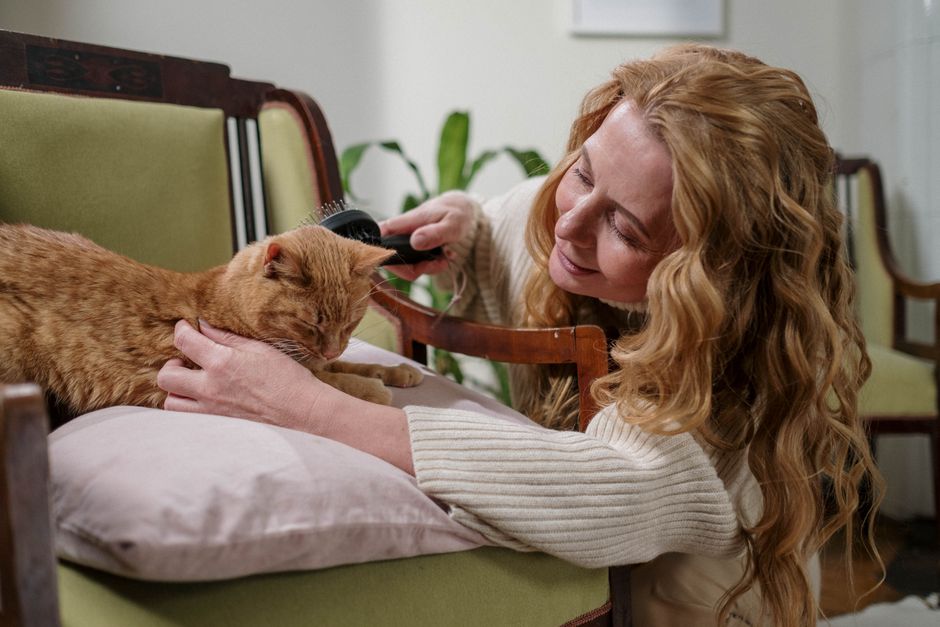
The iCatCare method is simple. Brush from her head toward her tail. Go the way the fur grows.
On a long-haired cat, use a wide-toothed comb. Take extra care under the front legs and between the back legs. The skin there is thin and sensitive.
Hit a knot? Don't pull it. Loosen the edges with your fingers, or leave it for now. Never cut a mat out with scissors. It is very easy to nick the skin underneath.
Brushing is also your chance to check her skin. Cornell notes that while you stroke her fur, you can check for lumps or bumps. You can see how her skin and coat look, too. Note any flakes, scabs or red patches.
Spot-Clean the Dirty Patches
Clean only the parts that are dirty. On most cats, that is just a few spots. Think of the fur under the tail after the litter box. Then the paws, the chin after meals, and a long-haired belly.
For each patch:
-
1
Wet a soft washcloth with warm water
Wring it out until it is damp, not dripping.
-
2
Wipe the way the fur grows
Short, light strokes.
-
3
Rinse the cloth and repeat
Stop when it comes away clean.
-
4
Pat the spot dry with a towel
Press the towel on. Don't rub the fur up the wrong way.
Do one patch per session if that is all she allows.
Plain warm water handles most everyday mess. Is dried litter or poop stuck in the fur? Hold the warm cloth on it for a minute to soften it. Then wipe gently. Don't tug.
Pee on the fur after an accident gets the same care. But if she keeps getting dirty under the tail, talk to your vet about why.
Stroke the Coat With a Glove Wipe
This is the step that replaces the bath. A pre-moistened glove wipe cleans the whole coat while you pet her. For a cat who hates water, it is the closest thing to a waterless cat bath.
-
1
Let her sniff the glove first
Hold it near her nose and wait for her to look away or rub on it.
-
2
Slip it on
One finger in each slot.
-
3
Stroke from head to tail, with the fur
Back, sides, chest and legs. Skip the eyes and the inside of the ears.
-
4
Finish on the spots she can't reach
The lower back and the base of the tail.
Why: these are the spots older and heavier cats can miss.
-
5
Use one glove per session
Then throw it away.
Slow strokes work better than fast ones. You are petting her, just with a damp hand.
LitterBond's Waterless Bath Glove Wipes are made for this step.
Each pack has five gloves. Each glove is sealed in its own foil sachet. It is moistened with a no-rinse, moisturizing formula. The label says "Deodorizing" and "Quick Refresh." You wear it like a glove, so it feels more like petting than bathing.

Know the limits. A glove wipe is for light dirt and odor. It won't lift sticky or heavy mess. A long-haired or very dirty cat may need a second glove. Her coat may feel a little damp after. It dries on its own.
🧽 A damp washcloth
Does the same job as a glove wipe, just more slowly.
🧴 Waterless shampoo
Comes as a spray, a foam or a powder.
🚫 Skip these
Baby wipes, hand wipes and human soap are made for people. Skip pet perfumes and heavily scented wipes, too. Cats are sensitive to essential oils and strong scents. And your cat will lick her coat after every session.
Wipe Gently Around the Face
Give the face its own soft pass with a fresh pad. Don't use the body glove here.
-
1
Dampen a cotton pad with warm water
Squeeze out the extra water first.
-
2
Wipe from the inner eye corner outward
Go along the fur. Never wipe the eye itself.
-
3
Use a new pad for each eye
Then throw both away.
-
4
Wipe her chin and around her mouth
Food bits collect here after meals.
-
5
Clean only the outer ear flap
Never go inside the ear.
A few gentle strokes per spot are plenty.
Crusty corners or rust-brown tear stains? LitterBond's Tear Stain Wipes are soft, pre-moistened cotton pads. They are for the fur around the eyes and the chin.
They help visibly fade tear stains with regular, gentle wiping. Old stains fade over days, not in one pass. The rest of the range is in our eye, ear and skin care collection. For the full routine, see how to clean cat tear stains gently.
If you notice redness, discharge, swelling, squinting or persistent scratching, stop and see your vet.
Dry, Brush and Check the Skin
Let the coat air-dry, then finish with a light brush. Keep her in a warm room with no drafts. Wait until the fur feels dry to your hand. Skip the hair dryer unless she is used to one. The noise and hot air scare many cats.
A last pass with the brush lifts any fur the glove loosened. It also fluffs the coat back up.
This is when dry skin shows up. Look for dry flakes on her back and shoulders, where she can't reach. The Skin Care Spray is made for everyday dry, flaky skin. Mist it onto the brush, not onto your cat. Then brush it through.
Use it only on unbroken skin. If you notice redness, discharge, swelling, squinting or persistent scratching, stop and see your vet.
Know the Bath and Vet Exceptions
Waterless cleaning handles everyday dust and smell. A few messes need water. A few need your vet. PetMD notes that cats generally need a bath only when a vet says so. The one exception is cleaning off something they got into.
| What you see | What to do | Why |
|---|---|---|
| Sticky or caked-on mess, like syrup or mud. | A real bath with a shampoo made for cats. | Wipes can't lift it. |
| Oil, paint or chemicals on the coat. | Call your vet or a poison line first. No wipes. | She will lick it off. |
| Heavy poop matted in the fur. | A cat groomer or your vet. | Mats can be very uncomfortable. |
| She suddenly stopped grooming. | Your vet. | It may signal pain or a health problem. |
| Red skin, sores or constant scratching. | Your vet. | Wiping won't fix skin trouble. |
Find your row, then do what it says before you reach for a wipe.
Something toxic on the fur is a vet job, not a cleaning job. International Cat Care explains that cats will groom any substance off their coats and swallow it.
Try to stop her grooming, and call your vet right away. iCatCare says any washing, with mild shampoo and water, should happen under instruction from your vet team.
Can't reach your vet? The ASPCA Animal Poison Control Center answers 24/7 at (888) 426-4435. A consultation fee may apply.
A cat who stops grooming is telling you something. The Cornell Feline Health Center warns that a sudden lack of grooming may signal a health problem. See your vet before you take over the job for her.
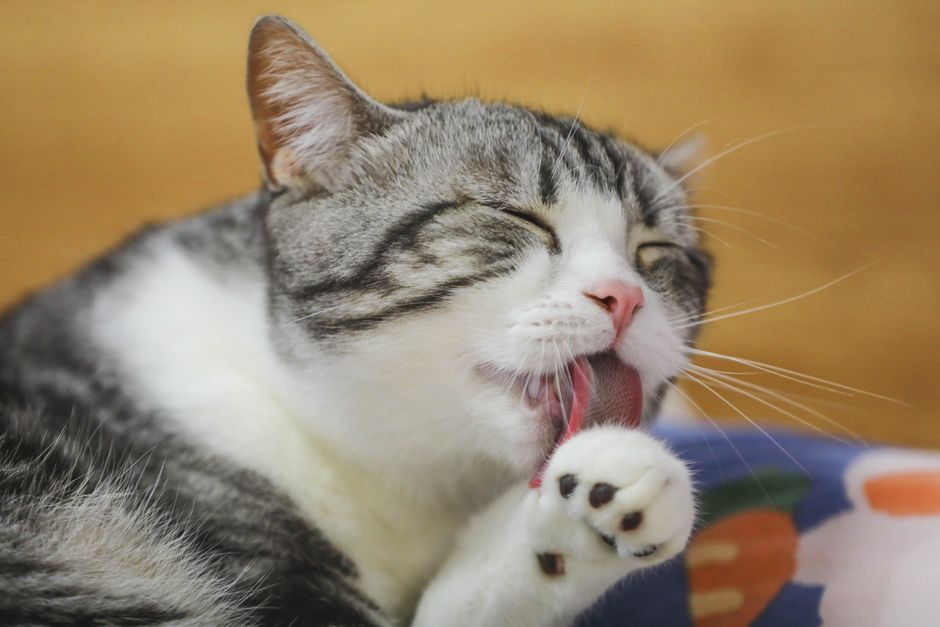
Bad mats need a pro. iCatCare says a cat groomer can sometimes comb mats out. But severe mats often have to be shaved off by your vet team. That often means sedation or general anesthesia.
For everything else, you now know how to clean a cat without a bath. If you do only one thing tonight, brush her for a few minutes where she likes it. Then hand over a favorite snack. Next time, add the glove. Teeth next? See how to clean cat teeth without brushing. The bath can stay where it belongs: on a short list of real exceptions.

For the cat who hates water
The glove-wipe step, ready to go
Five sealed glove wipes with a no-rinse formula. You stroke your cat the way you already pet her; one glove per session. They are for light dirt and odor, not sticky or heavy mess.
See the bath glove wipes →Questions this guide did not cover
How often should you bathe a cat?
Rarely, and only for a reason. PetMD says vets don't recommend frequent baths, partly because baths can dry out a cat's skin. It quotes a vet who advises at least four to six weeks between baths. For a healthy cat with a normal coat, there may be no schedule at all.
Do long-haired cats need baths?
Usually not. They need daily combing instead. International Cat Care says long-haired breeds need a little help, Persians most of all, since they have a thick undercoat under a long top layer. Its grooming guide says to comb them at least daily, only for as long as the cat is comfortable. With daily grooming, it adds, cats shouldn't become matted.
Do hairless cats need baths?
Yes. They are the real exception to the no-bath rule. International Cat Care says breeds with little or no coat need weekly bathing or sponging to remove oily secretions. It also says these breeds may be prone to skin problems. Ask your vet which cleanser to use on bare skin.
Can I use dish soap on my cat?
Only for an oily or painted coat, and only once your vet or a poison helpline has said yes. VCA Animal Hospitals says paint can be washed out of fur with mild liquid dish soap, or carefully trimmed away with clippers. It warns never to use paint thinners or mineral spirits on the skin without asking first. In most cases, it adds, leaving a little paint behind beats hurting her skin. For everyday dirt, pick a cat shampoo instead.
Related reading
- How to Clean Cat Tear Stains Gently (and When to Call the Vet)
- How to Clean Your Cat's Teeth Without Brushing: 7 Options, Ranked
About this article
Researched and written by the LitterBond Team. Sources include International Cat Care, the Cornell Feline Health Center, the ASPCA, VCA Animal Hospitals and PetMD. Reviewed and updated September 27, 2026. LitterBond does not employ veterinarians; for medical decisions about your individual cat, always consult your veterinarian.


