
How Long Does Catnip Last in a Toy? (And How to Refresh It)
LitterBond Team
By the LitterBond Team · Researched against ASPCA, iCatCare and Cornell Feline Health Center guidance · Last updated: October 14, 2026
Last month, your cat carried that toy mouse everywhere. Tonight she gave it one sniff and walked off to the window. Is the toy used up, or is she just done for now?
Usually it's one of three things, and each one runs on its own clock. One catnip reaction lasts minutes, and then she needs a break. The catnip inside a toy fades much more slowly, and how you store the toy changes how fast. And some cats never react to catnip at all.
Below: how to tell which one you're seeing, and how to refresh a faded toy. Then how to store toys, and when a toy is done.
How Long Does One Reaction Last?
A catnip reaction lasts minutes, and then your cat needs a break before the next one. The sources agree that it's short. They differ a little on how long the break is.
So a cat who plays hard for ten minutes and then wanders off isn't done with the toy. She's done for now. Give it a rest of at least a few hours; Johnson-Bennett suggests catnip no more than once a week.
What does a reaction look like? A 2017 study in BMC Veterinary Research describes the classic one. Cats sniff, lick and bite the catnip, and shake their heads. They rub their head, chin or cheeks on it and roll over. Some drool or kick it with their back feet.
Not every cat gets wild, though. The ASPCA says catnip makes some cats sedated and others stimulated. A quiet cat slowly licking her toy may still be reacting.
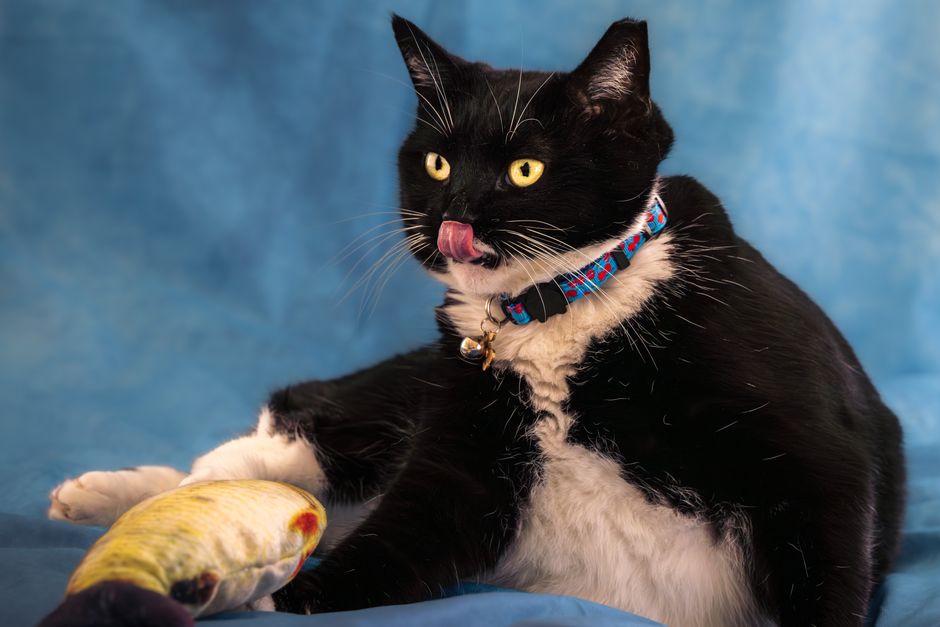
If she has never reacted to catnip, the toy may not be the problem. International Cat Care calls the catnip response hereditary, so some cats simply don't have it. Young kittens often don't react until about six months old. Here's more on why some cats don't react to catnip.
How Long Does the Catnip Stay Strong?
There's no set expiry date for the catnip in a toy, but it does fade. None of the sources here puts a number of weeks on it. It depends on how fresh the catnip was when the toy was made, and on how the toy is kept.
The part your cat reacts to is an oil in the leaves called nepetalactone, PetMD explains. Pam Johnson-Bennett calls it a volatile oil, the kind that drifts off into the air. PetMD says catnip loses its potency over time. It suggests keeping catnip in an airtight container. Small Door Veterinary suggests the freezer, in an airtight container.

Researchers handle catnip the same way. In the 2017 study, the team ordered fresh plant material just before testing, to avoid any possible breakdown of the active compounds. They kept it tightly sealed in its bag, at room temperature and in the dark.
Now think about a toy left on the living room floor. It sits in open air, day and night, for weeks. It may also have sat in a box or on a shelf for a while before it reached you.
Here's how to tell the catnip has faded:
🌿 Has the catnip in this toy faded?
- She ignores it, even after a few hours away from catnip
- You squeeze it and sniff, and the green, herby smell is faint or gone
- A pinch of fresh catnip or a newer toy still gets her attention
How Do You Refresh a Catnip Toy?
Match the fix to the toy: swap a pouch, add fresh catnip, or mist the outside. Pick the one that fits the toy in your hand.
Swap the Pouch
A toy with a pocket is the easiest to bring back. LitterBond's Refillable Catnip Plush Buddies hold dried catnip in a pouch behind a hook-and-loop pocket. Each toy comes with 2 refill pouches. Here's the swap:
-
1
Open the pocket
Pull the hook-and-loop flap apart.
-
2
Slide out the old pouch
Check it for tears as it comes out.
-
3
Tuck in a fresh one
Push it all the way into the pocket.
-
4
Press the pocket firmly closed
A determined cat might open it.
-
5
Seal the spares
Keep spare pouches in a sealed bag until you need them.
Play together, and replace any pouch that tears. One honest limit: a fresh pouch can't make a cat react if she never reacted to catnip in the first place.

Catnip & play
Refill the catnip, keep the toy
Soft sherpa plush buddies with dried catnip in a pouch behind a hook-and-loop pocket, plus 2 refill pouches per toy. Sold in assorted 3- or 6-packs, with the styles picked by the store. Press the pocket firmly closed after every refill, and play together.
See the refillable catnip toys →Roll It in Fresh Catnip
Many catnip toys are sewn shut, but you can still freshen the outside. Pam Johnson-Bennett keeps plain toy mice in a sealed container filled with good dried catnip. She writes that they "can be marinated over and over again." International Cat Care suggests storing favorite toys in bags with catnip inside.
Rub the catnip between your palms before you add it. Johnson-Bennett says this releases the oil. A 2022 study in iScience found something similar in catnip leaves. Crumpling and tearing the leaves made them give off more than 20 times as much of the compounds cats react to.
Pick dried catnip made from leaves and blossoms, as Johnson-Bennett suggests. Keep the amount small. PetMD suggests just 1 tablespoon at a time. Skip concentrated catnip oils. Cats are sensitive to essential oils and strong scents.
Mist It Lightly
A spray adds scent to the outside of a toy. That includes a toy that never had catnip inside. LitterBond's catnip and silvervine spray is a 20 ml glass mist bottle with both plant extracts. A light mist can bring a forgotten toy back into rotation. Spray the toy, never your cat, and keep it away from her eyes.
Results vary from cat to cat. Some cats that ignore catnip respond to silvervine. If she ignores both plants, a spray made from them won't change that.
How Should You Store Them?
Keep catnip toys sealed between sessions, and bring out only one or two at a time. Sealing protects the scent. Rotation keeps each toy new to her.
- Seal them. Johnson-Bennett says to keep catnip toys in tightly sealed containers when not in use. A zip bag or a glass jar works.
- Keep loose catnip cold and dark. Small Door suggests the freezer for dried catnip. The 2017 researchers kept theirs sealed and in the dark.
- Rotate them. International Cat Care suggests two or three toys on the go, rotated regularly and given one at a time. The Cornell Feline Health Center says rotating toys can keep your cat from getting bored with them.
- Space out the catnip. Johnson-Bennett suggests catnip no more than once a week.
Put toys away after every play session, too. Pick them up, look them over, and seal them back in the bag. That one habit covers storage, rotation and damage checks.
When Is a Toy Done?
Retire a toy when it's damaged, not just when the scent fades. A faded toy can be refreshed. A torn one can't.
Throw a toy away if a seam splits, stuffing shows or a part comes loose. The Cornell Feline Health Center warns about small pieces and string-like parts, such as feathers and string. They may come off, especially when chewed, and get swallowed.
In a refillable toy, a worn pouch is an easy fix. Swap it out, and keep the pocket pressed shut. If the toy itself tears, retire it.
Sometimes the toy is whole and the catnip is fresh, and she still walks away. Many cats play for the chase, the sound or the feel of a toy, not the catnip. For ideas by play style, see what kinds of toys cats like.
Keep one vet line in mind. A cat who loses interest in play and food at the same time needs a vet check.
If you do one thing tonight, gather the toys from under the couch. Throw out any that are torn. Swap in a fresh pouch where a toy has one. Seal the rest in a bag with a pinch of fresh, crumbled catnip, or give one a light mist of the spray. Then bring out a single toy on her next catnip day, and let her find it.
Questions this guide did not cover
Can I make my own catnip toy?
Yes, a clean sock works. Cat behavior consultant Pam Johnson-Bennett suggests filling the tip of a sock with catnip and tying a knot in the end. Researchers in the 2017 BMC Veterinary Research study offered catnip to cats inside a sock, too. Stay nearby while she plays with it.
Can a cat have too much catnip?
Yes. The ASPCA notes that catnip can cause vomiting and diarrhea. Offer a little now and then, not a big pile every day. If she vomits again and again or seems unwell, call your vet.
Why do cats rub their faces on catnip?
Scientists think it may help keep mosquitoes away. In a 2021 study in Science Advances, rubbing and rolling on silver vine leaves left a compound called nepetalactol on cats' fur. Those cats drew significantly fewer mosquitoes than cats without it. Earlier reports had linked catnip's nepetalactone to repelling mosquitoes, too.
Related reading
- Why Doesn't My Cat React to Catnip? 7 Reasons and What to Try Next
- What Kind of Toys Do Cats Like? A Play Style Guide
About this article
Researched and written by the LitterBond Team. Sources include the ASPCA, International Cat Care, the Cornell Feline Health Center, PetMD and Cat Behavior Associates. Reviewed and updated October 14, 2026. LitterBond does not employ veterinarians; for medical decisions about your individual cat, always consult your veterinarian.


