
How Often Should You Wash Cat Bowls? (And What That Slime Is)
LitterBond Team
By the LitterBond Team · Researched against Cornell Feline Health Center, VCA and iCatCare guidance · Last updated: December 25, 2026
How often should you wash cat bowls? Wash her food bowl after every meal, and wash her water bowl every day. That is the plain advice from the U.S. Food and Drug Administration (FDA). A fountain follows the schedule in its maker's manual.
Maybe you ran a finger around the water bowl, and it felt slick. You rinsed it and topped it up yesterday. A quick rinse doesn't lift that film, though. It clings to the bowl, and it comes back fast.
Below: a schedule for each bowl, what the slime is, and a two-minute wash that gets it off.
How Often Does Each Bowl Need Washing?
Food bowls get washed after every meal, and water bowls every day. The FDA also says to dry food bowls after each wash. Its pet food handling tips add the method: soap and hot water.
The Centers for Disease Control and Prevention (CDC) splits it by food type. Clean the bowl after every use for wet food. Clean it every day for dry food and water.
Here is the full schedule:
| What | How often | Who says so |
|---|---|---|
| Wet food bowl | After every meal | FDA, CDC |
| Dry food bowl | At least once a day (FDA: after each use) | FDA, CDC |
| Water bowl | Every day | FDA, CDC |
| Water fountain | Water and parts on the maker's schedule | The manual |
| Food scoop | After each use, and only for pet food | FDA |
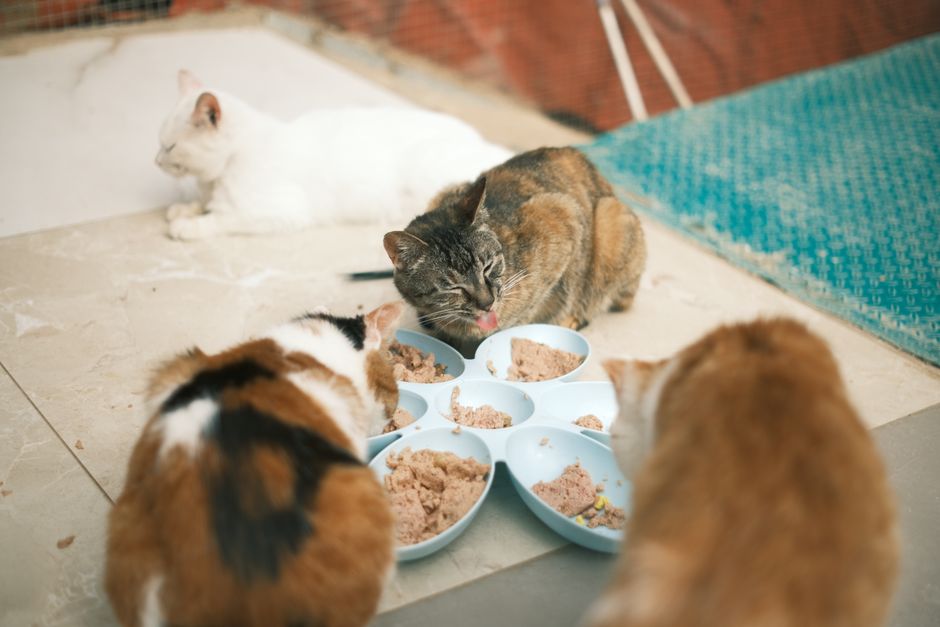
Wet food needs the most care. The FDA says to refrigerate or throw out leftover canned and pouched food promptly. So don't add fresh food on top of an old layer. The Cornell Feline Health Center lists spoiled cat food among the common causes of vomiting in cats.
What Is That Slime in the Bowl?
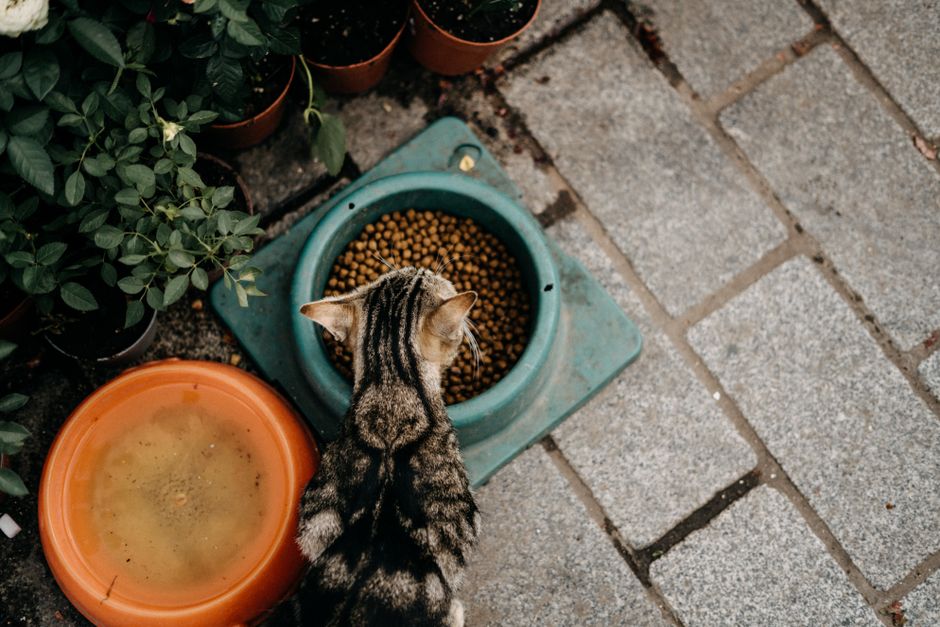
The slime is a biofilm, a thin living layer that builds up on wet surfaces. The Center for Biofilm Engineering at Montana State University explains how it forms. Bacteria stick to a surface in a moist place. Then they give off a slimy, glue-like substance that holds them there.
Your cat starts it each time she eats or drinks. Cat behavior author Pam Johnson-Bennett explains that bacteria from a pet's tongue stick to the bowl. If the bowl isn't washed, they build up into a biofilm.
It comes back because a bowl gives it all it needs. The Montana State team says biofilm grows wherever there is moisture, nutrients and a surface. Free-floating bacteria can attach within minutes.
In a 2011 household germ study, NSF found that pet bowls were the fourth germiest place in the homes it tested. Its advice was to wash pet dishes daily.
That's why a rinse and a top-up don't count. The film clings, so you have to scrub it off.
How Do You Wash a Cat Bowl?
Scrub the bowl with hot, soapy water, rinse it well, and let it dry. It takes about two minutes. Here is the routine:
-
1
Empty it
Tip old food into the trash and pour out the old water.
-
2
Add hot water and a little soap
A mild dish soap works.
-
3
Scrub off the film
Work a sponge or brush over the inside, the rim and the base.
-
4
Rinse until no suds are left
Then feel the inside. It should feel smooth, not slick.
-
5
Dry it
A towel or a dish rack both work.
The CDC's steps match: wash with soap and water, scrub with a sponge or brush, then rinse off the dirt and soap. Pick an unscented soap if you can. Cats are sensitive to essential oils and strong scents.
A dishwasher works too, if the bowl is dishwasher-safe. The CDC says it's okay to put pet items in with your own dishes. By hand, the University of Guelph's pet nutrition team suggests a separate sponge for pet bowls. If you use the kitchen sink, the CDC says to clean the sink and the area around it right after.
If you'd rather not touch the gunk, a cleaner with its own brush helps. LitterBond's Bowl Cleaner Mousse is a mild, pet-specific foam in a pump with a built-in silicone brush head. Pump, scrub, then rinse until the foam is gone. It loosens slimy film and grease, and it rinses clean with no soapy residue. For dried-on food, let the foam sit, or soak the bowl first. It makes the daily wash quicker, but it doesn't replace it. Hot water and a good rinse still do the real work. You'll find it with our other odor and home cleaning basics.

Odor & Home
Foam and a brush in one pump
A 120 ml foam pump with a built-in silicone brush head, for food and water bowls, fountain parts and washable toys. Pump, scrub, then rinse until the foam is gone. It loosens slimy film and grease. It doesn't replace the daily wash.
See the bowl cleaner mousse →What About Water Fountains?
A fountain is still a water bowl, so the slime grows there too. The Cornell Feline Health Center says some cats drink more from a fountain, though cats differ in whether they like one.
Follow the maker's manual for the pump, the tubes and the filter. Between deep cleans, wipe the basin whenever it feels slick. The same bowl cleaner mousse is made for fountain parts and washable toys, too.
Do you add a dental water additive? Mix it fresh every day, and wash the bowl or fountain on the same schedule. The label on the LitterBond Dental Water Additive says to mix it fresh daily. To see where it fits with other tooth care, read how to clean your cat's teeth without brushing. Still deciding? Here is an honest look at dental water additives.
Which Bowl Is Easiest to Keep Clean?
Smooth, hard bowls are the easiest to keep clean. Plastic scratches over time. VCA Animal Hospitals notes there may be a link between plastic food and water dishes and chin acne in cats. The rough surface or scratches in plastic can make it easier for germs to build up.
VCA adds that swapping plastic for smooth dishes, like glass or stainless steel, may help chin acne clear in some cats. So may washing those dishes every day.
✅ Stainless steel or glass
Hard, smooth and non-porous. Steel is hard to scratch. Glass lets you see film start to build.
🍽️ Glazed ceramic
Fine while the glaze is smooth and whole.
⚠️ Plastic
Light and cheap, but scratches give the film more places to cling.
When Should You Call Your Vet?
A clean bowl fixes the slime, but it can't fix a change in your cat. Call your vet if you notice any of these:
⚠️ Signs that are about your cat, not the bowl
- She drinks a lot more than usual. International Cat Care says any cat drinking more than usual should be seen by a vet.
- She drinks much less, or seems dehydrated. Cornell says to call a vet promptly.
- Her chin looks dirty or bumpy, or turns swollen and sore. VCA lists these as signs of chin acne.
- She vomits more than once a week, or vomits and also seems tired, eats less or drinks more (Cornell).
A new bowl can't settle a sore chin on its own. Your vet should see it.
If you do one thing tonight, pick up the water bowl and scrub it, not just rinse it. After that, wash the food bowl after each meal and the water bowl each morning. The film won't have time to settle in.
Questions this guide did not cover
How much water should a cat drink each day?
About a cup a day for an average 10-pound cat. The Cornell Feline Health Center puts it at about 4 ounces per 5 pounds of lean body weight. Cats on wet food may drink less, since their food holds a lot of water.
How can I tell if my cat is drinking more than usual?
Measure it for a day. International Cat Care suggests filling her bowls to the brim and checking what's left after 24 hours. It says over 100 ml per kg of body weight a day is more than usual. Shared bowls make this harder to track.
Should I wash my hands after feeding my cat?
Yes, before and after. The FDA's food handling tips say to wash your hands for at least 20 seconds with soap and hot water. They also say not to use her bowl as a scoop.
Related reading
- How to Clean Your Cat's Teeth Without Brushing: 7 Options, Ranked
- Do Cat Dental Water Additives Actually Work? An Honest Look
About this article
Researched and written by the LitterBond Team. Sources include the Cornell Feline Health Center, VCA Animal Hospitals, International Cat Care, fda.gov and cdc.gov. Reviewed and updated December 25, 2026. LitterBond does not employ veterinarians; for medical decisions about your individual cat, always consult your veterinarian.


