
How to Calm a Cat During Fireworks: A New Year's Eve Plan
LitterBond Team
By the LitterBond Team · Researched against VCA, ASPCA and AVMA guidance · Last updated: December 1, 2026
Last New Year's Eve, the first bang came at midnight. Your cat shot under the bed and didn't come out until morning. Maybe she yowled at the back door, or squeezed behind the washer. This year, you want a plan.
You can't stop the fireworks. But you can make the night a lot easier on her. Set up a safe room a few days ahead. On the night, keep her inside, shut out the noise and let her hide. Then give her time to settle.
Below: why fireworks scare cats, what to do before, during and after, and when to call your vet. Start this week. Most of the plan works best with a few days of lead time.
Why Do Fireworks Scare Cats?
Fireworks are loud, sudden and bright, and your cat hears them far better than you do. Cats Protection, a UK cat charity, says cats have very sensitive hearing. They hear what we hear, "but a lot louder." Unexpected bangs and flashes can make them feel frightened and unsafe.
Cats also like to know what comes next. A night of random booms gives them no warning at all.
Not every cat panics, though. PetMD calls fear of fireworks a noise phobia, "but not all cats experience it." Some cats barely lift their heads. Others hide for hours. If you don't know how yours reacts yet, plan for a scared cat.
Watch for these signs of fear:
Signs your cat is scared of the fireworks
- Hiding, or cowering behind or on top of furniture
- Pacing, circling or restlessness
- Ears pulled back, big pupils or a tucked tail
- Loud meowing or yowling
- Trying to run away or get out of the house
- Eating or drinking less than usual
- Peeing or pooping outside the litter box
- Grooming much more than usual
This list comes from Cats Protection, the UK vet charity PDSA, PetMD and VCA Animal Hospitals. If you see these signs, the plan below is built for her.
What Should You Do Before the Fireworks?
Most of the work happens before the first bang. Start at least a few days ahead. That way her safe spot already feels normal when she needs it.
Set Up a Safe Room
Pick a quiet room on the side of the house away from the street. A room with few or no windows is ideal. For New Year's Eve, the ASPCA suggests a room without windows and "lots of warm blankets."
Then stock it so she never has to leave:
- Hiding spots, low and high. Use a cardboard box on its side, a bed with a blanket over it, and a clear shelf. The PDSA says cats often feel safest up high.
- A litter box. The PDSA suggests one near her den.
- Water and food. She may not want to come out for hours.
- Her own bedding. A blanket she already sleeps on smells like home.
- A favorite toy or two. VCA suggests a comfy bed and favorite toys.
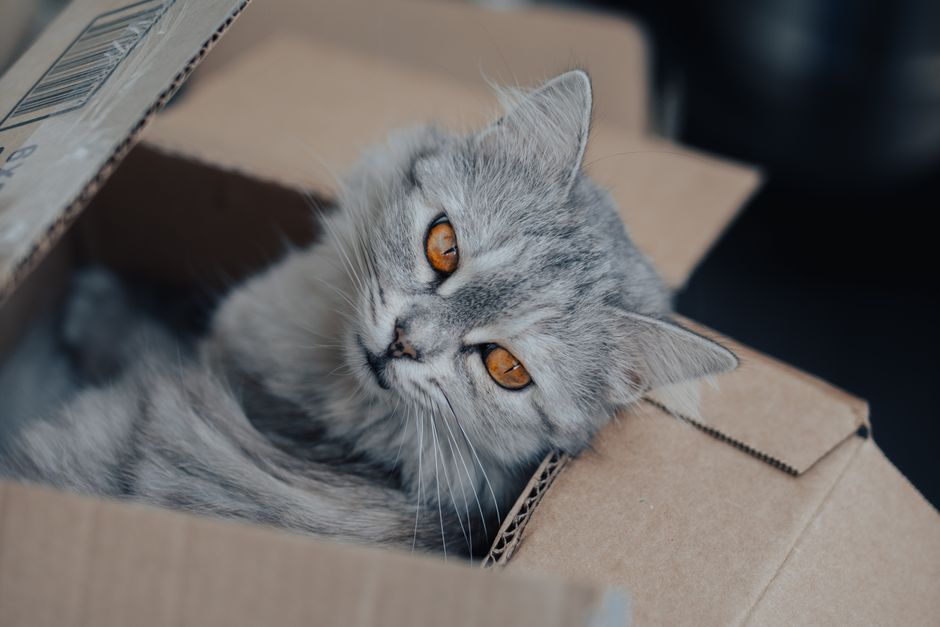
Then leave the door open, unless you're hosting (more on that below). That may sound odd. But Cats Protection says some cats "can feel more stressed if confined to one room." PetMD suggests giving cats access to a few safe rooms. So shut the outside doors and windows instead. She stays in the house, and she still gets to choose.
While you're at it, block any spot where you couldn't reach her. PetMD names places like a crawl space or up under the roof.
Plug In a Diffuser Early
This step is optional. A plug-in diffuser can go in her safe room, or wherever she spends the most time. LitterBond's Calming Diffuser Starter Kit is drug-free and odorless to people. It runs day and night, and it helps many cats feel more at ease.
Timing matters most. Changes are usually gradual. Plug it in this week, so it has run for most of December by the 31st. One refill lasts about 30 days of nonstop use. A diffuser can't make the fireworks quieter, and results vary from cat to cat. For what studies of pheromone diffusers in general do and don't show, see our plain-English look at the research.
Skip scented plug-ins, candles and oils. Cats are sensitive to essential oils and strong scents.

Calming
For the room she hides in
One plug-in diffuser and one 48 ml refill, for about 30 days of nonstop use. Plug it in well before New Year's Eve, since changes are usually gradual. It won't make the fireworks quieter. The safe room still does most of the work.
See the Calming Diffuser Starter Kit →Check Her ID and Microchip
A scared cat can dart out a door that's open for two seconds. If she gets out, her ID is how she gets home. The American Veterinary Medical Association (AVMA) says cats and dogs alike should have ID tags "with up-to-date information." It also says to keep your contact details current in the microchip registry.
So check both now. Did you move or get a new phone number this year? Update the chip company. If she isn't chipped yet, ask your vet about it.
Check Every Door, Window and Cat Flap
Walk through the house before the big night. Make sure every window shuts and latches. If you have a cat flap, make sure it locks. Cats Protection says to keep all windows, doors and cat flaps closed so a scared cat can't escape.
What Should You Do on the Night?
On the night, keep her in, keep it quiet and let her choose where to be. New Year's Eve fireworks don't always wait for midnight. So set things up in the afternoon.
-
1
Bring her in well before dark
The PDSA says to get cats inside well before dark. Then lock the cat flap.
-
2
Close the windows and curtains
The PDSA also says to close curtains before dark and leave the lights on. That helps hide the flashes.
-
3
Turn on steady sound
A TV, radio, music or a fan all work. Cats Protection says background noise can help reduce the impact of sudden sounds.
-
4
Mist her bedding, not her
About 15 minutes before dark, you can mist her blanket with LitterBond's Calming Spray. It's drug-free and odorless to people. It helps her blanket feel familiar. It won't make the bangs any less startling. Let it dry, and never spray it on your cat. The liquid has a light tint, so test it on a hidden spot of fabric first.
-
5
Leave the diffuser on
If you plugged one in, keep it running all night. Never cover it.
-
6
Keep dinner at the usual time
A normal routine tells her this is a normal night.
Let Her Hide
If she runs under the bed, let her stay there. Hiding is how many cats cope with scary things, from strangers to loud noise. Our guide to why cats hide from guests explains more. PetMD says being able to get away and hide "reduces the fear and stress fireworks can cause."
So don't pull her out. The PDSA says never to force a cat out of her den, "even if they've been in it for a long time." The RSPCA says not to tempt her out, either. Leave her until she's ready.
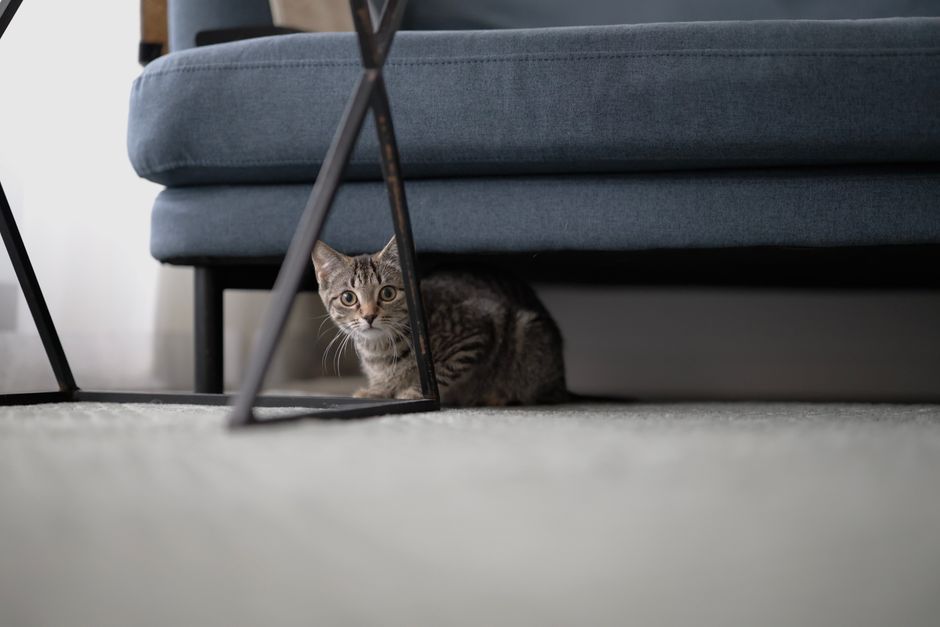
Don't pick her up or hold her. Cats Protection says trying to pick up or cuddle a scared cat might make her more fearful.
Act Like It's a Normal Night
Your cat takes cues from you. The RSPCA says to stay calm and act as you usually do. VCA says to offer gentle reassurance and keep up your routine as usual.
If she comes to you, that's fine. Cats Protection says it's fine to give her some attention if she seeks it. Talk softly. Stroke her if she leans in. Never scold her for hiding, yowling or an accident.
A toy or a snack can help too, but only if she's interested. VCA suggests an interactive or puzzle toy to take her mind off the noise. If she ignores it, let it go.
If You're Hosting a Party
Guests mean a front door that opens again and again. That's when a scared cat slips out. The AVMA suggests a safe, escape-proof room during parties and fireworks. So on a party night, close her safe-room door. Tape a note to it so guests leave it shut. Check on her quietly now and then.
What Should You Do Afterward?
Give her time to come out on her own. The last bang doesn't mean she feels safe yet. Cats Protection says cats can take a while to calm down, so give her some space.
PetMD says a cat might hide after fireworks "anywhere from a few hours to a few days." That's normal. Keep water, food and her litter box close to her hiding spot. The PDSA's advice is to make sure she can reach food and water.
Does she usually go outside? Wait until daylight, and walk the yard first. The AVMA says to check for fireworks debris before letting pets outside. Neighbors may set off a few more fireworks the next night. So bring her in before dark again.
Can She Get Used to Fireworks?
Some cats can learn to mind the noise less, but it takes weeks to months. This slow training is called desensitization. You pair a very quiet version of the sound with something she likes.
Here is how the PDSA describes it:
-
1
Start very quiet
Play firework sounds through a speaker at a very low volume.
-
2
Add something good
PetMD suggests giving a snack while the sound plays.
-
3
Repeat at that volume
Do it a number of times over a few days.
-
4
Go up a little
Raise the volume slightly only if she seems completely comfortable.
-
5
Back off if she worries
If she looks tense, go back to a lower volume.
The PDSA says it "will take several weeks/months." PetMD agrees it needs to happen weeks to months before a scary event. VCA suggests starting in the months before New Year's Eve.
So this New Year's Eve may come too soon for it. Start in January instead, and aim for July 4th. Has she been badly scared on past holidays? The AVMA suggests behavior therapy to help her get used to the noise. Ask your vet or a veterinary behaviorist.
When Should You Call the Vet?
If she panics badly every year, talk to your vet well before the night. VCA says that if your cat is severely distressed by fireworks, you should seek your vet's guidance.
Call your vet if you notice any of these:
⚠️ Call your vet if you notice any of these
- She panics badly every time there are fireworks
- She hurts herself trying to hide or get out
- She still won't eat the day after the fireworks
- She's suddenly scared of fireworks when she never used to be
- You've tried these steps, and she's still very scared
A sudden change deserves a check-up. The PDSA says a cat who suddenly fears fireworks may need one to make sure pain or illness isn't the reason. If she's hurt, don't wait. Vets Now, a UK emergency vet group, says to contact your vet right away.
Book the visit a few weeks before New Year's Eve, and ask about options for the night. Only your vet can say what fits your cat. And as the PDSA puts it, never give your cat any medication that hasn't been prescribed by your vet.
If you do nothing else this month, do three things. Set up her safe room. Check her microchip details. Plan to have her inside before dark on the 31st. Then, when the first bang comes, turn up the TV, close the curtains and let her hide. She may spend midnight under the bed. That's okay. She's somewhere she feels safe, and you know right where she is.
Questions this guide did not cover
Can I leave my cat home alone on New Year's Eve?
Yes, and for most cats home is the better choice. The AVMA says to leave pets at home when you go to parties, fireworks displays and other gatherings. Get her room ready and switch on some background sound before you head out.
Should I put my cat in a crate during fireworks?
Only if you need to. The AVMA names a crate as one option while guests come and go. But PetMD notes that cats hate to be confined, and small spaces can make them more afraid. For most cats, a room she can come and go from is kinder.
Do some cats like watching fireworks?
Some do. PetMD says that while some cats loathe fireworks, others might love to watch them. A curious cat can watch from inside, with the window shut and latched.
Are fireworks dangerous if my cat eats them?
Yes. The ASPCA calls eating fireworks incredibly dangerous for pets. Keep unused fireworks well out of her reach. If you think she chewed or swallowed any, call your vet right away.
Related reading
- Do Cat Pheromone Diffusers Work? The Evidence and a Fair Trial
- Why Does My Cat Hide From Guests? A Calm Holiday Plan
About this article
Researched and written by the LitterBond Team. Sources include VCA Animal Hospitals, the ASPCA, the American Veterinary Medical Association (AVMA), cats.org.uk and PetMD. Reviewed and updated December 1, 2026. LitterBond does not employ veterinarians; for medical decisions about your individual cat, always consult your veterinarian.


