
How to Get a Cat Into a Carrier (Without the Fight)
LitterBond Team
By the LitterBond Team · Researched against VCA and iCatCare guidance · Last updated: October 23, 2026
The carrier comes out of the closet. By the time you find your keys, your cat is under the bed. Last time, it took twenty minutes, one scratched arm and a late check-in at the vet.
There are really two jobs here. The first is getting her in today, calmly, with no chase. The second is making the carrier a normal part of her life, so next time she walks in on her own. With fall checkups and holiday trips coming up, this is a good month to start both.
Below: why cats fight the carrier, which carrier makes it easier, and a training plan in small steps. You'll also find a calm way to load her when the visit is today, and the signs that mean it's time to talk to your vet.
Why Do Cats Fight the Carrier?
Most cats fight the carrier because of what it has meant before. VCA Animal Hospitals notes that many cats see their carrier only right before a vet visit. Then come the car, the strange clinic and a stranger's hands. So the carrier turns into the first sign of a bad day.
A vet writing for PetMD makes the same point. The carrier often comes out only when something unpleasant is about to happen. Cats learn that pattern fast.
A few other things make it worse:
- It smells wrong. A carrier from the garage smells like dust, not home. One from the last visit may still smell like the clinic.
- It moves. She gets lifted, swung by a handle and set down in a noisy car.
- It takes her away from home. The American Animal Hospital Association (AAHA) points out that leaving home is not a normal thing for a cat.
The fix isn't more strength. It's changing what the carrier means to her.
Which Carrier Makes It Easier?
A sturdy carrier with a top door makes every step easier. Cat Friendly Homes, from the Feline Veterinary Medical Association (FelineVMA), suggests a carrier that is sturdy and has both a top and a front entrance.
International Cat Care (iCatCare) explains why the top door matters. With a carrier that opens at the top, you can lift your cat gently in or out. You don't have to push her through a small front door.
✅ Easiest: hard carrier with a top door
Solid plastic, a door on top and one in front, and a top half that unclips. In its guide to travelling with your cat, iCatCare favors solid plastic because it is easy to clean. AAHA says she should be able to stand, turn around, sit and lie down inside.
🙂 Workable: front door only
A sturdy plastic carrier with just a front door still works. It is harder to load a cat who isn't trained, because she has to go in headfirst through a small opening.
⚠️ Skip for vet trips
iCatCare says cardboard is no match for a determined cat. Its guide to vet visits also advises against soft fabric carriers, which can collapse, and backpack styles, which can cause too much movement.
How Do You Train a Cat to Like It?
Carrier training works by making the carrier boring first, then good. The name for this is desensitization. You show her the carrier in small, easy doses, until it no longer means "vet." Then you pair it with things she likes, which is called counter-conditioning.
iCatCare says the carrier should ideally be "part of the furniture" at home. It should be a place your cat chooses to sleep or eat.
Here's a simple plan. Move to the next step only when she's relaxed at the one before.
-
1
Leave it out
Put the carrier in a room she likes, with the door open or off. Leave it there all the time.
-
2
Make it smell like home
Add a blanket she already sleeps on. iCatCare also suggests wiping a soft cloth around her face, then rubbing it on the carrier.
-
3
Put snacks nearby, then inside
Start with a favorite snack beside the carrier. Then move it just inside the door, then to the back.
-
4
Serve a meal in it
Once she walks in easily, put her food bowl inside.
-
5
Close the door for a few seconds
Open it before she asks to leave. Slowly build up to minutes.
-
6
Lift it, then set it down
With her inside, lift the carrier a little and put it back down. Give her a snack. Later, carry it across the room.
Keep each session short. Fear Free Happy Homes suggests just a minute or two, since cats fill up on snacks quickly.
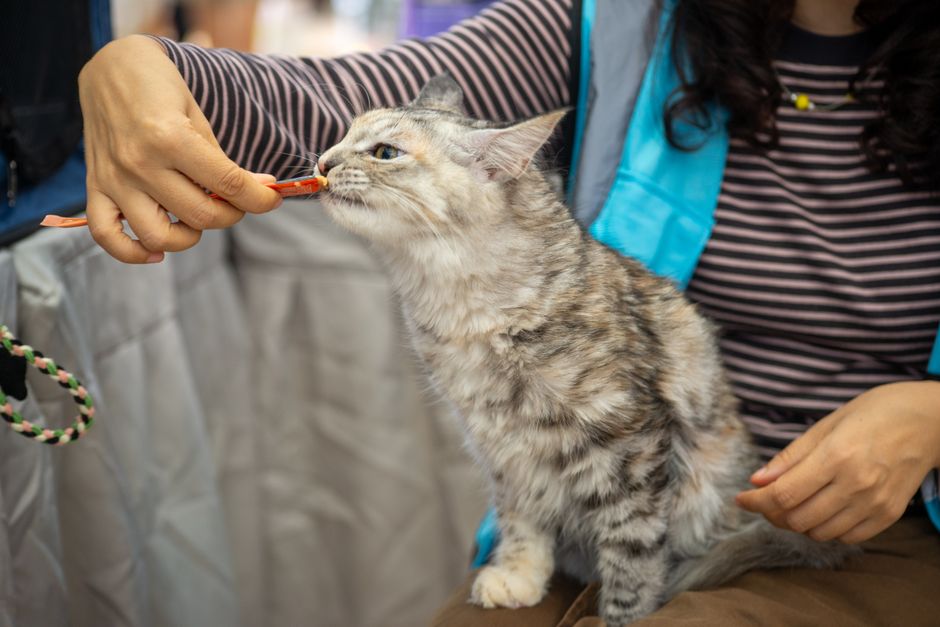
Watch for her threshold. That's the point where she goes from curious to scared. Flat ears, a low crouch or a fast exit mean you went too far. Go back one step, and end on a good moment.
It also helps to make the carrier a little more interesting. Cat Friendly Homes suggests putting snacks, catnip or toys inside so she wants to go in. If she ignores plain catnip, a light mist of catnip and silvervine spray on the bedding is another option. Some cats that ignore catnip respond to silvervine, but results vary. Spray the bedding, never your cat. Think of it as a reason to go in and sniff, not a way to settle her.
What If the Vet Visit Is Today?
With no time to train, set things up so loading takes seconds. Get the carrier ready first, then bring her to it. Chasing her around the house with it can make the next time harder.
Start about 15 minutes before you plan to load her. If you use a pheromone spray, iCatCare's advice is to spray the carrier at least 15 minutes before she goes in. One option is LitterBond's calming spray, a drug-free, pheromone-based formula made for carriers and bedding. Mist the towel or blanket inside, not your cat, and let it dry. It's odorless to people, and it can help the carrier and blanket feel more familiar. Spray it ahead of time, not once she's already upset. Many cats need a few trips to get used to the routine, and results vary from cat to cat.
The liquid has a tint, so test it on a hidden spot of the fabric first. Skip air fresheners and scented sprays near the carrier. Cats are sensitive to essential oils and strong scents. Pheromone products don't help every cat, either. For what the research does and doesn't show, see whether cat pheromone diffusers work.

Calming
For the carrier towel, not the cat
A 60 ml fine-mist bottle with a drug-free, pheromone-based formula. Mist the carrier towel about 15 minutes before she goes in, let it dry, and never spray your cat. It's odorless to people. Many cats need a few trips to get used to the routine.
See the calming spray →Then load her. The Cat Fanciers' Association shares a vet's method for cats who haven't been trained:
-
1
Close her in a small room early
A bathroom works well. Pick a room with no furniture she can get under.
Why: you won't have to pull her out from under the bed.
-
2
Stand the carrier on its end
The open front door should face the ceiling. Have a helper hold it steady if you can.
-
3
Lower her in, back end first
Hold her close, support her back legs and let her slide in gently, bottom first.
-
4
Close the door, then gently tip the carrier back onto its base
Give her a snack.
A top-opening carrier makes this easier. Cat Friendly Homes suggests you gently cradle her and lower her in through the top. You can also take the top half off, let her settle in the bottom half, then calmly put the top back on.
If she twists and scratches, use a towel. In its five carrier tips, Cat Friendly Homes describes tossing a blanket over her and wrapping her like a burrito, not too tight. Then you slide her into the carrier. iCatCare suggests a thick towel that smells familiar, placed in the carrier with her. Cat people call this wrap a purrito.
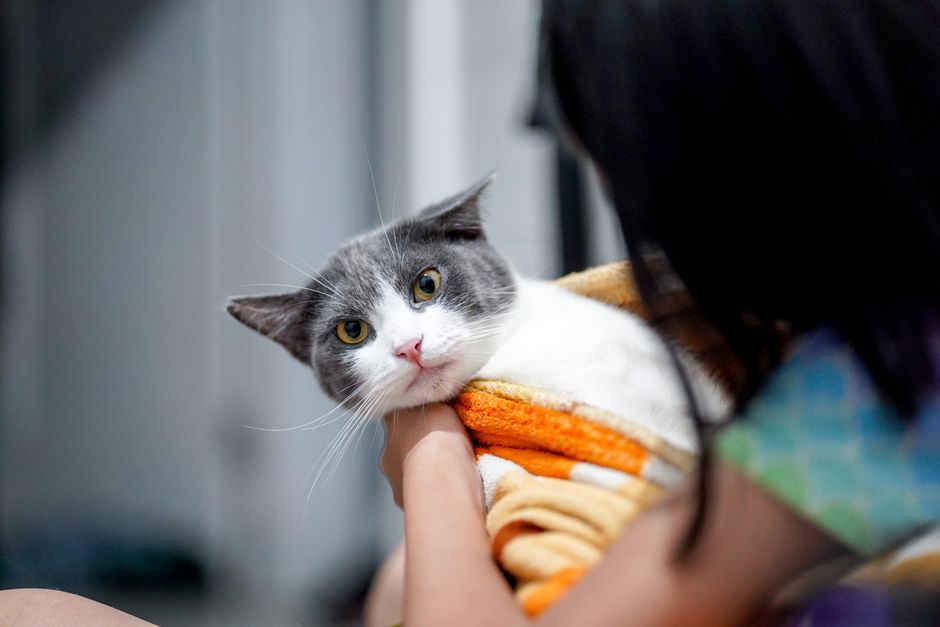
Never lift or drag her by the scruff, the loose skin on the back of her neck. In its position statement on scruffing, iCatCare says scruffing should never be used routinely in cat care.
How Should You Carry the Carrier?
Carry it like something fragile, not like a shopping bag. iCatCare says to hold the carrier underneath rather than by the handle. Try not to swing it or bump it against your legs. Cat Friendly Homes suggests carrying it with both arms, like a valuable package.
Cover it with a towel or a light blanket. Cat Friendly Homes says this blocks her view of the changing scene around her. Leave the air vents uncovered, so fresh air still gets in.
In the car, iCatCare suggests the footwell behind a front seat, or the back seat with the seatbelt holding the carrier in place. Never put her in the trunk, where the air can be poor and she may overheat.
When Should You Talk to Your Vet?
If every trip ends in panic, bring your vet into the plan. Training helps many cats over time. Some cats need more help than a plan at home can give.
Talk to your vet if your cat does any of these on trips:
⚠️ Talk to your vet if trips look like this
- Panics and fights so hard she could get hurt
- Drools
- Wets or soils herself in the carrier
- Throws up in the car every time
- Hurts herself trying to get out
Open-mouth breathing is a different matter. In a cat, it can mean overheating or breathing trouble. Stop somewhere cool. If her breathing doesn't settle, call your vet that day.
Cat Friendly Homes says to talk to your veterinarian if your cat hasn't gotten used to the carrier even with practice. Your vet can suggest options that make visits easier for her. Call before the appointment, not from the parking lot.
One more sign matters. A calm cat who suddenly hides or lashes out when you touch her may be in pain. That's a vet check first, carrier or not.
If you do only one thing this week, bring the carrier out and leave it in the living room. Open the door, add her blanket and drop in a snack now and then. The first time you find her napping in there, the fight is already half over.
Questions this guide did not cover
How long does carrier training take?
It depends on her age and her past. Fear Free Happy Homes says a kitten may learn in as little as a few days. An adult cat with bad carrier memories may need several months of practice, a couple of minutes a day. Slow progress still counts.
Should I feed my cat before the vet trip?
Usually, hold back food for a few hours first. Cats Protection, a UK cat charity, suggests limiting food for a few hours before the journey, unless your vet has told you otherwise. It means less chance of vomiting or a toilet accident on the way.
My cat's carrier smells like the vet. What should I do?
Wash it before your next practice session. Cat Friendly Homes suggests cleaning an old carrier well with an unscented cleaner, rinsing it and leaving it in the sun. Then put fresh bedding in it that smells like home.
Can my cat stay in the carrier during the exam?
Often, yes, if the top comes off. iCatCare's guide for cat carers explains that the top half can be removed, so your cat can be examined while she stays in the bottom half. Ask your vet team if they can work that way.
Related reading
- Do Cat Pheromone Diffusers Work? The Evidence and a Fair Trial
- Why Does My Cat Hide From Guests? A Calm Holiday Plan
About this article
Researched and written by the LitterBond Team. Sources include VCA Animal Hospitals, International Cat Care, PetMD, AAHA and Cat Friendly Homes. Reviewed and updated October 23, 2026. LitterBond does not employ veterinarians; for medical decisions about your individual cat, always consult your veterinarian.


