
How to Clean Cat Tear Stains Gently (and When to Call the Vet)
LitterBond Team
By the LitterBond Team · Researched against iCatCare, Cornell Feline Health Center and VCA guidance · Last updated: September 27, 2026
Rust-brown streaks under both eyes. Crust stuck in the inner corners. On a white face, your cat can look like she cried rust. And every wipe seems to spread the stain instead of lifting it.
Here is how to clean cat tear stains without hurting her. First, look at the eye itself. Soften any crust. Then wipe the fur outward from the inner corner. Never touch the eye, and use a fresh pad for each eye. Dry the fur. Do it again tomorrow.
Is the eye red, squinting, swollen or cloudy? Is there thick yellow or green discharge? Is only one eye tearing? Then skip the wipe and call your vet.
The short version:
-
1
Check the eye first
Red, squinting, cloudy, thick discharge, or only one eye? Call your vet instead.
-
2
Soften the crust
A cotton ball with clean water, or a rinse at the inner corner.
Why: dry crust smears when you rub it.
-
3
Wipe outward, one pad per eye
Inner corner out, along the fur. Never on the eye.
-
4
Dry the fur
Pat it with a soft, clean cloth. Do it again tomorrow.
Why: wet fur keeps picking up color.
Check for Vet Signs First
Tear stains are usually a cleaning job. A sore eye is not. No wipe will help a sore eye. So look at the eye in good light before you reach for a pad.
Start with what normal looks like. International Cat Care says your cat's eyes should be "clear, bright and free of discharge or inflammation." This routine is for clear, watery tears in a cat who eats, plays and acts like herself.
⚠️ Vet first, not a wipe, if you see:
- Red or puffy eye or eyelid
- Squinting, or blinking much more than usual
- Thick discharge, or yellow or green discharge
- A cloudy, milky-looking eye
- Pawing or rubbing at the eye
- Tearing in one eye only
- Tearing that is new, or heavier than usual
The Cornell Feline Health Center lists signs of conjunctivitis. They include squinting, lots of blinking, and discharge that can be "thick and dark-colored." A cat with a sore on the eye's surface may squint or rub the eye. The eye may look cloudy, too.
What about one watery eye? PetMD names a cold, an injury and a blocked tear duct as common causes.
If you notice redness, discharge, swelling, squinting or persistent scratching, stop and see your vet. International Cat Care says eye problems "should be investigated as soon as possible."
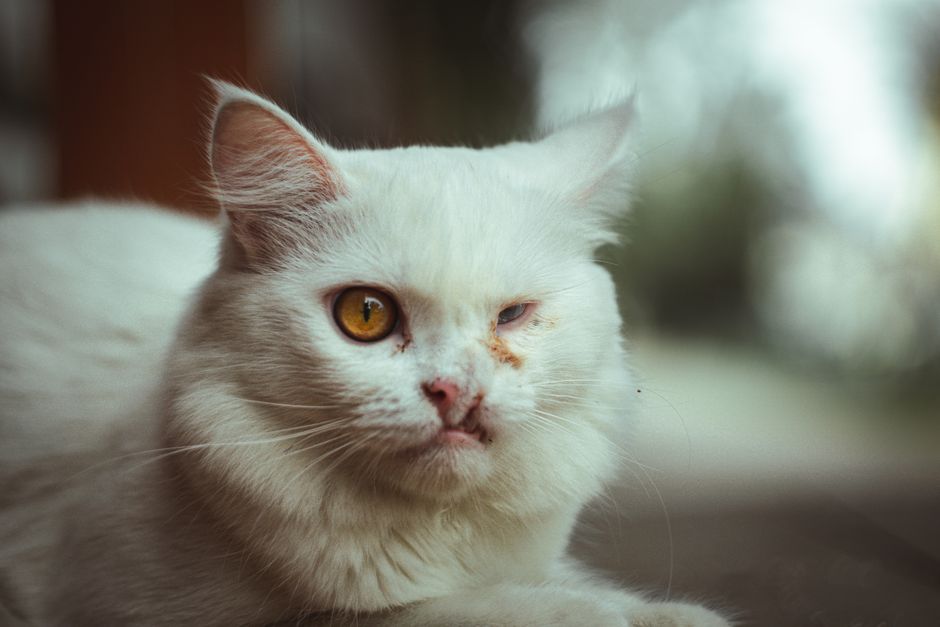
One more thing. VCA Animal Hospitals suggests a vet visit for a cat with tear stains. That rules out a hidden problem. Once your vet has checked her, the routine below is for normal, clear tears.
Know Why the Fur Turns Brown
Brown stains under cat eyes come from the tears, not from dirt. VCA Animal Hospitals explains it. The red or brown tint comes from molecules that contain iron, called porphyrin. Some cats have more of it in their tears than others. It shows most on white or light fur.
So why do the tears land on the fur? Often it is just the shape of the eyelids. Tears spill onto the face instead of draining down into the nose. VCA calls that "only a cosmetic issue."
Flat-faced cats have it hardest. International Cat Care names Persians and Exotic Shorthairs. Their short muzzles and other face features mean tears can't drain into the nose the normal way. The result is runny eyes, and often a stained face. VCA names Himalayans, too. Vets call this extra tearing epiphora.
Most cats don't need the area around their eyes cleaned. A very flat-faced cat is the exception.
That also explains the smear:
- Dry crust holds color. Rub it dry, and you spread it.
- One pad for two eyes moves gunk. It carries mess from one side to the other.
- Damp fur keeps staining. Wet fur keeps soaking up color.
Fix those three things, and the routine starts to work.
Skip Home Remedies Near the Eye
The internet is full of tear stain tricks. Keep them away from your cat's eyes.
VCA warns against products with hydrogen peroxide. It says they "can cause severe damage if splashed into the eyes." The same goes for vinegar, makeup remover and powders. If it wasn't made for a cat's face, it stays off her face.
Scented wipes and sprays stay off, too. Cats are sensitive to essential oils and strong scents.
You will also see pills and special foods sold for tear stains. Talk to your vet about those before you try them. None of them replaces a clean, dry face.
And no cat tear stain remover clears old stains in one pass. That goes for homemade ones and store-bought ones. Gentle cleaning, done again and again, is what works.
Settle Her Before You Start
A cat who pulls away from a pad is not being difficult. Her face is tender. She needs to trust the routine first.
Pick a quiet moment, when she is already relaxed. Start by stroking her cheeks and under her chin. Keep sessions short and calm. If she only allows one eye today, do one eye.
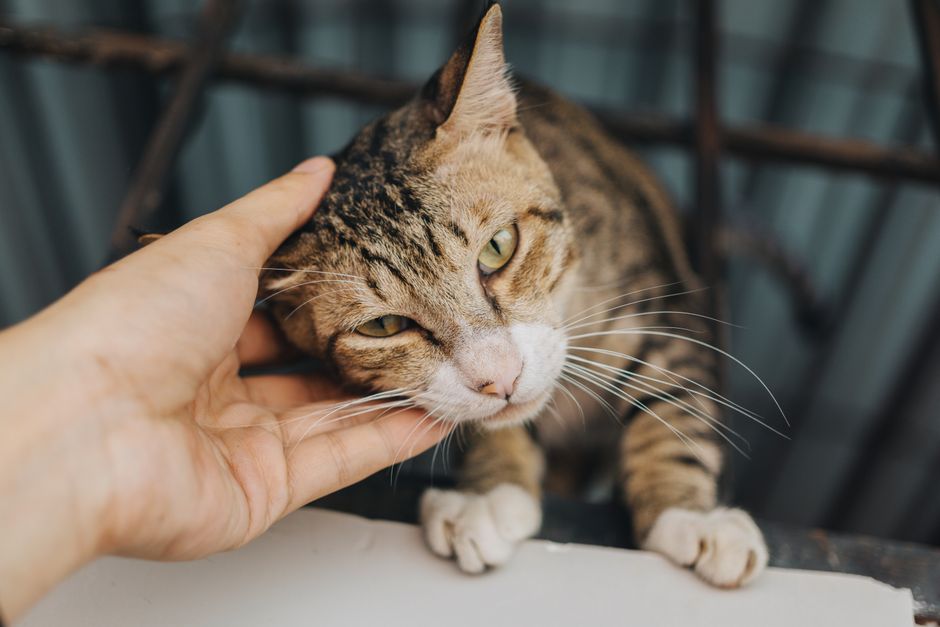
Get everything ready before you pick her up:
- Pads. Soft, round cotton pads or cotton balls.
- Liquid. Clean water or an eye rinse.
- Cloth. A soft, clean cloth for drying.
- Light. A bright spot, so you can see the corner of the eye.
- Reward. A favorite snack for afterward.
Is she very wriggly? Try a loose towel wrap, sometimes called a purrito. Drape a towel over her body and shoulders. Tuck her front paws in, and keep her head free. A second person can help, too. One strokes and steadies. The other wipes.
Stop before she gets upset, not after. Ending while she is calm makes tomorrow easier.
International Cat Care gives one firm rule: never touch the eyeball. It hurts, and your cat will try to avoid the experience in the future.
Soften the Crust at the Corner
Dried crust will not wipe off cleanly, so soften it first. Picking at it with a fingernail pulls her fur. It also puts your nail right next to her eye.
The simplest choice is a cotton ball dampened with clean water. That is what International Cat Care suggests. VCA suggests a warm, wet washcloth. Lukewarm is right. Test it on the inside of your wrist first.
You can also use a cat eye wash. LitterBond's Eye Wash is a 60 ml bottle with a long, curved tip. Hold the tip close to the inner corner, but not touching it. The rinse helps flush away dust and debris. It softens crust, so you can wipe it off instead of picking. It is an everyday cleaning rinse, not a medicine.
Pick the method that fits your cat
Rinse, then padTip close to the corner, not touching.
Soaked padHold it on the crust for a few seconds.
Clean waterA damp cotton ball does the job.

Any of the three will soften crust. Choose the one she fights least.
If you notice redness, discharge, swelling, squinting or persistent scratching, stop and see your vet.
Wipe Outward, One Pad per Eye
Wipe from the inner corner outward, along the stained fur. Stay on the fur, never on the eye.
Use a fresh pad for each eye. Most people skip this step. It is why the stain seems to travel.
Go slowly, with light pressure. Several soft strokes lift more than one hard rub. They also don't tug at the thin skin under her eyes. For a flat-faced cat, once or twice a day is a common rhythm. A cat who barely tears may only need it now and then.
LitterBond's Tear Stain Wipes are 120 round, soft cotton pads. They come pre-moistened with a plant-based formula, in a tub with a snap lid. Use one pad per eye, then toss it. The pads help visibly fade tear stains with regular, gentle wiping. You can use them on her chin and around her mouth, too.

Pads like these often get sold as a cat tear stain remover. Think of them as a daily cleaning pad instead.
Is your cat fussy about new smells? Spot-test first. Try one pad on her chin before her eyes. Cats are sensitive to essential oils and strong scents.
This is also how to clean a Persian cat's eyes day to day. Same direction, same fresh pad. You just do it more often.
Dry the Fur, Then Repeat Daily
Finish by patting the fur dry with a soft, clean cloth. VCA says to always dry the area after you clean around the eyes. Its page on extra tearing adds that a clean, dry face helps. The stain comes from tears sitting on the fur, so dry fur matters.
So how do you get rid of cat tear stains for good? You keep them from building up. Older stains fade over days of gentle wiping, not in one pass. Fresh tears keep coming, so the routine never really ends. It just gets easier.
Pick the same time every day, like after her evening meal. It becomes a habit for both of you.
Want to see progress? Take a photo of her face in daylight once a week. Day to day, the change is hard to spot.
Are the stains just as dark after a few weeks of daily care? Is the tearing getting heavier? Then ask your vet to take another look.

For the wipe step
One soft pad per eye, every day
120 soft, pre-moistened cotton pads for the fur around the eyes, never the eye itself. Stains fade with gentle daily wiping, not in one pass. If you notice redness, discharge, swelling, squinting or persistent scratching, stop and see your vet.
See the tear stain wipes →Everything for this routine is in our eye, ear and skin care collection. For her coat, see how to clean a cat without a bath. For her teeth, see how to clean cat teeth without brushing.
A cat who squirms away from the pad isn't a difficult cat. She just needs shorter sessions. Learning how to clean cat tear stains is mostly patience. If you see redness, discharge, swelling or squinting, stop and call your vet. Otherwise: one pad, one eye, a little every day.
Questions this guide did not cover
Can I put human eye drops or saline in my cat's eyes?
Not unless your vet tells you to. PetMD advises against human eye drops or human eye solutions unless a veterinarian directs you to use them. If her eye looks sore enough that you want drops, book a visit instead.
Can a vet clear a blocked tear duct?
A vet can test for a blocked duct and try to flush it open. VCA describes the test: a drop of fluorescent dye goes in the eye, and the vet watches for it at the nostril. If the duct seems blocked, the cat is put under anesthesia and the duct is flushed. The Merck Veterinary Manual adds that surgery may be needed if the duct is badly damaged.
Should I trim the fur around my cat's eyes?
Short fur there can help, but let a pro hold the scissors. VCA lists keeping the fur around the eyes trimmed short as one way to manage tear staining. Blades that close to an eye are risky if she jerks her head. Ask a groomer or your vet clinic to do the trim.
Why does the skin under her eyes look red or smell?
Skin that stays wet for days can get sore. VCA lists odor and skin irritation among the signs that can come with extra tearing. That is past what a wipe can fix. If the skin looks red or raw, or it smells, have your vet check it.
Related reading
- How to Clean a Cat Without a Bath: A Calm, Waterless Routine
- How to Clean Your Cat's Teeth Without Brushing: 7 Options, Ranked
About this article
Researched and written by the LitterBond Team. Sources include International Cat Care, the Cornell Feline Health Center, VCA Animal Hospitals, the Merck Veterinary Manual and PetMD. Reviewed and updated September 27, 2026. LitterBond does not employ veterinarians; for medical decisions about your individual cat, always consult your veterinarian.


