
How to Get Your Cat to Use the Scratching Post Instead of the Couch
LitterBond Team
By the LitterBond Team · Researched against iCatCare, Cornell Feline Health Center and ASPCA guidance · Last updated: October 3, 2026
The couch arm has threads hanging off it again. The scratching post you bought sits in the corner, still spotless. Your cat walks right past it, reaches up the side of the couch, and digs in.
Here's the short answer. Most cats will switch to a post when three things are right: the spot, the post itself, and what she gets for using it. International Cat Care (iCatCare) calls scratching normal and necessary. Cats need to do it. So the goal is not zero scratching. It's a better place for it than your couch.
Below: why she scratches, why the post gets ignored, and how to pick, place and reward a new one. Plan on weeks, not days.
Know Why She Scratches
Scratching does three jobs for your cat, and a couch does all three well. First, it keeps her claws in shape. iCatCare explains that dragging the claws down a surface pulls off the worn outer layer. A sharp new claw sits underneath.
Second, it's exercise. iCatCare says scratching works the muscles in her front legs and spine. Humane World for Animals adds that cats often scratch just to get a good stretch.
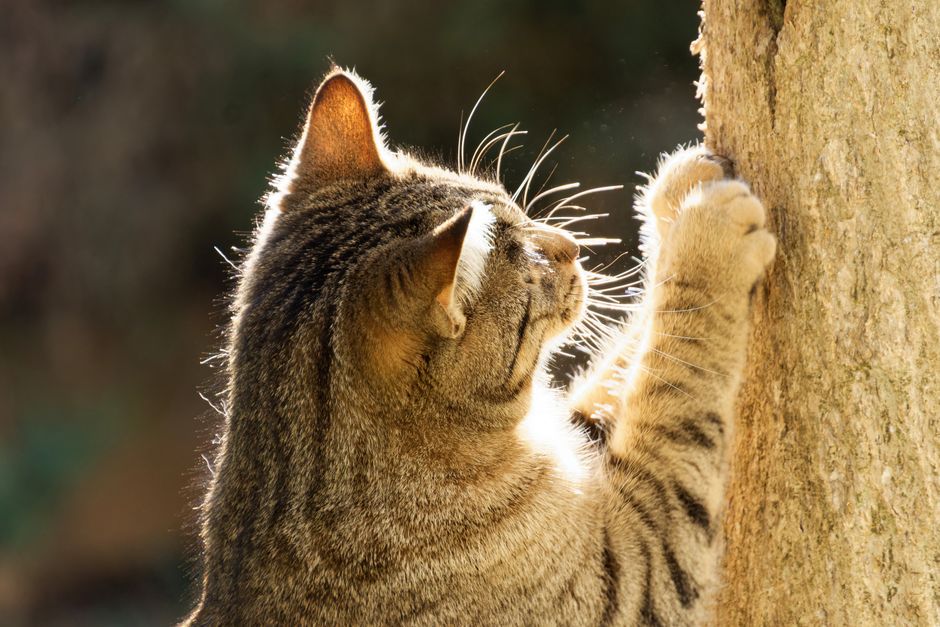
Third, it's a message. The Cornell Feline Health Center calls scratching largely a marking behavior. Glands in her paws leave her scent behind. The torn fabric is a sign other cats can see, too.
That's why the couch wins. It's big, it's steady, and it sits in the middle of her home. It may also be where she naps. iCatCare notes that cats often scratch after they sleep.
Find Out Why the Post Gets Ignored
A post she ignores is usually telling you what's wrong with it. Before you buy another one, check yours for the four common problems.
📍 Wrong spot
It sits in a back room or a corner, far from where she scratches now.
📏 Too short
She can't stretch out to her full length on it.
⚖️ Too wobbly
It tips or slides when she pulls. iCatCare notes that lightweight scratchers can move around during use.
🧶 Wrong surface or angle
She scratches rough fabric up high, and the post is soft carpet. Or she scratches the rug, and the post stands upright.
Then watch her for a few days. Where does she scratch? Does she reach up high, or scratch flat along the floor? Does she pick rough fabric, bare wood or the rug? Cornell suggests matching the new post to what she already likes. Her habits are your shopping list.
Choose a Post She'll Want
Pick a post that is tall, steady and rough enough to beat the couch. Most ignored posts fall short on at least one of these.
Tall Enough for a Full Stretch
Steady Under Her Weight
The post should not wobble or tip when she pulls on it. Cornell says it needs to be sturdy enough that it won't topple. A wide, heavy base helps. If it still moves, stand it against a wall.
A Surface She Likes
Humane World says most cats like sisal, a rough rope. Some cats prefer corrugated cardboard or wood. The Feline Veterinary Medical Association (FelineVMA) also lists rough fabric and logs. If she loves the carpet, Cornell suggests a carpet-covered post.
The Right Angle
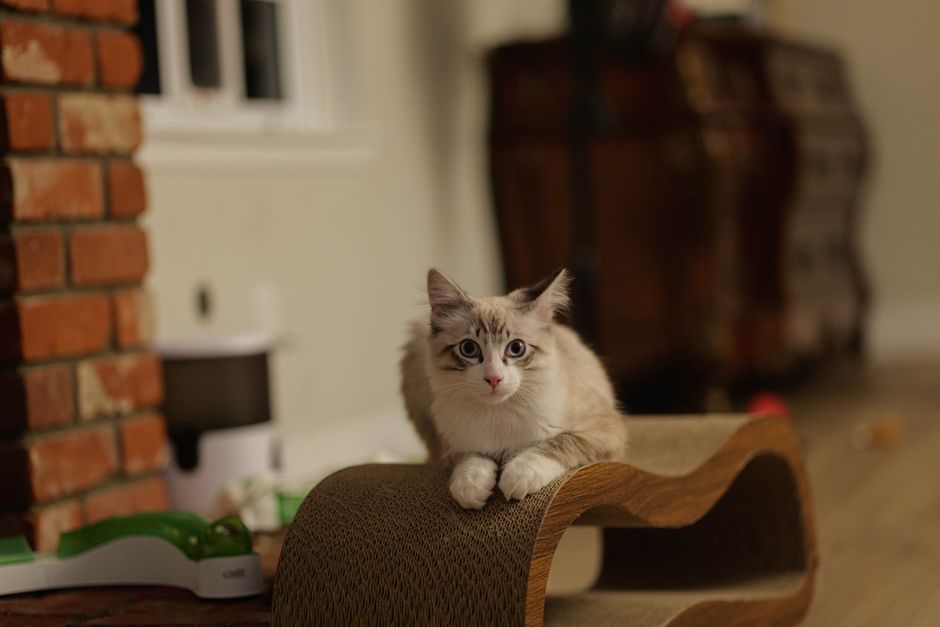
Some cats scratch up. Others scratch flat along the floor. The ASPCA notes that some cats like vertical posts, some like flat ones and some like slanted ones. iCatCare adds that kittens and senior cats may prefer large angled or flat cardboard scratchers.
If she scratches the rug, try a flat scratcher first. You can also lay a post on its side, as Humane World suggests.
Put It Where She Already Scratches
The best spot for a new post is right next to the spot she already uses. Humane World puts it simply: if your cat scratches the couch, put the post next to the couch. Cornell and FelineVMA say the same. Stand it in front of the torn corner, so it's the first thing her paws meet.
Put a second scratcher near where she sleeps. FelineVMA notes that cats often stretch or scratch when they wake up.
A 2024 study in Frontiers in Veterinary Science asked the owners of 1,211 cats in France about scratching. Posts placed in areas the cat often used were better at redirecting scratching.
A few more placement tips:
- Pick a path, not a corner. A spot she walks past every day beats a quiet back room.
- Count your cats. iCatCare suggests one post per cat, plus one extra, each in a different spot.
- Move it later, and slowly. Once she uses the post, you can shift it bit by bit. Cornell describes moving it gradually. VCA Animal Hospitals says to wait until the habit is set.
Make the Post Worth Her Time
A new post has to be more interesting than the couch, at least at first. Scent, play and rewards do that job.
Add Catnip or Silvervine
Cornell suggests putting catnip or a favorite snack on or around the post. Humane World suggests rubbing catnip on the post for the first several days. iCatCare notes that catnip can help draw a cat's attention to a scratching post.
Loose catnip falls off, though. A light mist is another way to add the scent. LitterBond's catnip and silvervine spray puts both plant extracts right on the post. The idea is to make the post the most interesting spot in the room. Mist the post, never your cat, and keep it away from her eyes.
Results vary from cat to cat. Some cats react at once. Others warm up over a few sessions. A spray made from these plants won't change a cat who ignores both of them.
Not every cat reacts to catnip. If yours doesn't, here's why some cats don't react to catnip. Some cats that ignore catnip respond to silvervine, a different plant. See how silvervine and catnip compare. Young kittens often don't react to catnip until around six months old.

Catnip & play
Make the post the most interesting spot
A 20 ml glass mist bottle with catnip and silvervine botanical extracts. Mist the scratching post or a toy, never your cat, and keep it away from her eyes. Some cats react at once; others warm up over a few sessions. Results vary from cat to cat.
See the catnip & silvervine spray →Play Around the Base
Play is an easy way to get her claws on the post. iCatCare suggests a simple hunting game around the base. Humane World suggests a fishing rod toy. Drag a wand toy slowly up the post, and let the feather pause just above her reach. When she grabs for it, her claws sink into the post.
Never press her paws onto the post yourself. iCatCare warns that forcing it can hurt her and harm your bond.
Reward Every Use
Catch her using the post, and make it pay. FelineVMA says cats can learn to use a scratcher when each use earns their favorite snack. Add a soft word of praise. iCatCare also suggests leaving a few snacks around the base or on top.
Here's a simple first session:
-
1
Scent the post
Rub on a pinch of catnip, or mist it lightly where her paws will land.
-
2
Bring out the wand toy
Drag it slowly up the post.
-
3
Let her win
Let her catch the toy while her claws are on the post.
-
4
Reward her
Give a favorite snack and a soft word the moment she scratches.
-
5
End while she's still keen
A few minutes is plenty. Try again tomorrow, same spot.
Make the Couch Less Tempting for Now
While she learns, make her old spot less fun to scratch. Cornell suggests covering it with blankets, sheets of plastic or double-sided tape. Humane World says a tight-fitting sheet is the easiest fix for furniture, with double-sided tape for smaller spots. iCatCare suggests a thick, heavy blanket or a one-sided sticky plastic film.
Leave the cover on while she builds the new habit.
Skip citrus or perfumed sprays on the couch. Cats are sensitive to essential oils and strong scents.
Trimming her nails helps too. Cornell says regular trims keep the damage down. It also mentions plastic nail caps glued over the claws, replaced every six to 12 weeks. iCatCare adds a limit, though. Trims don't meet her need to scratch, so she still needs the post.
Skip Punishment and Give It Weeks
Yelling or spraying water won't teach her to use the post. Cornell says cats don't respond well to punishment, and it may lead to aggression. A squirt of water teaches her that you bring the trouble, not the scratching. FelineVMA adds that punishment can raise her stress and lead to more scratching.
If you catch her at the couch, stay calm. Pick up the wand toy and lead her to the post. Reward her when she scratches there.
Declawing is not a shortcut. The Feline Veterinary Medical Association (FelineVMA, formerly the AAFP) strongly opposes declawing as an elective procedure. Cornell explains why it's serious. Declawing is an amputation of the bones at the tips of the paws, not a simple removal of the nails.
Stress can play a part in scratching too. The 2024 study's authors suggest stress and frustration may drive some unwanted scratching. They recommend several short play sessions that end in a successful catch.
A cat who loses interest in play and food at the same time needs a vet check.
Then be patient. Each good session makes the post a little more hers.
If you do one thing tonight, move the post. Stand it right next to the couch spot she uses most, and check that it doesn't wobble. Add a pinch of catnip or a light mist of the spray. Drag a wand toy up it, and reward the first scratch. Give her a few weeks, and she may walk right past the couch on her way to the post.
Questions this guide did not cover
What if my cat scratches the walls instead?
Copy the wall with her scratcher. International Cat Care says a cat who scratches textured wallpaper needs an upright scratching area with a similar texture and ridges. Put it against that same stretch of wall.
What else can I put on furniture to make it less appealing?
A few textures are worth a try. The ASPCA lists sandpaper, or a vinyl carpet runner laid upside down, knobby side up. VCA Animal Hospitals adds aluminum foil and a loosely draped piece of fabric.
Why does my cat scratch when I come home?
Often it's excitement. Humane World for Animals says cats scratch to express emotions, like excitement or stress. A scratcher near the front door gives that burst of energy a place to go.
Do cats scratch furniture more at night?
Some do. In a 2024 study in Frontiers in Veterinary Science, cats that were active at night, or very playful, scratched more in unwanted places. The authors recommend regular, brief play sessions with suitable toys.
Related reading
- Why Doesn't My Cat React to Catnip? 7 Reasons and What to Try Next
- Silvervine vs. Catnip: What's the Difference, and Which Should You Try?
About this article
Researched and written by the LitterBond Team. Sources include International Cat Care, the Cornell Feline Health Center, the ASPCA, VCA Animal Hospitals and the Feline Veterinary Medical Association (FelineVMA, formerly AAFP). Reviewed and updated October 3, 2026. LitterBond does not employ veterinarians; for medical decisions about your individual cat, always consult your veterinarian.


