
How to Groom a Long-Haired Cat at Home (and Stop Mats Before They Start)
LitterBond Team
By the LitterBond Team · Researched against VCA and ASPCA guidance · Last updated: November 1, 2026
You run your hand along her side and find a knot. It sits behind her ear, or under one front leg. Last week it was not there. Now you wonder what else you missed.
Here is the short answer on how to groom a long haired cat. Do a two-minute check of her mat spots each day. Do a fuller comb-through once a week. Stop each session while she is still calm. Cat charities and vets say long coats need brushing daily, so even a quick pass counts.
This guide shows where mats start and a seven-step routine. It also covers the rear end, baths and the point where a vet or groomer should take over.
Pick Tools That Suit a Long Coat
Start with a comb, not a brush. A comb reaches the base of the hair, where tangles begin.
VCA Animal Hospitals says metal combs with long, offset teeth suit medium and long coats. It adds that some tools lift loose undercoat or tease out small mats. A slicker brush is a common second tool. Press lightly, and skip the face.
Our Wooden Handle Steel Comb is one pin comb to consider. The Wide Tooth (Long Hair) style has 29 longer pins with wide gaps. The Long & Short Tooth style has alternating pins for loose undercoat. It lifts loose hair and works through small tangles. It is not made for tight mats. You can browse more cat grooming tools if you want a second option.

Whatever you pick, keep the pressure light. Skin is thin over the spine and belly. Never use scissors on a mat. VCA says to leave that job to clippers in expert hands.
Check the Mat Hot Spots First
Mats start where fur rubs. Legs move, collars shift and cats sit on their back ends. Those spots tangle first.
VCA lists the areas under the legs, the rear end, the chest, the back and the collar line. Its coat-care page adds the area behind the ears. Use this table as your daily check.
| Spot | Why it tangles | Your first move |
|---|---|---|
| Behind the ears | Fine, soft hair rubs on bedding | Feel with two fingers, then comb in short strokes |
| Under the front legs | Fur rubs with every step | Lift the leg gently and comb outward |
| Chest and neck | Collar and food drips | Comb upward toward the chin |
| Back of the hind legs | Long "pants" drag and twist | Comb from the knee down in small sections |
| Belly | Fur is fine and she lies on it | Check by touch first. Comb only if she allows |
| Rear end | Litter and loose stool cling to long hair | Look every day. Ask a vet or groomer for a trim |
Run your fingertips through each spot. A knot feels like a small lump or a stiff patch. Catch it early, and a few light strokes may be enough.
Use the same order every day. Try ears, front legs, chest, hind legs, belly, then the rear end. A fixed order means you never skip the spot she dislikes. It also helps you notice change. A new lump, a sore patch or a flaky area is worth a note. Tell your vet about anything that is still there after a few days.
Follow a Simple Weekly Routine
A short, steady routine beats one long battle. Cats Protection says to brush long-haired cats daily, at a calm time. ASPCA says every few days for an indoor long-haired cat. Pick the pace your cat can handle, and aim to raise it.
Try these steps once a week. Do the quick hot-spot check on the other days.
- Pick a calm moment, such as after a nap. Avoid the minutes after a meal or a play burst.
- Sit down and let her sniff the comb. Pet her first with your hand.
- Start where she likes touch. The cheeks and the back are common choices.
- Move to the belly and legs. The ASPCA says to comb the fur upward toward the head.
- Work in small layers. Lift the top hair, comb the layer below, then let it fall.
- Tease any small tangle with your fingers first. Then use the comb's tip.
- Stop when her tail lashes, her skin ripples or she turns to bite. Give her a snack.
The Wooden Handle Steel Comb works well in step 6. Pinch the hair at the base so it does not tug. Slide the gathered hair off the pins when you finish a section.
Reddit users often say the same thing about short sessions. One thread has owners who get only a few strokes before their cat swats. Others in similar threads say it took weeks or even years for a cat to enjoy it. A few calm strokes still count. Add a little time each week.
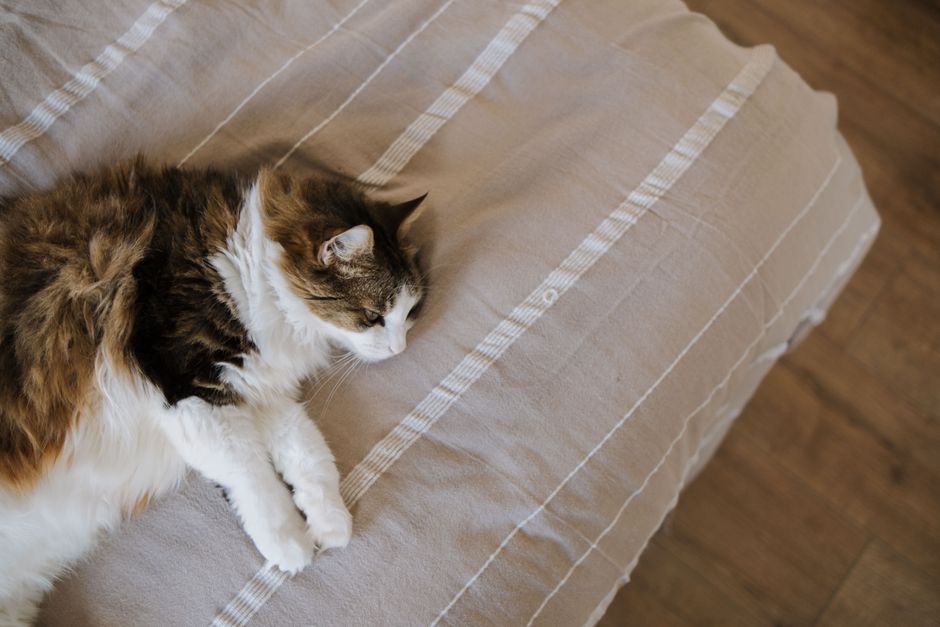
If she runs off, shrink the goal. Pick one hot spot a day. Comb it for ten seconds. Give a snack and walk away. The next day, add a second spot. Some owners say a sleepy cat fights less, so try after a nap. Never hold her down to finish. A cat who learns that grooming ends when she says so is more likely to come back.
Older and stiff cats need extra help. The RSPCA says older cats, or cats with joint problems such as arthritis, may need more help. If she can no longer twist to reach her back or hind legs, check those spots for her every day. Keep the pressure very light.
Clear the hair when you finish. Cats Protection suggests vacuuming up loose hair after you brush. Hair left on the floor or her bed can end up back in her coat.
Handle Small Tangles and the Rear End
Small tangles are a finger job. Big mats are not. If a knot is loose and away from the skin, pinch the base and tease it apart from the tip. Then comb it out. Our guide on how to get mats out of cat fur covers the full method.
If a mat is large or tight against the skin, stop. Cats Protection says not to cut mats out yourself. VCA says to use clippers, never scissors. Skin can fold into a mat and nick easily.
The rear end needs its own plan. Long hair there can catch litter and stool. Reddit users often mention a "sanitary trim" done by a vet or a cat groomer. Some say cat groomers are hard to find, so ask your vet first. For light dirt on the coat, the Waterless Bath Glove Wipes are one no-rinse option. Stroke head to tail, and skip the eyes and the inside of the ears. They suit light dirt and odor, not heavy soiling. Fur that is caked needs a trim.
Check the area daily. It takes a few seconds.
Bathe Only When You Need To
Most adult cats rarely need a bath. VCA says so. Cats clean themselves, and a bath is hard on both of you.
If your cat does need one, brush out the tangles first. VCA says to do this before any bath. Wet tangles can pull tighter. Use a shampoo made for cats and rinse well. VCA suggests a fragrance-free kind. Cats are sensitive to essential oils and strong scents, so skip anything with a strong smell.
Between baths, the Waterless Bath Glove Wipes can give her coat a quick refresh. Each pack holds five gloves, and one glove covers one session. Her coat may feel damp, then it air-dries. A long-haired or very dirty cat may need a second glove.

Ask your vet before you bathe a cat who is old, in pain or stiff. A groomer or a vet can bathe her for you.
Know When to Call a Pro
⚠️ Call your vet or a cat groomer if you see any of these
- A mat that is large, tight against the skin or in many places
- Red, sore or wet skin under or near a mat
- Scabs, bald patches, bumps or heavy flaking
- Sudden mats on a cat who used to keep her coat tidy
- A cat who fights every try, so someone may get hurt
VCA says that painful mouth problems, extra weight and arthritis can lower how much a cat grooms herself. Cats Protection says that too much or too little self-grooming can point to illness. The ASPCA lists scabs, redness, hair loss and constant scratching as reasons to see a vet.
A vet can also remove mats while the cat is sedated. A summer "lion cut" is a groomer's job, not a kitchen-scissors job. VCA adds that outdoor cats need at least an inch of coat left for sun cover.

A Routine You Can Keep
Feel the three spots. Comb one section. Stop on a good note. That is enough for today.
Mats are easier to avoid than to fix. A few quiet minutes each day will do more than one long session. And if she lets you do three strokes, that is three more than yesterday.

Grooming tools
A comb for long coats
A pin comb with a solid wood handle and stainless-steel pins, in Fine Tooth, Wide Tooth (Long Hair) or Long & Short Tooth, or as a set of three. For loose hair and small tangles. Use light pressure, and leave tight mats to a groomer.
See the steel comb →Questions this guide did not cover
Should I shave my long-haired cat in summer?
Usually not. A thick coat does not mean she needs clippers. VCA Animal Hospitals notes that cats which mat easily may be more comfortable in a warm-weather trim called a lion cut. Book that with a groomer or vet. If she goes outdoors, ask how much fur to leave for sunburn cover.
Does brushing a long-haired cat cut down on hairballs?
It can. Hair you comb out is hair she cannot swallow. VCA says regular brushing lowers hairballs and loose fur around the house. A cat who suddenly starts coughing up more of them needs a vet visit, as RSPCA Australia points out.
When should I start grooming a long-haired kitten?
As soon as she settles in. VCA suggests making combing a normal, happy habit for a young cat, with snacks if needed. Think seconds, not minutes, at first.
Why does my long-haired cat's coat look dull or greasy?
Look beyond the brush. A flat, flaky or oily coat can point to a health issue, and VCA lists these changes as reasons to phone your vet. Mention any lumps or sore spots too.
Related reading
- How to Get Mats Out of Cat Fur (and When to Call a Groomer)
- Best Brush for Long-Haired Cats (Ragdoll, Persian, Maine Coon): Match the Tool to the Coat
About this article
Researched and written by the LitterBond Team. Sources include VCA Animal Hospitals, the ASPCA, Cats Protection, reddit.com and RSPCA Australia. Reviewed and updated November 1, 2026. LitterBond does not employ veterinarians; for medical decisions about your individual cat, always consult your veterinarian.


