
Vinegar vs. Enzyme Cleaner for Cat Urine: Which Actually Removes the Smell?
LitterBond Team
By the LitterBond Team · Researched against Cornell Feline Health Center, iCatCare and FelineVMA (AAFP) guidance · Last updated: October 13, 2026
You wiped the spot with vinegar. The next morning, the room smelled fine. Then it rained, the air got heavy, and the cat pee smell came back. Now it has a sharp vinegar edge on top.
So, vinegar vs. enzyme cleaner for cat urine: which one gets the smell out? For anything soft, the answer is an enzyme cleaner. Think rugs, couches and mattresses. It has to soak in as deep as the pee went, and it needs time to work. Vinegar can freshen a fresh spot on a hard floor. But it isn't made to break down the uric acid crystals that bring the smell back.
If your first try failed, you are not alone. One cat owner on Mumsnet listed all she had tried on a carpet. Bicarb. Bicarb and vinegar. Enzyme sprays. A carpet cleaning machine. "It definitely still stinks," she wrote. One reply named the likely reason. The pee had probably soaked into the floor below, so the fix had to go that deep too.
Below: why the smell comes back, what each option can and can't do, and how to make an enzyme cleaner work.
Why Does the Smell Come Back?
Cat pee changes as it sits. The part that lasts longest is also the hardest to wash out. Three things are going on at once.
- It gets worse with age. PetMD says the smell gets worse with time. Old pee gives off mercaptans. Those are the same compounds that make skunk spray stink.
- Water can't wash it out. Uric acid is part of cat pee. It does not dissolve well in water, says CatWatch. That is the cat newsletter made with the Cornell Feline Health Center. As pee dries, it can form crystals. That makes carpet and cloth harder to clean.
- Damp air wakes it up. An expert from Oregon State University Extension explains this on Ask Extension. Uric acid crystals cling tightly to things like cloth, paper and bare wood. They are not water-soluble. And the smell can come back when those things are moved or meet humid air.
So a spot can smell clean for a day, then sour again when the air turns damp. CatWatch has a plain fix. If you smell it on a humid day, repeat the enzyme cleaner step.
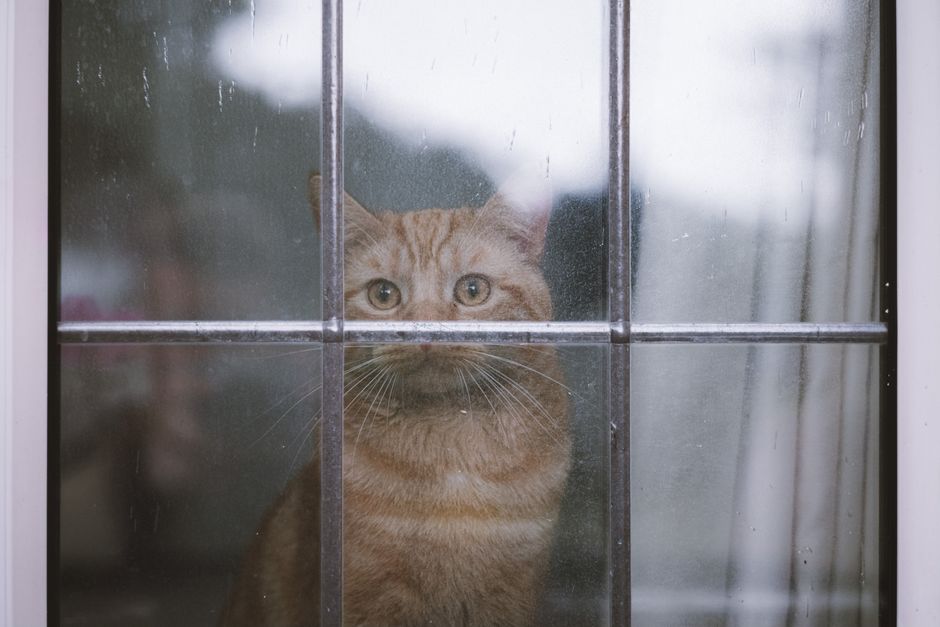
Your cat's nose matters too. The Cornell Feline Health Center notes that cats will pee or spray again in spots they have marked with their scent. It says odors must be neutralized, not just deodorized. Her sense of smell is keen. If she can still smell it, she may go back.
What Can Vinegar Actually Do?
Vinegar is not useless. It just does a smaller job than most home tips suggest.
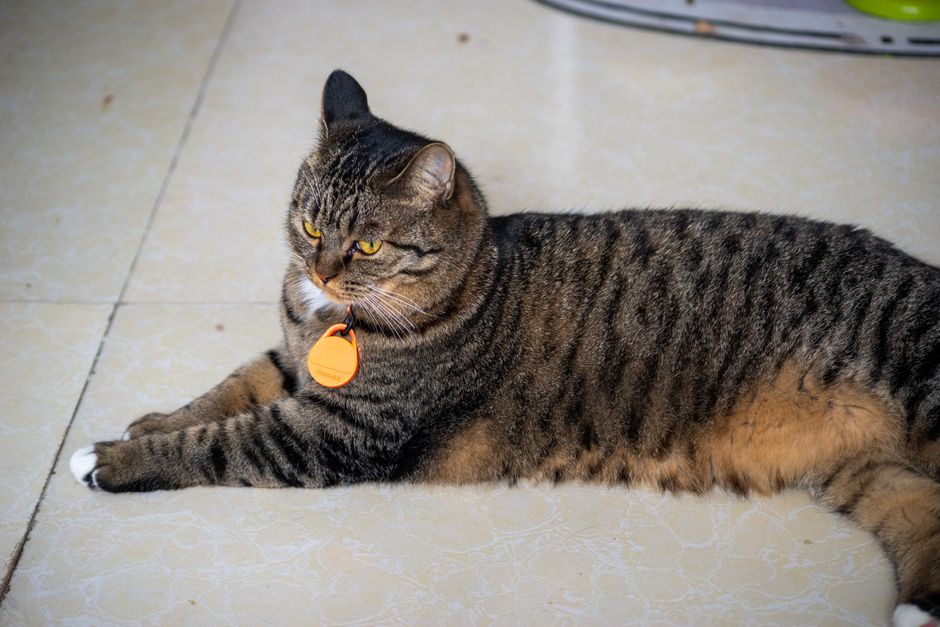
Vinegar also leaves a smell of its own. Cats.com says you may smell the vinegar itself for a while. It should fade in a few days. Cats are sensitive to essential oils and strong scents. Open a window, and keep your cat out of the room while it airs out.
One rule has no exceptions. Never use vinegar with bleach. The Missouri Poison Center warns that bleach mixed with an acid cleaner, like vinegar, gives off chlorine gas.
What Does an Enzyme Cleaner Do?
An enzyme cleaner goes after what the smell is made of. It doesn't just cover it up.
The sources line up here. CatWatch says cleaners made for cat urine break down the stuff in the urine. They don't just mask the odor. PetMD says the enzymes break down the acid in cat urine and get rid of the smell. The Extension expert suggests a cleaner labeled for urine odor, with enzymes that can break down uric acid crystals. International Cat Care also points to enzyme cleaners made for cat urine.
The catch is time. Consumer Reports notes that enzyme cleaners need a longer dwell time to work. That means how long the cleaner sits before you wipe it. PetMD says to let the cleaner sit for 10 to 15 minutes. A quick spray and wipe gives the enzymes almost no time at all.
Depth matters just as much. An enzyme cleaner only works where it reaches. Say the pee went through a rug and into the pad. A light mist cleans the top and leaves the rest. That was the point of the Mumsnet reply, too.
An enzyme cleaner for cat urine won't rescue every spot. Formulas differ, too. Consumer Reports found that each type of cleaner has its pros and cons. Still, of the common options, it is the one made to break down the part that brings the smell back.
How Do Five Common Options Compare?
It's natural to grab whatever is under the sink first. Here is how the usual options stack up against cat pee smell.
| Option | What it does | Where it fits | Its limit |
|---|---|---|---|
| Vinegar | An acid that neutralizes the salts in dried pee. | A fresh spot on a sealed floor or wall. | Not made to break down uric acid crystals. Cornell says it smells like urine. Never with bleach. |
| Baking soda | Soaks up some pee and odor. | A fresh puddle. Laundry. | Sits on top. Can't reach deep pee. |
| Hydrogen peroxide | Works on stains. | Stains on light, colorfast cloth, after a spot-test. | Can bleach cloth and weaken the fibers. |
| Enzyme cleaner | Breaks down what the smell is made of. | Carpets, rugs, couches, cat beds, mattresses. | Needs a deep soak, 10 to 15 minutes, full drying and sometimes a repeat. |
| Pro cleaning | Deep cleaning by a pro. | Leather, S or X codes, pee soaked through foam. | Soaked foam may still need replacing. |
A few notes on the middle rows. Cats.com says baking soda can absorb pee and odor. That makes it handy for a fresh puddle. But it sits on the surface. It can't reach pee that has soaked down.
Hydrogen peroxide needs care. A restoration expert told TODAY it could bleach the cloth. It could also weaken the fibers if you don't remove all of it. Consumer Reports adds that cleaners with peroxide or bleach work faster on stains. But they don't suit every surface. Spot-test on a hidden spot, and let it dry before you judge.
What Never to Use
How Do You Use an Enzyme Cleaner?
When an enzyme cleaner seems to fail, check two things. Did it reach as deep as the pee? Did it get time to work and dry? This routine covers both.
-
1
Blot
Soak up anything still wet with paper towels. Press, don't rub.
-
2
Soak
Wet the spot as deep as the pee went, and wider than you can see. The Feline Veterinary Medical Association says to clean a big enough area to remove the smell. That may be up to three times the size of the stain.
Why: an enzyme cleaner only works where it reaches.
-
3
Wait 10 to 15 minutes
Or as long as the label says. Leave it alone.
Why: enzymes need dwell time.
-
4
Blot again
Press a dry towel into the spot, hard.
-
5
Air-dry
Skip the heat. CatWatch notes a soaked carpet can take a day or two to dry.
-
6
Sniff, then repeat
Once it's fully dry, sniff up close. Old spots often need a second round.
Sniff again on the next humid day. If the smell is back, do one more round.
Cleaning a couch? Our guide to getting cat pee smell out of a couch shows how to find hidden spots and read the cleaning code.
LitterBond's Urine Odor Eliminator is made for the soak step. It is a bio-enzyme spray with persimmon tannin and plant extracts. It breaks down cat pee odor at the source instead of masking it, when you soak it deep enough. The 400 ml trigger bottle is for bigger areas, like rugs and cushions. The 100 ml mist bottle is for small spots. Here is its honest limit. It only works where it reaches, so a light spritz won't do. Old or set-in spots often need more than one round.

It has a light, fresh scent. Spot-test it on a hidden spot first, and follow your couch's cleaning code. Open a window while you work. Keep your cat out of the room until the spot is dry. Cats are sensitive to essential oils and strong scents. Never spray it on your cat. Never use it with bleach or ammonia cleaners.
Which One Should You Reach For?
The right tool depends on where the pee landed and how long it has been there.
Pick by where the pee landed
Blot, then wipeA vinegar and water wipe can cut the smell. Peed there before? Use an enzyme cleaner.
Enzyme cleaner, soaked deepSoak as deep as the pee went.
Enzyme cleaner, 2 or 3 roundsLet it dry fully between rounds.
Call a pro cleanerWater-based cleaners don't suit these.
Match the tool to the spot, not to what's in the cupboard.
When the enzyme spray fits, and when it doesn't:
✅ Good fit
Carpets, rugs and cloth couches with a W or W/S code. Also cat beds, bedding and the floor around the litter box.
🛋️ Leather, S or X code
Water-based cleaners are not meant for these.
🧽 Foam soaked through
Two or three rounds and it still smells. It may need replacing.
🩺 Peeing for a health reason
No cleaner fixes the reason she went there.
More tools for litter box smells are in our odor and home cleaning collection.
Is the Smell the Real Problem?
A cat who suddenly pees outside the box needs a vet check first. The Feline Veterinary Medical Association says every cat that starts to pee around the house needs a full exam. She also needs a urine test.
🩺 Call your vet if your cat:
- Strains in the litter box
- Cries out while peeing
- Has blood in her pee
- Keeps licking her genital area
Straining while passing little or no urine is an emergency, especially in a male cat. The Cornell Feline Health Center calls a blocked urethra "an absolute emergency." Male cats are at greater risk. International Cat Care agrees. A cat who tries to pee and can't, or passes only a little, must be seen urgently.
Once your vet rules out a health problem, keep the cleaning thorough. Cats often go back to spots that still smell. If the habit keeps up, talk to your vet. Never punish her. International Cat Care says punishment only makes a cat fearful and the problem worse.
Vinegar can make a spot smell like vinegar for a few days. But the smell your cat keeps finding hides partly in crystals vinegar isn't made to break down. You might use the Urine Odor Eliminator or another enzyme cleaner for cat urine. Either way, the soak and the wait matter more than the bottle. Soak it as deep as the pee went. Give it 10 to 15 minutes. Then let it dry all the way before you judge the smell.

For the soak step
Soak it deep, then give it time
A bio-enzyme spray with persimmon tannin and plant extracts that breaks down cat pee odor at the source. Soak the spot, wait 10 to 15 minutes, blot and let it dry. Repeat on old spots. Free US shipping on orders $39+ · 30-day returns
See the Urine Odor Eliminator →Questions this guide did not cover
Are oxygen cleaners better than enzyme cleaners?
Neither type wins outright. Consumer Reports tried nine sprays on carpet samples stained with real dog urine. Its top performers were not traditional enzyme cleaners. Still, it concluded that one formula type isn't better or worse than the other.
What if I don't have an enzyme cleaner yet?
Use biological washing powder as a backup. International Cat Care suggests a 10% solution of biological or enzymatic washing powder. Rinse with cold water, then let the area dry thoroughly. Test a small hidden patch first.
Is there a last step once the spot is dry?
International Cat Care adds one. Its soiling guide suggests a light mist of surgical spirit (isopropyl alcohol) from a plant mister once the area is dry. Scrub gently and let it evaporate. Test a hidden patch first. Open a window, keep flames away (it's flammable), and keep your cat out until it has gone.
How do I find old pee spots I can't see?
Use a black light. The Feline VMA house-soiling guide says to use a black light (UV) to find soiled areas. Search in a dark room, and mark each glowing patch with tape before you clean.
Related reading
- How to Get Cat Pee Smell Out of a Couch (Even When It Keeps Coming Back)
- Do Cat Pheromone Diffusers Work? The Evidence and a Fair Trial
About this article
Researched and written by the LitterBond Team. Sources include the Cornell Feline Health Center, International Cat Care, the Feline Veterinary Medical Association (FelineVMA, formerly AAFP), mumsnet.com and PetMD. Reviewed and updated October 13, 2026. LitterBond does not employ veterinarians; for medical decisions about your individual cat, always consult your veterinarian.


