
Why Does My Cat's Breath Smell So Bad? Causes and Vet Signs
LitterBond Team
By the LitterBond Team · Researched against Cornell Feline Health Center, VCA and AVMA guidance · Last updated: December 29, 2026
She climbed onto your chest for her evening cuddle, and you caught it. A sour, heavy smell, right in your face. You turned your head away, and then you felt a little bad about it.
So, why does your cat's breath smell? Here is the short answer. A healthy cat's breath shouldn't smell bad. The most common cause is dental disease: plaque, tartar and sore, swollen gums. Some smells point somewhere else, though, and those are a job for your vet.
Below: what's normal, what usually causes it, which smells mean a vet visit, what to check at home, and what helps day to day.
Should a Cat's Breath Smell at All?
No, a healthy cat's breath shouldn't smell bad. The Cornell Feline Health Center says a healthy cat's breath "should not be offensive." A PetMD article by Melissa Boldan, DVM, agrees. Normal cat breath, it says, should not be smelly.
Age doesn't change that. The UK vet charity PDSA says bad breath is not normal, even in an older cat. Its advice is short: contact your vet if your cat has bad breath.
That doesn't mean you need to panic tonight. The PetMD article still says to call your vet. But it calls bad breath likely not a cause for worry unless it comes with a poor appetite, vomiting or low energy.
So the smell isn't just "cat breath." It's a sign worth following up. Most of the time, it leads back to her teeth and gums.
What Causes Most Bad Cat Breath?
Dental disease is the usual cause. VCA Animal Hospitals names periodontal disease as the most common cause of bad breath in cats. That's disease of the gums and the tissue around the teeth. VCA says it comes from plaque and tartar build-up. Cornell calls it "by far" the most common problem behind bad breath.
Here is how it builds. Plaque is a soft, sticky film of germs on the teeth. Cornell explains that without brushing, plaque sticks to the teeth. Over time it thickens and hardens, and it draws even more plaque. VCA says that within days, plaque hardens into rough tartar.
The gums come next. They turn red and swell, which is called gingivitis. Cornell says this can lead, in time, to tissue and bone loss.
And the smell itself? PetMD explains it plainly. As germs and damaged tissue break down, they give off foul-smelling sulfur compounds. That is the sour, heavy smell you noticed.
Dental disease is very common in adult cats. So if her breath smells, her mouth is the first place to look.
Can Food Make Her Breath Smell?
Sometimes, but food is rarely the whole story. PDSA lists diet as one cause of bad breath. It says certain smelly cat foods can cause it.
Food can also get stuck. Cornell notes that food, a strand of hair or string can lodge in the small gaps between teeth. There it can break down and start to smell. The Merck Veterinary Manual adds that a thread, string or other object may get caught under the tongue. If you ever spot string in her mouth or under her tongue, don't pull on it. A Merck page for vets says string in the mouth must never be pulled, since it may be embedded in the tissue. Call your vet.
So how do you tell food breath from a problem? Notice when you smell it. If it's there between meals, day after day, it isn't just dinner. Cornell's advice is clear: consistent bad breath should be checked by a vet.
Which Smells Mean a Vet Visit?
Some smells point beyond her teeth, so let your vet find the cause. Cornell links a few specific smells to illness elsewhere in the body. None of them is a reason to panic. Each one is a reason to book a visit soon.
🍬 Sweet or fruity
Cornell says this might mean diabetes. Other signs are drinking a lot, peeing a lot and losing weight. PDSA compares the smell to nail polish remover.
💧 Like urine or ammonia
Cornell says this could point to kidney disease. Other signs are drinking a lot, peeing a lot and a poor appetite. PDSA likens the smell to bleach.
🤢 Foul, with vomiting
Cornell says this could be a liver problem. Watch for a poor appetite, a swollen belly, or yellow eyes or gums.
😿 Rotten, with drooling or pawing
This can mean her mouth hurts. Merck notes that pain may make a cat paw at her mouth.
Mouth pain has several causes, and your vet will look for them. One is gingivostomatitis, a long-lasting, painful inflammation of the gums and mouth lining. The Cornell Feline Health Center lists bad breath, heavy drooling and pawing at the mouth among its signs. Mouth tumors are another. Cornell's page on oral tumors lists drooling, bad breath, trouble swallowing and a swollen face.
A sudden change counts, too. If her breath changes quickly, book a vet visit. The same goes for red, swollen or bleeding gums, drooling, dropping food or a broken tooth. Vet first, no home product. A breath product can't fix a smell that comes from illness or pain.
What Can You Check at Home?
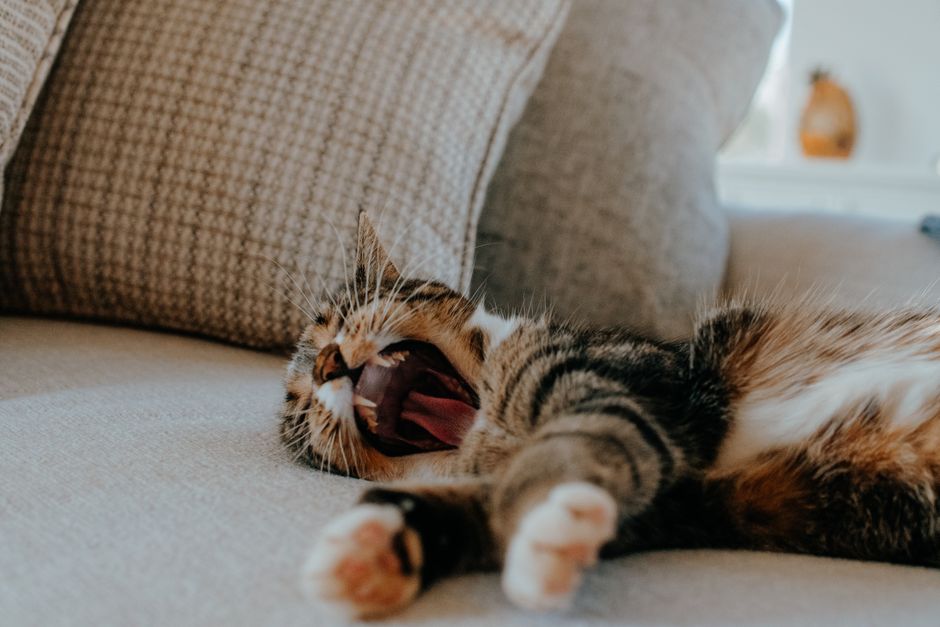
A calm look and a few notes give your vet a head start. You don't need to open her mouth wide. Wait for a yawn. Or gently lift her lip at the side while she's relaxed on your lap. Look at the outside of the teeth, where they meet the gums.
Then run through these:
- Gums. The Cornell Feline Health Center describes gingivitis as swelling, redness and discomfort where the gums meet the teeth. In bad cases, the gums bleed.
- Teeth. The AVMA lists broken or loose teeth, and teeth that are discolored or covered in tartar.
- Drooling or pawing. International Cat Care lists both as signs of dental disease.
- Eating. Cornell says a cat with dental trouble may hesitate to eat, hold her head at an odd angle while chewing, or stop eating. The AVMA adds dropping food.
- Drinking and peeing. Notice if she drinks or pees more than usual. Cornell lists both alongside some of the smells above.
If she pulls away when you touch her mouth, note that too. Merck says pain may make a cat resist any attempt to look. Never force it.
Any one of these is a reason to see your vet. Jot down what you saw and when it started. A short list helps your vet more than a guess.
What Helps Once Illness Is Ruled Out?
Daily care at home, starting with brushing if she'll allow it. Once your vet has checked her and ruled out illness, the goal is less plaque each day. The AVMA calls regular brushing the single most effective thing you can do between dental cleanings. Daily is best, it says, but brushing several times a week can help. Cornell also suggests brushing, ideally every day, with a tooth gel made for cats.
Many cats won't sit still for a brush. That's normal, and it doesn't mean her teeth go without care. This guide on how to clean cat teeth without brushing ranks the options by how much handling each one takes.
One low-handling option is Daily Purr Defense, LitterBond's enzyme dental mousse. You smooth a small dollop along her gumline with a fingertip or a soft brush. It takes about 30 seconds. Let her sniff or lick a little first.
It helps reduce plaque between vet cleanings, and it freshens breath. Fresher breath is often what you notice first, within the first week of daily use. The plaque part is gradual. It won't remove tartar, and it doesn't replace a cleaning at the vet. It's daily care, not an answer to what caused the smell. That's why the vet visit comes first.
If she won't let you near her mouth at all, a water additive asks nothing of her. The LitterBond Dental Water Additive mixes into her fresh water each day. It helps reduce plaque buildup and freshens breath, with zero handling. Results vary from cat to cat, and they are gradual.
Keep a plain bowl of water nearby at first. If she drinks less overall, stop and check with your vet. Our honest look at whether dental water additives work for cats covers how to start one.
Not sure which fits your cat? You can compare dental care options side by side.

Dental care
Daily plaque care for brush-shy cats
An enzyme foam you smooth along the gumline in about 30 seconds, from a fingertip or a soft brush. It helps reduce plaque and freshens breath between vet cleanings. Fresher breath is often what you notice first, within the first week of daily use. It won't remove tartar or replace a vet visit.
See Daily Purr Defense →What If Tartar Is Already There?
Then she needs a vet cleaning, not a breath product. Home care works on soft plaque. Once plaque hardens into tartar, no foam, gel or water additive can take it off. VCA says care for bad breath starts with a full exam of the mouth. Then comes a professional cleaning under general anesthesia, above and below the gumline.
If you've spotted a yellow-brown crust on her teeth, read our guide on whether you can remove tartar from cat teeth at home. It explains why scraping isn't the fix, and what a vet cleaning involves.
A cleaning gives her mouth a fresh start, but plaque comes right back. VCA notes that plaque starts to cling to a freshly cleaned tooth as soon as she makes saliva. Cornell says plaque will build up again within days without regular brushing. So the daily routine you start afterward is what slows the next round.
Talk to your vet about when to begin. Then pick the care she'll accept, and keep it short and steady.
That smell during the cuddle was worth noticing. It isn't a quirk, and you didn't miss it. Let your vet find the cause first. Then, a few calm seconds a day, help keep the next layer of plaque in check.
Questions this guide did not cover
Is bad breath normal in kittens?
Not when it keeps up. VCA Animal Hospitals says a kitten's bad breath often comes from teething or from eating something questionable. In young cats, though, it says consistently bad breath usually has a medical cause. Young cats can even develop gum disease before they're 1 year old. If it lasts, call your vet.
Can I use my own toothpaste to freshen her breath?
No. The Cornell Feline Health Center says never to use toothpaste for humans, because some of its parts can upset a cat's stomach. Pick a tooth gel or paste made for cats.
How often should a vet check her teeth?
At least once a year. The AVMA says your pet's teeth and gums should be checked at least once a year by your vet. It says to go sooner if you see signs like bad breath, loose teeth or bleeding from the mouth.
Related reading
- Can You Remove Tartar From Cat Teeth at Home? The Honest Answer
- Do Cat Dental Water Additives Actually Work? An Honest Look
About this article
Researched and written by the LitterBond Team. Sources include the Cornell Feline Health Center, VCA Animal Hospitals, the American Veterinary Medical Association (AVMA), International Cat Care and the Merck Veterinary Manual. Reviewed and updated December 29, 2026. LitterBond does not employ veterinarians; for medical decisions about your individual cat, always consult your veterinarian.


