
Why Won't My Cat Sleep in Her Bed? 7 Reasons and Fixes
LitterBond Team
By the LitterBond Team · Researched against iCatCare and Cornell Feline Health Center guidance · Last updated: December 2, 2026
The new bed came last week. It's soft, round and nicer than your own pillow. Your cat sniffed it once. Then she climbed into the cardboard box it came in. Since then she has slept in the box, on your pillow and in the laundry basket.
So you type "why won't my cat sleep in her bed" into your phone. Most often, the bed doesn't give her what she wants yet. Cats pick a sleeping spot for warmth, height, quiet and a smell they know. A new bed in the wrong place can miss all four. So the fix is often about the spot as much as the bed.
Below are seven reasons a cat won't use a new bed, with a fix for each. You'll also get a simple way to bring in a new bed. And you'll see the signs that mean a call to your vet.
Do Cats Sleep in Just One Spot?
Most cats never pick one bed for good. Cats Protection, a UK cat charity, says "cats like to regularly switch between different sleeping locations". It says they do it to protect themselves from fleas and other parasites.
A guide on Catster agrees. Cats like to switch things up, it says, so don't expect them to use the bed all the time.
So set a fair goal. You're not after a cat who lives in her bed. You want a bed that turns into one of her regular spots. If she naps in it after breakfast and on the couch after dinner, it's working.
Is It Where the Bed Sits?
Check the spot first. The same bed can be ignored in one corner and loved in another.
1. It's in a busy or open spot
The Ontario SPCA says to put the bed in the sun. It also says to keep the bed away from small children and other animals. A bed on a shelf or ledge should be fixed so it can't fall off with her inside.
Height counts too. "Cats feel safest when they are somewhere up high," says Cats Protection. International Cat Care says cats need to rest and watch over their surroundings from high places. And Cats Protection adds that cats like to sleep away from where they eat, drink and use the litter box.
Here's where to put a cat bed:
- Sun: a window spot that gets light for part of the day.
- Quiet: a room people don't walk through all day, away from kids and other pets.
- Height: a shelf, chair or window perch, with the bed fixed so it can't slide.
- Distance: a spot well away from her food, water and litter box.
Is the bed in a hallway or next to the litter box? Then moving it may be the only fix you need.
2. It's too cool or drafty
Warmth decides a lot. "Cats prefer warm places to sleep," says International Cat Care. The Cornell Feline Health Center says cats like to seek out warm places to rest. It also says to keep an older cat's favorite bed out of drafty areas. Cats Protection says beds should be away from drafts, but not too close to heat sources.
That's why the laundry pile and your blanket win so often. They hold warmth, and she can sink right into them.
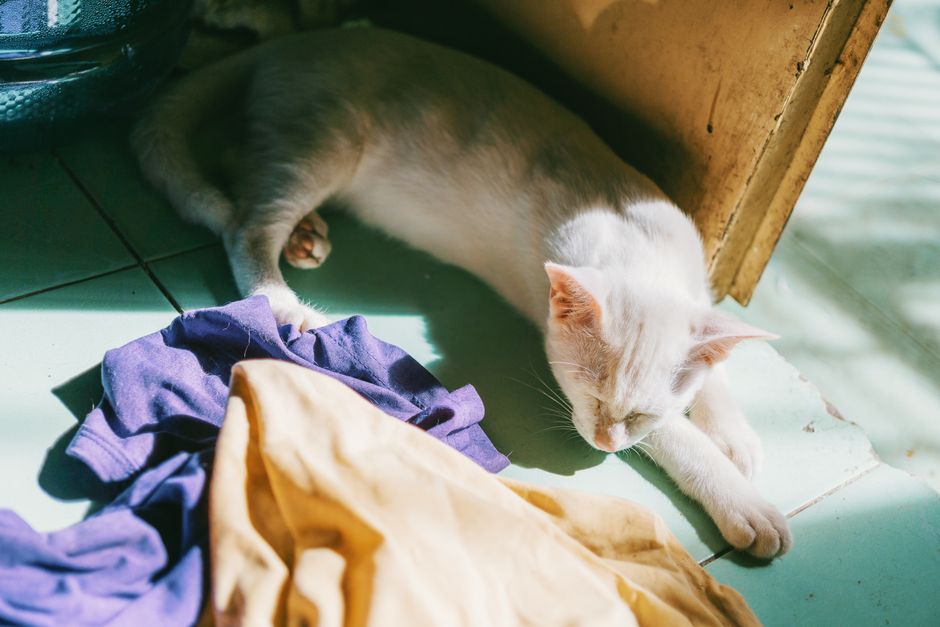
So move the bed out of any draft. Try a patch of sun or a warm room, and add a blanket she can dig into. Heaters and heating pads need more care. Our guide to keeping an indoor cat warm in winter covers the burn and fire risks.
Is It the Bed Itself?
Is the spot right, but she still walks past? Then look at the bed: its shape, its smell and its size.
3. It doesn't fit how she sleeps
Cats sleep in different ways, and the bed has to match. The Ontario SPCA says a cat who stretches out will probably prefer a large, flat bed. A round bed suits the cat who curls up. A cave-style bed suits a cat who likes closed-in spaces.
Watch how she sleeps for a few days. Then match the bed to what you see:
Match the bed to how she sleeps
SprawlerA flat mat or a large, flat bed
CurlerA round or donut bed with a raised rim
HiderA covered bed, a cave or a tent
Go with the style you see most often, not the one you like best.
Does she love the cardboard box? That tells you something useful. PetMD says most cats prefer hiding spots that are dark, warm, and sufficiently closed off at the back. It says a hiding spot can be as simple as a cardboard box with a blanket, or a covered cat bed. Cats Protection says tall sides to hide behind, "such as a cardboard box," are even better. International Cat Care says secret hideaways are important for cats. A box-lover is often a hider. That's a long-time habit, though. If the hiding is new, start with the vet section below.
You can keep the box and line it with a blanket. Or you can try a covered tent, which gives her a roof and walls to tuck in behind. LitterBond's Canvas Tent Bed is a dome with a roof and a woven floor mat. It has a mesh back window and a wide, round doorway. You slide the poles into the sleeves before first use. To wash it, take the poles out first and follow the care label.
The Ribbed Plush Tent Bed is the soft version, ready when you unpack it. Its poles come already in place, and the floor is lined with plush. It folds flat when you need the space. Spot clean it, and wash it only as the care label says.
With either tent, pick the size by her weight. Go up a size for a hider who also stretches out, or a cat near the limit. Check the pole sleeves and pole ends now and then. Stop using it if a pole pokes through torn or chewed cloth. Both are for lying inside, not for climbing on. The plush tent's long plush can shed fibers if a heavy chewer works on it. Keep an eye out. A tent won't win over a cat who likes to sprawl in the open. And some hiders will stick with the box anyway.
4. It smells new
A new bed smells like a box and a store, not like home. Many cats "like to have a strong, familiar scent," says International Cat Care. The Ontario SPCA suggests using your cat's old bedding. Or add "a small article of clothing of a favourite person" to the new bed.
Air the bed out for a day. Then add her old blanket or a T-shirt you've worn. Skip scented sprays and fabric fresheners. Cats are sensitive to essential oils and strong scents.
5. It's the wrong size
A bed that's too small leaves a sprawler hanging over the edge. A big, flat bed may feel too open to a cat who likes to curl up against something. Check the maker's weight chart, and size up if she's near the limit or sleeps stretched out.
Age matters too. Cornell suggests box steps or ramps when an older cat can't jump to a favorite windowsill anymore. A bed she can step into, or steps up to a high spot, may help her. But if she has stopped jumping, book a vet check too. International Cat Care lists difficulty jumping as a sign to see your vet.
Is Someone Else in the Way?
Sometimes the problem isn't the bed at all. It's who else wants it.
6. Another cat claims it
With more than one cat, a bed often goes to whoever gets there first. Cats Protection says each cat should have "a few different beds they can call their own". It says cats don't usually like to share, unless they are really bonded. International Cat Care suggests several beds with more than one way in and out. That way, cats are less likely to block each other. It adds that a mix of covered and open resting spots can work well.
Give each cat at least one bed of its own. Spread extras across different rooms. Don't line them up in one corner, where one cat can guard them all.
7. She'd rather sleep with you
Does she always end up on your bed? Nothing is wrong. Your bed is warm, and it smells like you. That's two things cats look for in one place.
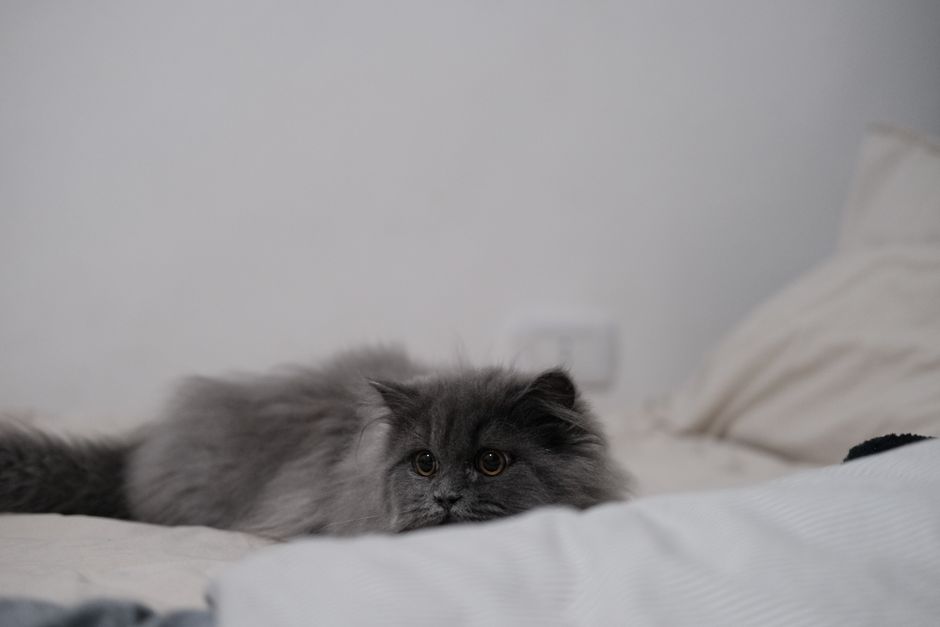
So work with it, not against it. Put her bed on your bed, beside it or on your side of the couch. Tuck a worn T-shirt inside. If she sleeps with you at night and naps in her own bed by day, count that as a win.
How Do You Introduce a New Bed?
How you bring in a bed matters as much as which one you buy. Here's how to get your cat to sleep in her bed:
-
1
Pick her spot
Catster suggests following her for part of a day. Then put the bed in one of her favorite nap spots.
-
2
Add home smells
Put her blanket or a worn T-shirt inside.
-
3
Add something good
Set a toy or a few favorite snacks on the bed. The Ontario SPCA suggests this to get her to explore.
-
4
Let her choose
The Ontario SPCA says never force your cat into the bed. Catster warns against picking her up and plunking her in it.
-
5
Give it time
Catster says it might take weeks to find the right spot.
Did you choose the Canvas Tent Bed? Face the doorway toward a quiet part of the room. Many cats peek in for a day or two before moving in.

Cat beds
A hideaway for cats who love boxes
A canvas-style dome tent with a woven floor mat, a mesh back window and a wide round doorway, in four sizes. The poles slide in before first use. Put it where your cat already naps.
See the tent bed →When Is a Sleep Change a Vet Question?
A cat who drifts from bed to bed is normal. A sudden change in how or where she sleeps is different.
"Any changes in your cat's hiding behavior should be addressed with your veterinarian," PetMD says. Cats are good at hiding when they're sick or in pain, it notes. Cornell says any change in behavior or health, sudden or slow, warrants a vet visit without delay.
⚠️ Call your vet if you see any of these
- She suddenly sleeps in new, hidden places
- She suddenly sleeps much more, or much less, than usual
- She hides a lot, even when the house is quiet
- She seems stiff getting in or out of bed, or no longer jumps up
- She eats less, or her litter box habits change
A month from now, she might nap in the new bed after breakfast. She might take the box after lunch and your pillow at night. That isn't a wasted buy. It's a cat with a rotation, and the bed made the list.
Questions this guide did not cover
How many hours a day do cats sleep?
Around 16 hours. Cats Protection says cats sleep for around 16 hours a day. That much rest is easier to spread over two or three favorite spots than to fit into one.
What kind of bed suits a new kitten?
Look for high sides and a low front. International Cat Care suggests a bed with high sides to keep out draughts and a low front for easy access, with a thick lining. If you can, bring some bedding home with your kitten from where she lived before.
What else helps an older cat rest well?
A warm blanket is a good start. International Cat Care suggests putting out an easily washable thermal blanket, which can help an older cat stay warm. The same page notes that many cats prefer higher-up places to sleep, such as their owner's bed, a windowsill or a sofa.
Why does my cat lie on the floor next to her bed?
She may want a cooler spot. Catster notes that cats may "retreat to the cool basement to prevent overheating" in hot weather. On a warm day, a plain floor can feel better than plush. Try a flat mat there, or move the bed away from heaters and sunny glass. If she also seems stiff or hesitates to step over the rim, check the vet list above.
Related reading
- How to Keep an Indoor Cat Warm in Winter (Without Burns or Fire Risks)
- Why Does My Cat Hide From Guests? A Calm Holiday Plan
About this article
Researched and written by the LitterBond Team. Sources include International Cat Care, the Cornell Feline Health Center, Cats Protection, Catster and Ontario SPCA. Reviewed and updated December 2, 2026. LitterBond does not employ veterinarians; for medical decisions about your individual cat, always consult your veterinarian.


