
How to Brush a Cat That Hates It: A Slow, Step-by-Step Plan
LitterBond Team
By the LitterBond Team · Researched against iCatCare, Cornell Feline Health Center and VCA guidance · Last updated: November 15, 2026
The brush comes out of the drawer, and she's halfway down the hall. Or she lets you do two strokes. Then she swats, grabs your hand with her teeth and bolts. Each try seems to make the next one worse.
She isn't being difficult. Learning how to brush a cat that hates being brushed starts with why she pulls away. Then you go much slower than feels right. Check for pain first. Go back to plain petting. Bring the tool in bit by bit, with a favorite snack. And always stop before she wants to leave.
Below are the common reasons cats push back and the body signs that mean stop. Then come the tools that pull least, and a plan in stages that can take days or weeks. Last is a list of signs that mean your vet should take a look.
Find the Reason She Resists
A cat who fights the brush often has a reason, and some reasons hurt. So before you work on her manners, think about how the brush feels to her. These are the common causes:
🦴 Pain or stiff joints
International Cat Care (iCatCare) lists being "more irritable or grumpy when handled or stroked" as a sign of arthritis. It says arthritis is very common in older cats, but may not be diagnosed. The Cornell Feline Health Center notes that cats in pain may act aggressively to avoid touch.
⚖️ Extra weight
VCA Animal Hospitals describes arthritic or overweight cats as having a hard time grooming themselves. iCatCare adds that extra weight is likely to make arthritis worse. The weight puts more pressure on the joints. If she has sore joints, handling her hips and back may hurt.
🐾 Touchy spots
PetMD says most cats dislike being brushed on the rear or underside. It names the armpits, belly, back legs and "especially the tail" as the most sensitive spots.
🕰️ A bad past experience
Some cats have bad grooming memories. Cats Protection, a UK cat charity, suggests a qualified behaviourist for them. A behaviourist can work through a desensitisation and counter-conditioning plan.
🧶 Mats that pull
The ASPCA warns that skipping brushing can lead to painful tangles. A brush that snags on one is no fun for her.
If the change is new, see your vet first. Cats Protection says a cat who suddenly grooms less or more than usual should see a vet. Cornell says the first step with an aggressive cat is to make sure there's no medical reason behind it.
Learn Her Stop Signals
Every stage of this plan has the same rule: stop before she shows she's uneasy. iCatCare's grooming guide says sessions should end before your cat shows any sign of discomfort. They should also end on a good note. Watch for the signs on iCatCare's list below. The last item is ours, and it's the plainest of all.
✋ Stop the session if you see any of these
- Skin rippling or twitching along her back
- Tail swishing, thumping or twitching at the end
- Turning her head sharply to face your hand or the brush
- Freezing, or going tense all of a sudden
- Ears flicking or turning backwards
- Licking her lips or swallowing
- Growling or hissing
- Swatting, or turning to bite or grab your hand
Let her choose, too. A 2021 study in Frontiers in Veterinary Science looked at 100 shelter cats. People learned a few simple rules built on choice, attention and limited touch. After learning the rules, the same people saw the cats they met act friendlier and show less aggression. The visits were short petting sessions with strangers, not grooming at home, but the ideas carry over. One rule was to let the cat move away if she chooses. So if she walks off mid-session, let her go, and don't follow her.
Never pin her down, and never scruff her. iCatCare's position statement on scruffing says it raises stress. It can even provoke a self-protective reaction. Cat vets agree. The Feline Veterinary Medical Association's 2026 handling guidance is written for vet teams. It says scruffing and tight restraint should never be used in any setting. It says choice and a sense of control minimize a cat's distress.
Pick a Tool She'll Accept
For a touchy cat, pick a tool that snags as little as possible. A slim comb, a soft brush or a rubber grooming mitt works for most coats. For short coats, iCatCare suggests a fine-toothed comb, a bristle brush, or a rubber grooming pad or mitten. For long coats, it suggests a wide-toothed comb plus a rubber pad or mitten. Whatever you pick, PetMD says not to brush too hard or use jerky, rushed moves.
LitterBond's Wooden Handle Steel Comb is one option. It's a slim pin comb, and some cats that dislike brushes accept a slim comb better. Pick Fine Tooth pins for short coats or Wide Tooth pins for tangles in long coats. Long & Short Tooth pins are for loose undercoat, and there's a set of all three.
Use light pressure, especially over the spine and belly, where the skin is thin. The comb is for small tangles only. Loosen knots with your fingers first, and never drag it through a tight mat. Store it away from your cat, since it isn't a chew toy.
Start With Your Hands
The first stage has no tool at all: just your hand where she already likes it. The Frontiers study told people that most friendly cats prefer being touched at the base of the ears and around the cheeks. Some also like the chin. It said to avoid the base of the tail and the tummy. It also said to be careful on the back, flanks, legs and tail.
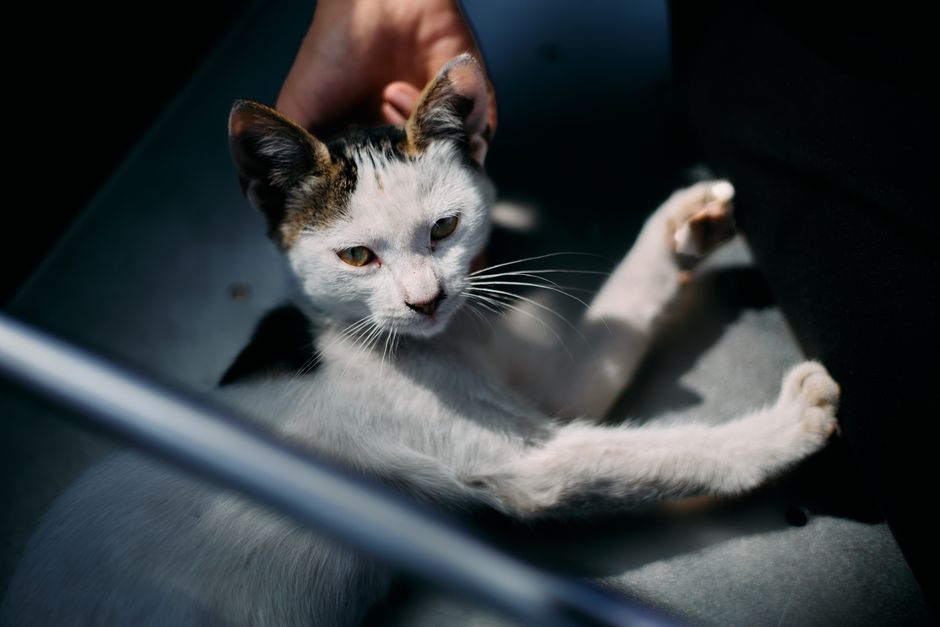
Spend a few days on this. Pick a calm moment, such as when she's dozing in her favorite spot. Pet her cheeks and the top of her head for a minute. iCatCare says to always start when your cat is relaxed and happy. It also says to reward relaxed behavior with praise and food. So stop, and give her a favorite snack.
Your hands do a second job here. The ASPCA suggests running your hands along your cat's body to check for wounds, bumps and hidden tangles. Does she flinch at the same spot every time? Make a note of it. That spot may be sore, and it's worth showing your vet.
Bring the Tool In Slowly
Next, the tool becomes a sign that good things are coming. This is how to get a cat used to brushing. VCA calls it desensitization and counterconditioning. You keep the scary thing mild enough that it doesn't cause fear. You pair it with very high-value rewards. You make it a tiny bit harder only after sessions go well. Here is how that looks with a comb or brush:
-
1
Set it down nearby
Put the comb or brush down near her while you sit with her, a few minutes a day. Put it away when you get up.
Why: it turns into part of the room, not a surprise.
-
2
Let her sniff
When she sniffs it, give her a snack right away.
-
3
Touch her cheek
Touch the back of the tool to her cheek, the way your hand did.
-
4
One slow stroke
Give one slow stroke from behind her head down over her shoulders, then a snack.
-
5
Stop there
End the session, even if she seems fine.
Why: the last thing she remembers is the snack, not the tool.
If you're using the steel comb, start the same way: one slow stroke over her shoulders, then a snack. A few slow strokes on her back come later, over many sessions. Always stop while she's still happy. Cats Protection's advice is not to try to do it all at once. Do a little bit at a time and build it up.
Each stage can take several days, and some cats need weeks. VCA says to end each session while your cat is still calm. If she shows fear, end it and start lower next time.

Grooming tools
A slim comb for brush-shy cats
A wooden-handle steel comb in fine, wide or long-and-short pins, or a set of three. Start with one slow stroke. A few slow strokes on the back come later, and you stop while your cat is still relaxed.
See the steel comb →Build Up to Short Brushing Sessions
Once one stroke is easy, add strokes, not minutes. Go from one stroke to three, then a few more, over many sessions. Keep each session short. Pick a calm moment, like after a nap or a meal. Brush her where she already likes to lounge, not somewhere you carry her. End before she wants to leave, so the last thing she remembers is a snack.
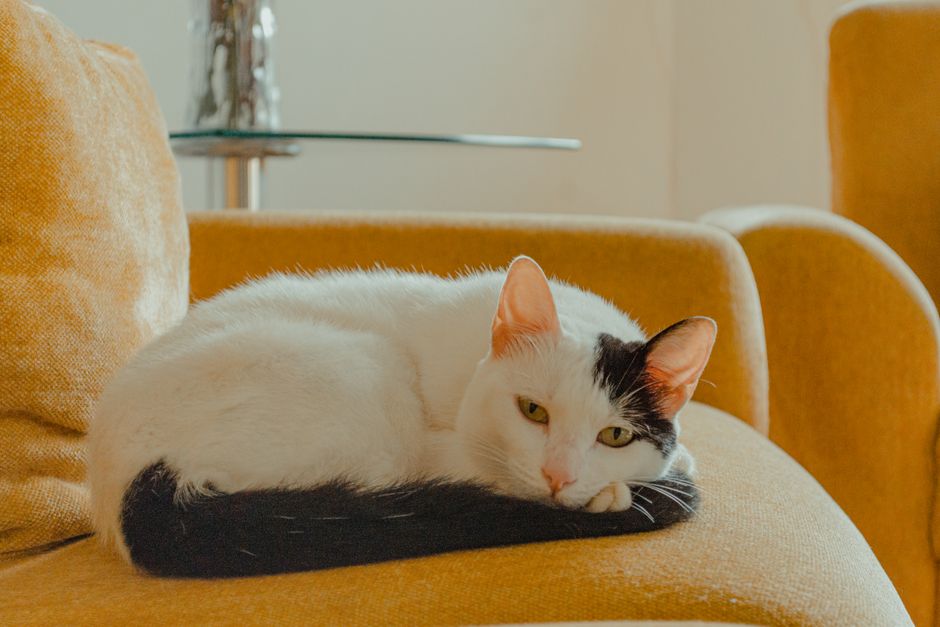
Work out from the easy areas. Her head, neck and shoulders come first. Her upper back comes next, then her sides. Her belly, legs and tail come last. Some cats will never enjoy those spots, and that's fine.
Long-haired cats need a little brushing often. VCA says cats with long, silky or curly coats need daily brushing to keep tangles and mats away. If you find a mat, don't cut it out with scissors. iCatCare warns against scissors. It says severe mats often need to be shaved off by your vet team. Our guide on how to get mats out of cat fur shows which mats you can handle and which go to a groomer.
Between brushing days, a stroke-down with a damp glove wipe feels more like petting than grooming. Here's our routine for how to clean a cat without a bath.
Later, in shedding season, a fluffy coat may need more than a slim comb. Wait until she takes the comb calmly. Then LitterBond's Deshedding Comb can lift loose undercoat with its curved metal blades. A push button slides the fur off. Use it now and then, never daily. Its product page says using a blade comb too often can thin the coat, so use a regular brush on other days.
The blades are sharp: work slowly in small sections, hold the skin flat, never pull, and stop if your cat struggles. Leave large or tight mats close to the skin to a groomer. Keep your fingers clear of the blade edges, and store it out of reach of children and pets.
Call the Vet for These Signs
Some fighting isn't a training problem at all. Call your vet if you notice any of these:
⚠️ Call your vet if you see any of these
- She flinches, cries or turns to bite when you touch one spot
- She guards a part of her body and won't let you near it
- Her skin shows redness, scabs, flakes or lumps
- She suddenly stops grooming, or grooms one spot over and over
- She used to put up with handling, and now she suddenly fights it
- She has mats close to her skin (a groomer or your vet should take these out)
VCA notes that your cat's coat may be the first sign of a health problem. Sore spots and skin changes are worth a vet visit before more brushing.
A cat who swats at the brush isn't a bad cat. She's telling you something. Listen, check for pain, and start smaller than you think you need to. One stroke, one snack, and stop while she's still happy. That's how a cat who hates being brushed can become a cat who puts up with it. Some even start to lean in.
Questions this guide did not cover
Why does my cat bite while I'm petting her?
It may be what vets call petting-induced aggression. The Cornell Feline Health Center says some cats suddenly turn aggressive while being petted. Before that, Cornell lists dilated pupils, tail lashing and ears moved back on the head. Its advice is to stop petting and give a cool-down period with no physical contact.
Should a groomer brush a cat who won't let me?
Sometimes, yes. The ASPCA notes that some cats do not tolerate being groomed. If your cat fights it and either of you could get hurt, it suggests booking a professional groomer or a veterinarian.
How often should a short-haired cat be brushed?
Once or twice a week. International Cat Care suggests grooming shorthaired cats at least once weekly. The ASPCA says one or two brushings per week help a cat keep her healthy glow.
Is it easier to start with a kitten?
Yes, if you can. iCatCare says you can get a kitten used to grooming from an early age, and slowly build up the time. Cats Protection also suggests bringing out combs and brushes while a cat is young.
Do cats ever enjoy being brushed?
Many do, in some places. PetMD says most cats enjoy being brushed around the head, neck and shoulders. Results vary from cat to cat, and some never like it much.
Related reading
- How to Get Mats Out of Cat Fur (and When to Call a Groomer)
- Why Is My Cat Shedding So Much This Fall? What's Normal and What Helps
About this article
Researched and written by the LitterBond Team. Sources include International Cat Care, the Cornell Feline Health Center, VCA Animal Hospitals, the ASPCA and the Feline Veterinary Medical Association (FelineVMA, formerly AAFP). Reviewed and updated November 15, 2026. LitterBond does not employ veterinarians; for medical decisions about your individual cat, always consult your veterinarian.


