
Why Are My Cats Suddenly Fighting? Causes and a Calm Reset Plan
LitterBond Team
By the LitterBond Team · Researched against Cornell Feline Health Center, iCatCare and VCA guidance · Last updated: January 5, 2027
Your two cats shared the couch all year. They washed each other's ears. Then the holidays came and went. Now one cat hisses every time the other one walks past. Last night there was a yowling tumble in the hallway, and a tuft of fur on the rug.
So why are my cats suddenly fighting? There is usually a reason, even if you can't see it yet. One cat may hurt or feel sick. One may smell strange after a vet visit. Something outside may have set one off. Or the holiday shake-up left them short on space and routine.
Below are the common causes, pain first. Then comes a calm reset plan, one step at a time.
Could One of Them Be in Pain?
Start with your vet, because pain is a common cause. A cat who hurts may lash out at anyone who comes close. Cats in pain "may act aggressively toward people or other pets," says the Cornell Feline Health Center. Cornell says the first step is to make sure there's no medical reason.
Pain isn't always easy to spot. A 2019 review in the Journal of Feline Medicine and Surgery gives sore joints from osteoarthritis as one example. It also names thyroid problems. It says cats older than 6 or 7 who suddenly turn aggressive should have a thyroid test. Some illnesses can even change how a cat smells to the others.
International Cat Care (iCatCare) also says to call your vet to rule out a health problem. VCA Animal Hospitals says to have your vet examine both cats.
Sudden aggression or hiding in a cat who used to be calm can mean pain. Injuries from fights always go to the vet.
What Else Sets Cats Off?
If your vet finds nothing, look at what changed around the first fight. More than one cause can happen at once.
A Cat Came Home Smelling Different
Cats know each other partly by smell, and a vet trip can change that. iCatCare notes that a cat picks up "unfamiliar scents" at the clinic. It says those smells can upset the other cats at home. The 2024 AAFP guidelines (the AAFP is now the Feline Veterinary Medical Association) name the same trigger. Cat vets and behavior experts wrote them. They point to "a change in odor or behavior of a cat after a trip to the veterinarian" as one cause.
Some cat behavior experts call this non-recognition aggression. To the cat at home, her friend looks right but smells like a stranger. So she hisses at him, or even attacks.
Something Outside Upset One Cat
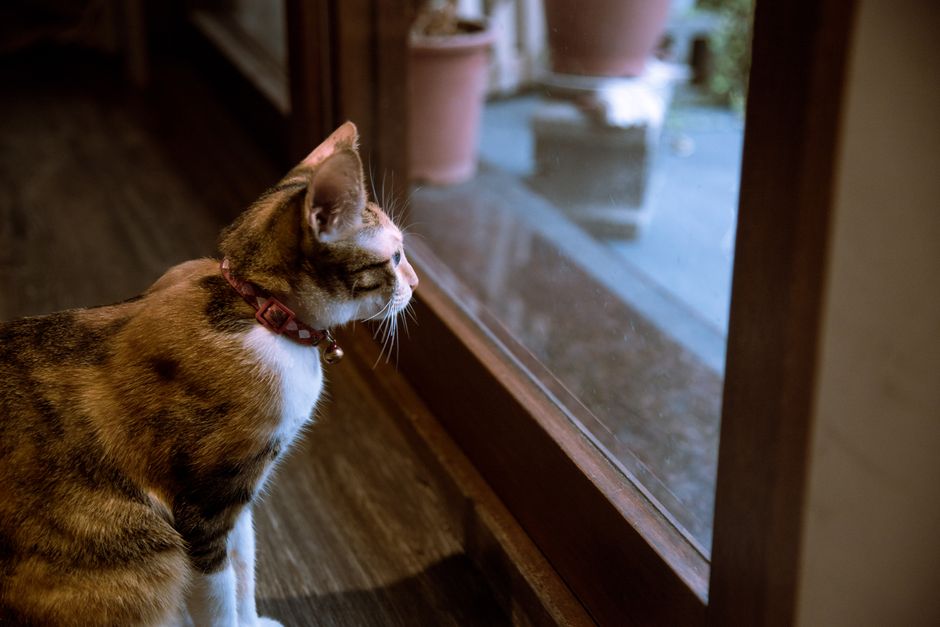
This one is called redirected aggression. A cat gets worked up by something she can't reach. Then she turns on the cat next to her. Cornell lists loud noises as a common trigger. Seeing an outdoor or stray cat through a window is another.
VCA's behavior vets say to give an upset cat a room alone. She may need to stay there "anywhere from several minutes to several days" to calm down. If a cat in the yard is the trigger, VCA suggests blinds or shutters to block the view.
They're Competing for Something
The AAFP guide says tension at home often comes down to competing for resources. Think food, water, litter boxes, beds and favorite perches. Not every fight is loud, either. Cat Friendly Homes, a site run by cat vets, lists quiet signs too. Look for long stares, and one cat guarding or blocking a spot.
Play Got Too Rough
Young cats play rough. The ASPCA says rough play is common in kittens and young cats. All cat play "consists of mock aggression" in the first place. But play can boil over. Play "can lead to overstimulation, which can escalate to aggression," WebMD notes.
One Cat Is Growing Up
Cats go through a stage called social maturity. The ASPCA says to think of it if trouble starts when one cat is one to three years old. Cornell describes cats, mostly males, turning on other males as they near social maturity. It puts that between two and four years of age.
The House Changed
Ohio State's vet school lists what the holidays change: guests, new schedules, a tree and decorations, and furniture moved to make room. Breaks in a cat's daily routine "can be very upsetting for her," it adds.
That alone may not start a fight. But it often lands on top of a vet trip, a noisy night or a strange cat in the yard.
Is It Play or a Real Fight?
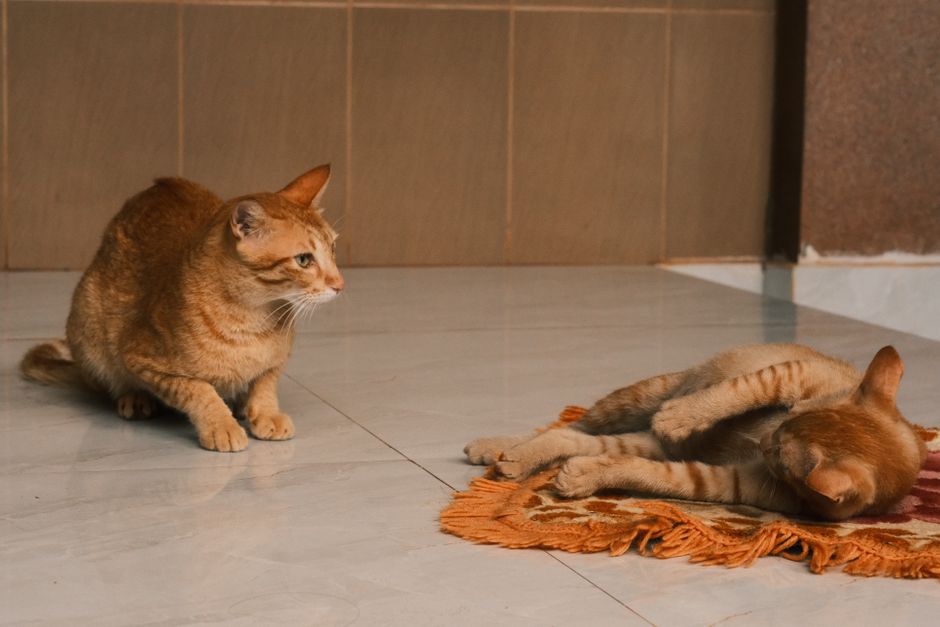
Play takes turns, and a real fight doesn't. The ASPCA calls play "reciprocal," with cats who "change roles frequently" as they go. In play, their ears point forward. Claws may come out, but they don't do damage.
Sound is a clue too. The AAFP guide says cats who wrestle without a sound are most likely playing. One cat chasing another, with yowls and no turn-taking, is likely not play. The 2019 review agrees that growls, hisses and screams are usually missing from play.
Real trouble has its own look. Cornell lists the signs of aggression. Look for wide pupils and ears flattened back. A raised, fluffed-up tail and an arched back are signs too. A scared cat flattens her ears and presses her whiskers down.
✅ Likely play
They take turns chasing and being chased. Ears point forward, and bodies lean in. Nobody gets hurt, even with claws out. It's mostly quiet.
⚠️ Likely a real fight
One cat does all the chasing. You hear hissing, growling or screaming. Ears go flat, pupils go wide, fur stands up. One cat hides or keeps away afterward.
How Do You Break Up a Fight?
Interrupt from a distance, and keep your hands out of it. Cornell is firm here. Never put your hand, or any part of your body, between fighting cats. iCatCare adds a second rule. Don't pick up either cat during a fight or right after it, or you may get bitten or scratched.
Instead, try these three steps:
-
1
Make a sudden noise
The ASPCA suggests a loud clap of your hands.
-
2
Block their view
The AAFP guide suggests a piece of cardboard or a board between the cats. It breaks their eye contact.
-
3
Steer them apart
It also suggests drawing each cat off to a toy, or into a different room.
Never punish either cat. The AAFP guide warns that throwing things at a cat or squirting her with water often makes her more afraid. PetMD adds that loud, long shouting backfires too.
Check Both Cats for Bites
After a real fight, look both cats over. VCA explains that a cat's teeth leave small, deep holes that seal over fast. A bite may go unnoticed for several days, until swelling and pain show up. A bitten leg may limp.
VCA also notes that a bite wound can turn into an abscess, a "pocket of pus" under the skin. So don't wait for the swelling. "If you know your cat has been in a fight, notify your veterinarian immediately," VCA advises.
How Do You Reset the Peace?
Start over, at the cats' pace. A reintroduction may mean acting as if your cats were "complete strangers meeting for the first time," iCatCare says.
Give Them Time Apart
After a bad fight, iCatCare suggests separate rooms for 24 to 48 hours, until both cats calm down. It also says to call your vet. Some cats need longer. The ASPCA suggests separate rooms for several days or weeks. Each cat gets its own bed, bowls and litter box.
Swap Scents Before They Meet
For a cat back from the vet, iCatCare suggests bedding from the cats' shared resting spots. Cat Friendly Homes suggests gently rubbing each cat's cheeks and chin with a clean towel. Then let the other cat sniff it. If the towel gets a hiss, don't move on yet.
Bring Them Back Slowly
The AAFP guide says to do it gradually. Start with the cats on either side of a door. Feed them there, one bowl on each side. VCA suggests starting 10 to 20 feet apart, so both cats stay relaxed enough to eat. Then move the bowls closer, a little at a time.
VCA warns that the biggest mistake is bringing the cats together too soon. For every step after the door, see how to introduce a new cat to your cat. The same slow steps work for two cats who already know each other.
Give Each Cat Its Own Things
Shared stuff gives cats something to fight over. For each resource, iCatCare suggests "one per cat, plus one extra, positioned in different locations" around your home. For two cats, that's three litter boxes in three places. The same goes for bowls, beds and scratching posts.
The AAFP guide goes further on food. It says cats should eat in separate spots, out of sight of one another, even cats who get along.
Height and hideouts help too. iCatCare notes that most cats like to watch the room from up high. It says every cat also needs a private place to rest. A cat tree, a cleared shelf or a covered bed gives a cat a way out of a standoff.
Then play with each cat on its own. The AAFP guide suggests two or more play sessions a day, each 5 minutes or longer.
Where Does a Diffuser Fit?
A plug-in diffuser can support the reset, but it isn't the fix. It can't do anything about a sore joint, a strange smell or one shared litter box.
If you want to try one, plug it in where your cats spend the most time. Use one diffuser per main room. The Calming Diffuser Kit (1 diffuser + 2 refills) is one plug-in with two 48 ml refills. That's about 60 days of nonstop use in one room. It's drug-free and odorless to people, and it runs day and night. It helps many cats feel more at ease, though results vary.
Are your cats living in two separate rooms during the reset? The Calming Diffuser 2-Room Kit (2 diffusers + 4 refills) puts one diffuser in each room. Never cover a diffuser while it's plugged in.
Give the kit a fair trial. Keep it plugged in nonstop for at least one full 30-day refill. Changes are usually gradual. Keep the separate bowls, boxes and beds in place the whole time. For what the research shows, see whether cat pheromone diffusers work.

Calming
A diffuser for the room they share
One plug-in diffuser and two 48 ml refills: about 60 days of nonstop use in one room, long enough for a slow reset. It's drug-free, and people can't smell it. It helps many cats feel more at ease. It can't replace the vet check, the slow steps, or separate bowls and boxes for each cat.
See the diffuser kit →When Should You Call for Help?
Some fights need more than a reset. Call your vet if you see any of these:
⚠️ Vet first if you see any of these
- A bite, a limp, a swelling or any wound after a fight
- A cat who hides and won't come out, or won't eat
- Sudden aggression from a cat who used to be calm
- Fights that keep getting worse, even after a slow reset
The ASPCA says any sudden change in behavior can point to a medical problem. If your cat won't eat, it says to see your vet right away.
If your vet rules out a medical cause, ask about a behavior expert. The ASPCA suggests a certified applied animal behaviorist or a board-certified veterinary behaviorist. Cornell also points to a veterinary behaviorist when simpler steps don't work.
Give the reset a few weeks. Your cats may not wash each other's ears again right away. But one evening you may look up and see them on the couch, one at each end, both asleep. That counts. Rule out pain first, go slowly, and give each cat enough of everything.
Questions this guide did not cover
Should I take both cats to the vet at the same time?
It can help. Fear Free Happy Homes suggests taking all your cats to the clinic together. That way they all come home with the same clinic smell.
Does neutering help cats who fight?
It can, if a cat isn't neutered yet. The ASPCA says intact males are particularly prone to aggressive behavior, and it advises neutering.
How long should a cat back from the vet stay apart?
Often a few hours to a day or two. International Cat Care suggests separate rooms for that long, then gradual, supervised contact. It also suggests washing the carrier bedding to remove the clinic smell.
Can ongoing tension make a cat sick?
It can. Cat Friendly Homes, run by cat vets, warns that tension can cause a cat distress. That distress can lead to stress-related illness. So call your vet early, even when the signs are quiet.
Related reading
- Do Cat Pheromone Diffusers Work? The Evidence and a Fair Trial
- How to Introduce a New Cat to Your Cat: A Step-by-Step Plan
About this article
Researched and written by the LitterBond Team. Sources include the Cornell Feline Health Center, International Cat Care, VCA Animal Hospitals, the ASPCA and PubMed Central. Reviewed and updated January 5, 2027. LitterBond does not employ veterinarians; for medical decisions about your individual cat, always consult your veterinarian.


