
Why Is My Cat Shedding So Much This Fall? What's Normal and What Helps
LitterBond Team
By the LitterBond Team · Researched against VCA, iCatCare and Cornell Feline Health Center guidance · Last updated: October 20, 2026
You cleaned the couch on Sunday. By Tuesday it looks like a second cat moved in. There are tufts on your dark jeans and soft drifts of fur under the bed. Your cat seems fine. So why is she shedding so much right now?
Most of the time, the answer is the season. Many cats shed more in the fall, and it is a normal part of how their coat works. VCA Animal Hospitals says some cats go through two heavy shedding cycles a year: one in late spring and one in late fall.
Brushing won't make her grow less hair. What it does is move the loose fur into the brush instead of onto your sofa. Below: why the fall shed happens, how to tell normal from not normal, and a short routine that helps. You'll also find the signs that call for a vet, not a better brush.
Why Do Cats Shed More in Fall?
A heavy fall shed is usually just the coat changing for the season. Cats lose old hair all the time. International Cat Care (iCatCare) says cats usually moult all year round, to varying degrees.
Some cats turn it up twice a year. VCA says cats in cooler climates may have two heavy seasonal cycles, in late spring and late fall. That is most likely in cats that often go outdoors. During those cycles, much of the undercoat can fall out in clumps.
Indoor cats are often different. VCA notes that many indoor cats shed at low levels all year round. So your indoor cat may never have a big fall shed. Or she may have a mild one. Both are normal.
A few other things change how much fur you see:
- Her coat. Long-haired cats have more fur to lose, and it shows up more on furniture.
- Her age. The Cornell Feline Health Center says older cats groom themselves less well than younger cats. More loose hair stays in the coat until it drops.
- Her stress level. According to VCA's guide to a healthy coat, many cats shed excessively when they are under stress. A move, a new pet or a house full of guests can count.
- Her food. VCA also says a cat on an inadequate diet may have a dull, dry coat and shed excessively. Talk to your vet before you change her food.
How Much Shedding Is Normal?
Normal shedding leaves a full coat behind. You find fur on your clothes, the couch and the brush. You don't find bare skin on your cat.
VCA puts the healthy baseline in one line: "A healthy animal does not shed excessively and has a shiny coat, free from dandruff or greasiness." So look at the coat, not just the couch.
Here is a quick check you can do while you pet her.
✅ Usually normal
Loose tufts that come out easily with a brush or your hand. A coat that still looks even and full. Clean, pale skin when you part the fur. She grooms, eats and plays the way she always has.
⚠️ Not normal
Thin or bald patches. Short, broken hairs that feel like stubble. Red, scabby or flaky skin. Licking or chewing one spot again and again. A dull or greasy coat that stays that way.
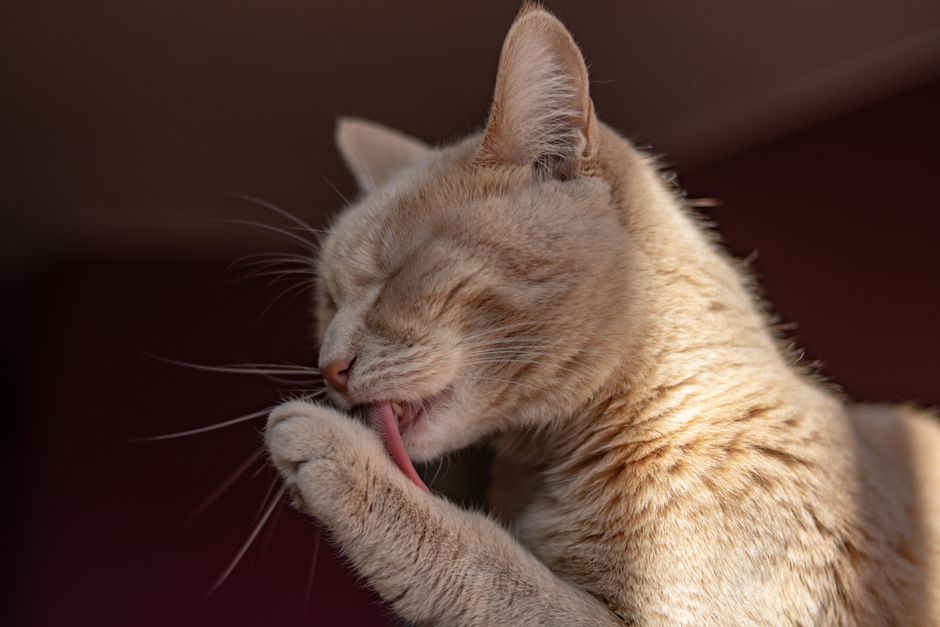
Over-grooming is the one to watch for. At first it can look like heavy shedding. iCatCare explains that over-grooming shows up as patches of broken or sparse hair. Some areas may lose hair completely.
The usual spots are the belly and the legs, especially the insides of the back legs. The sides of the body are common too. Check those places each time you brush. Fur that comes out as loose tufts is shedding. Fur that has been licked short is something else.
What Helps During a Heavy Shed?
Regular brushing helps more than anything else. It won't change how much hair she grows. It catches the loose hair before it lands on your couch or in her stomach.
Brush on a Schedule
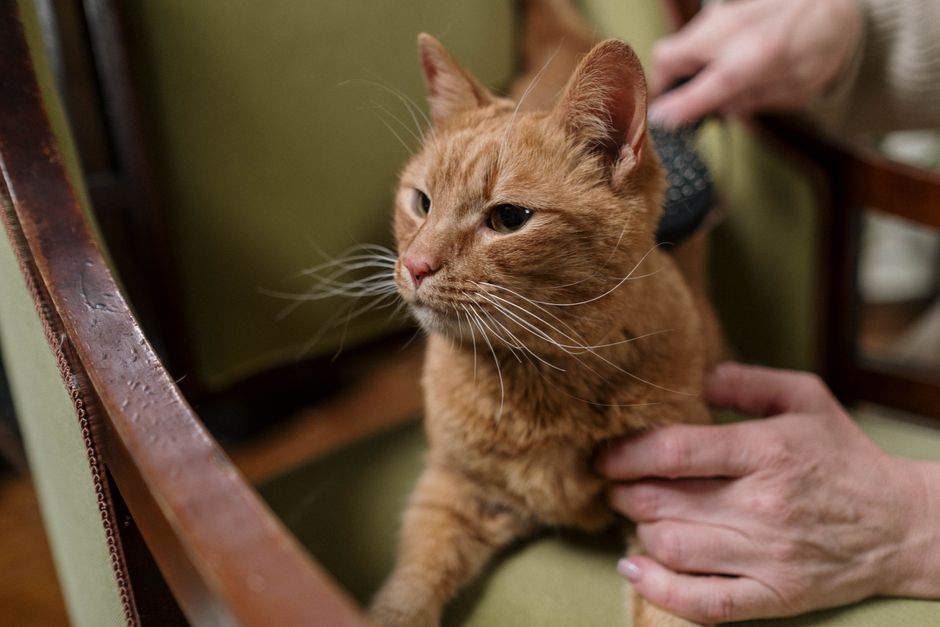
iCatCare's advice depends on her coat. Groom a short-haired cat at least once a week. Groom a long-haired cat at least once a day.
In a heavy fall shed, you'll likely pull more fur out each time. If she enjoys it, a few extra short sessions a week are fine. Two minutes counts.
Pick a Tool She Accepts
You don't need a special gadget. The best tool is the one she lets you use. iCatCare suggests these:
🐈 Short hair
A fine-toothed comb, a bristle brush or a rubber grooming mitten.
🦁 Long hair
A wide-toothed comb and a rubber grooming mitten.
VCA adds that long-toothed metal combs help medium and long-haired cats. The ones with rows of offset teeth lift loose hair and smooth small tangles.
Keep Each Session Short
Timing matters more than technique. Here is a simple way to brush a shedding cat:
-
1
Pick a calm moment
After a meal or a nap works well.
-
2
Start where she likes to be touched
For many cats, that is the cheeks and the top of the head.
-
3
Brush the way the fur grows
Head toward tail, with light strokes.
-
4
Stop while she is still relaxed
End before she shows any sign of discomfort.
-
5
End on a good note
A favorite snack and some praise.
Tail thumping, flat ears or skin that twitches down her back mean she is done. Stop and try again tomorrow. For a full calm routine with no water, see how to clean a cat without a bath.
Wipe Up What the Brush Leaves
A brush always leaves some loose hair on top of the coat. A damp cloth, wrung out well and stroked with the fur, picks up much of it. So does a glove wipe.
LitterBond's waterless bath glove wipes slip over your hand, so the wipe-down feels more like petting. Stroke her head to tail and skip the eyes and the inside of the ears. It is a light refresh after brushing, not a fix for shedding. Her coat may feel a little damp, then it air-dries.

Grooming
A quick wipe-down after brushing
Five disposable glove wipes, each sealed in its own sachet, with a no-rinse formula. Slip one on after brushing and stroke with the fur to pick up loose surface hair. A light refresh, not a fix for shedding.
See the bath glove wipes →Help Dry, Flaky Patches
Some cats get dry, flaky skin on the back or shoulders. Those are spots they can't reach well. Brushing spreads the natural oils from her skin along the hair. VCA lists that as one reason all cats benefit from regular brushing.
For everyday dryness on unbroken skin, you can mist a skin care spray onto the brush, not onto your cat. Then brush it into the dry area. Dry skin needs regular care, not one spray. If you notice redness, discharge, swelling, squinting or persistent scratching, stop and see your vet.
Skip coat oils, perfumes and scented sprays. Cats are sensitive to essential oils and strong scents.
Keep Hairballs in Check
A shedding cat swallows more loose hair while she grooms. The Cornell Feline Health Center says long-haired breeds like Persians and Maine Coons are at much greater risk of hairballs. Its advice is to get your cat used to a daily brushing and combing.
A Cornell vet notes that a hairball once every week or two is nothing to worry about. Some signs are different. If your cat is lethargic and won't eat for more than a day or so, call your vet right away. The same goes for repeated retching that brings nothing up.
Make the House Easier
You can't brush out every hair, so plan for the rest. Keep a lint roller by the door. Put a washable throw on her favorite spot on the couch, and wash it each week. Vacuum a little more often through the fall. The shed does end.
When Is Shedding a Vet Problem?
Shedding that leaves bare skin, or comes with other changes, goes to your vet. Loose fur on the couch is normal. These signs are not:
⚠️ Call your vet if you see any of these
- Bald or thin patches, or hair that looks broken off
- Red, scabby or broken skin
- Licking or chewing one spot over and over
- Scratching that doesn't settle
- A coat problem that comes back soon after you groom her
- A cat who suddenly quits grooming (it can be a sign of pain)
- Shedding along with changes in eating, drinking or energy
VCA says that if the skin or coat problem returns quickly after grooming, go to your vet for an exam.
Over-licking has causes worth finding. iCatCare lists skin problems, such as an allergy to flea bites. It also lists pain, including urinary tract disease, and stress. Its advice is plain: contact your vet team as soon as possible if you see your cat over-grooming.
If you notice redness, discharge, swelling, squinting or persistent scratching, stop and see your vet.
Senior cats need a closer look too. Cornell notes that when older cats groom less well, it can lead to matted hair and skin odor. Gentle daily brushing helps her keep up. It also lets you spot changes early.
A fall shed can bury your couch in fur, and still be normal. A few short brushing sessions a week, a snack at the end, and a quick look at her skin each time will cover most cats. If the brush ever turns up bare skin instead of loose tufts, that's the moment to call your vet.
Questions this guide did not cover
Does a bath help with fall shedding?
Usually not, and most cats would rather skip it. International Cat Care says there is no reason to bath a healthy cat, and most don't tolerate it well. A comb lifts the loose undercoat without the fight.
Should I shave a long-haired cat who sheds a lot?
Not as a first step. The Cornell Feline Health Center suggests a haircut once or twice a year only if your cat won't allow brushing. Your vet or a reputable groomer can do it.
What do I do about a mat I find while brushing?
Work a small mat loose with your fingers. iCatCare says to tease it apart gently and slowly, from the root toward the end of the hair. Severe mats often need shaving by your vet team, sometimes with sedation.
Can a cat lose fur without over-grooming?
Yes, though it is less common. The UK vet charity PDSA says hair loss can come from a condition that makes fur fall out. More often, a problem makes the cat over-groom. Either way, bare patches mean a vet visit.
Related reading
- How to Clean a Cat Without a Bath: A Calm, Waterless Routine
- How to Clean Cat Tear Stains Gently (and When to Call the Vet)
About this article
Researched and written by the LitterBond Team. Sources include VCA Animal Hospitals, International Cat Care, the Cornell Feline Health Center and pdsa.org.uk. Reviewed and updated October 20, 2026. LitterBond does not employ veterinarians; for medical decisions about your individual cat, always consult your veterinarian.


