
How to Stop a Cat From Spraying Indoors (and How It Differs From Peeing)
LitterBond Team
By the LitterBond Team · Researched against Cornell Feline Health Center, FelineVMA (AAFP) and ASPCA guidance · Last updated: October 22, 2026
You find a small wet mark on the wall by the front door. The litter box looks fine. Your cat acts like nothing happened. It is worrying, and it smells.
Here is how to stop a cat from spraying, in order. See your vet first. Clean every mark with an enzyme cleaner. Fix the shared spaces. Lower the stress behind the mark. Then give the plan time. No one step is a quick fix, but each one helps.
See Your Vet First
Spraying looks like a behavior problem. It can also be a health sign. The Cornell Feline Health Center says cats with medical conditions may not always act sick. The American Association of Feline Practitioners tells owners to contact their vet right away about house soiling. Book the visit before you try anything else.
Tell the vet what you have seen. Say when it started and which spots your cat picks. Say whether the litter box habits changed, and whether your cat is eating, drinking and peeing as usual. The AAFP brochure lists medical problems, such as a bladder condition called feline idiopathic cystitis, as one of the main causes of house soiling. Your vet can check for those first.
A male cat who can't pass urine is an emergency. The University of Illinois College of Veterinary Medicine calls a blocked urethra a true emergency. Signs include straining again and again with no success, small amounts of bloody urine, and vomiting. Peeing in odd places can be a sign too. If you see this, go to a vet right away.
Ask about spaying or neutering if your cat is not fixed. Cornell says it reduces the effect of hormones on spraying. It does not work for every cat. Cornell also says about one in ten neutered males and one in twenty neutered females still spray.
Tell Spraying From Peeing
On the floor, the two can look alike. Sorting them out helps your vet and helps you pick the right fix.
| Sign | Spraying | Peeing |
|---|---|---|
| Posture | Stands, tail up and quivering, no squat | Squats, may scratch after |
| Where | Walls, door frames, furniture sides | Floors, beds, soft items |
| Amount | Small | A larger puddle |
| Litter box | Often still used | Often used less |
Cornell says cats usually spray on upright surfaces, like the backs of chairs or walls, and don't squat to do it. The ASPCA adds that marks often hold less urine than normal peeing, and that cats who mark still use the box. Preventive Vet notes that puddle size alone does not settle it. Some cats do both.
Why do cats spray at all? Spraying is how cats leave a scent message. It is not a sign of a bad cat. The PDSA, a UK pet charity, points out that female cats and neutered males spray too. So a fixed cat spraying does not mean you missed something. It means the cause may be somewhere else.
A short phone video of the posture can help your vet.
Clean Every Mark the Right Way
A spot that still smells like urine can invite your cat back, and then you have a cycle: she marks, you wipe, she marks again. Cleaning well is how you break it. The ASPCA says to use an enzymatic cleaner made to neutralize pet odors. Cornell says odors must be neutralized, not just deodorized.
First, find every mark. Check at cat nose height: door frames, window sills, the sides of furniture, curtains, bags. Our guide to tracking down hidden pee spots can help.
Then use one method each time:
-
1
Blot
Soak up anything still wet. Press with a towel. Don't rub.
-
2
Soak
Wet the whole spot with the cleaner. Go a little past the edge.
Why: a cleaner only works where it reaches.
-
3
Wait 10 to 15 minutes
Or as long as the label says.
-
4
Blot again
Press a dry towel into the spot.
-
5
Air-dry
Let it dry on its own, then repeat on older spots.
LitterBond's Urine Odor Eliminator is a bio-enzyme spray for carpets, sofas, cat beds and bedding. Spot-test a hidden patch first. It has a light, fresh scent, so open a window and keep your cat away until the spot is dry. Cats are sensitive to essential oils and strong scents. For painted walls and door frames, check your paint maker's cleaning advice first.
Curtains, throws and bags can be marked too. Follow each care label, and clean them the same way as the rest of the room. Check them again in a day or two, since a faint smell may be the only sign that a spot was missed.
Not sure which cleaner to pick? Read vinegar vs. enzyme cleaner for cat urine.
Fix the Shared Spaces
Cat-to-cat tension is one of the most common reasons for marking, says the ASPCA. Cats that have to share every bowl and box can feel crowded. The spaces are the part you can change fastest.
The AAHA and AAFP guidelines give a rule of thumb: one litter box per cat, plus one more. They say to put the boxes in different spots around the house that are quiet and easy to reach. The ASPCA also suggests several sources of food, water, scratching posts and toys, and several perches, so cats don't have to share.
Keep the boxes clean too. The same guidelines say to scoop daily, to clean and replace boxes regularly, and to use hot water rather than soap or strong chemicals.
- Boxes: count cats, then add one.
- Spots: spread them out, not in a row.
- Food and water: more than one station.
- Rest: a high perch or a hiding place for each cat.

If you have more than one cat, watch who uses which box and who blocks the door. If you have only one cat, two boxes in two spots is still a good plan.
Cats fighting now? Read why cats suddenly start fighting. For the wider picture, see why a cat pees outside the litter box.
Lower the Stress Behind the Mark
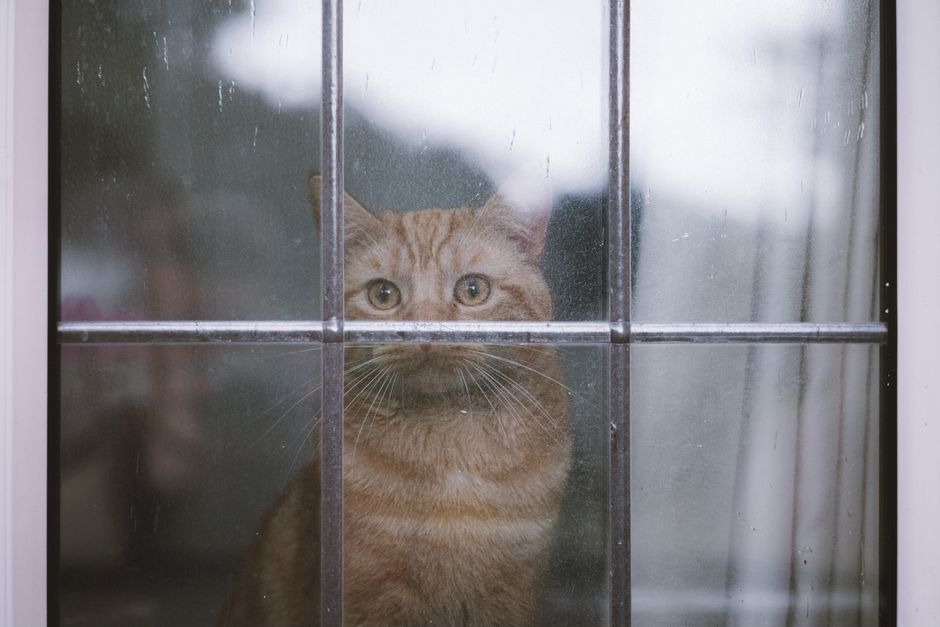
The ASPCA puts it plainly: cats don't like change. A new person, a new pet or a remodel can all set off marking. So can a stray cat outside the window.
Big changes take time to settle. If you moved, changed the furniture or brought home a new pet, expect some weeks of adjusting. Give each cat a quiet place she can reach without passing another cat.
Start with what you can see. Adopt a Pet suggests closing the blinds so your cat can't watch outdoor cats. It also suggests cleaning the area outside doors and windows. Cornell lists frustration among the causes, such as too little play. Add a few short play sessions each day with a wand toy, and let your cat end each session when she wants to.
A pheromone diffuser can be one low-effort piece of the plan. LitterBond's Calming Diffuser Starter Kit is a drug-free plug-in made to help ease tension. It comes with one diffuser and one refill, about 30 days of nonstop use. Plug it into a standard wall outlet where your cats spend the most time, and use one diffuser per main room. It runs day and night and is odorless to people. Never cover it while it is plugged in, and never put the liquid on your cat.
Change tends to be gradual, so be patient with your cat and with yourself. Give it one full refill before you decide. Results vary from cat to cat. A diffuser can't fix a litter box problem or a health problem. For what the research says, read do cat pheromone diffusers work.

What Not to Do
- Don't punish. Cornell says never hit, kick or scream at a cat. It says punishment is not only ineffective but can make the problem worse.
- Don't take it personally. The AAFP says cats don't soil out of spite or anger.
- Don't skip the vet because your cat seems fine. Cornell says cats with medical conditions may not always act sick.
- Don't use ammonia or vinegar cleaners. Cornell says they smell like urine.
Give It Time and Keep a Log
Keep a simple log. A notebook or a phone note is fine. Write the date, the spot, and what happened that day. Note visitors, a new cat, a storm or a change in routine. Note whether your cat used the box. In a few weeks, the log shows a pattern.
It is easier to judge a change when you make only one at a time. Try one new step, give it a couple of weeks, and write down what happens before you add the next.
The log also gives your vet something real to work with. Bring it with a photo of any mark, and ask your vet two things: could this be medical, and what should we try next if nothing changes?
Many owners feel stuck. On one Cats.com community thread, people describe trying vet checks, cleaners, diffusers and more, and still not knowing what to try next. If that is you, ask your vet about a behavior specialist. Best Friends Animal Society suggests a vet with behavior training.
Tonight, call the vet and take a photo of each mark. That is the first step, and the rest follows.

Calming
For a tense, busy home
One plug-in diffuser and one 48 ml refill: about 30 days of nonstop use in the room your cats share most. Pair it with separate food, water and litter for each cat.
See the Calming Diffuser Starter Kit →Questions this guide did not cover
What is phantom spraying?
It is when a cat backs up, lifts her tail and quivers, but no urine comes out. Preventive Vet describes it as the same posture without the pee. Tell your vet about it all the same.
Are unneutered males more likely to spray?
Yes. The ASPCA says marking is more likely with an unneutered male, with several cats in the home, or after a change like a new person or pet.
Does spray smell different from normal pee?
It can. The ASPCA says the urine from marking smells pungent. A strong smell on a wall or door frame is a clue, though a vet visit is how you rule out a health cause.
Should I rehome a cat that sprays?
Start with the vet and a plan. Owners on a Mumsnet forum thread described feeling this way, and replies there urged a vet check first. If nothing changes, ask your vet about a behavior specialist before you decide.
Related reading
- Do Cat Pheromone Diffusers Work? The Evidence and a Fair Trial
- Why Is My Cat Peeing Outside the Litter Box? Causes and What to Do First
- Why Are My Cats Suddenly Fighting? Causes and a Calm Reset Plan
About this article
Researched and written by the LitterBond Team. Sources include the Cornell Feline Health Center, the Feline Veterinary Medical Association (FelineVMA, formerly AAFP), the ASPCA, vetmed.illinois.edu and Preventive Vet. Reviewed and updated October 22, 2026. LitterBond does not employ veterinarians; for medical decisions about your individual cat, always consult your veterinarian.


