
Indoor Cat Bored in Winter? 12 Easy Ways to Keep Them Busy
LitterBond Team
By the LitterBond Team · Researched against iCatCare, VCA and Cornell Feline Health Center guidance · Last updated: December 22, 2026
It's dark by five. Your cat yowls at 4 a.m. She bats a pen off the desk, then walks right past her toys. The house is full for the holidays, and she sleeps most of the day away.
Some of that is just winter. Cats Protection says cats may sleep more in winter to save energy and keep warm. With short days, they may also spend more time napping in sunny spots.
Here's the short answer. A bored indoor cat needs small daily changes, not a pile of new stuff. Think a hunt, a view, a place to climb and a steady routine. But first, make sure it's boredom and not illness. Below: a quick check, then 12 easy ideas. Most of them are free.
Tell Boredom From Illness
Boredom and illness can look alike, so rule out illness first. PetMD says a cat who paces, over-grooms or meows a lot might be bored. International Cat Care (iCatCare) notes that indoor life can be dull and predictable. A bored indoor cat may scratch the furniture or cry a lot.
The trouble is, a sick cat can act the same way. VCA Animal Hospitals explains that cats have evolved to hide pain and illness. A sick cat may hide. Sometimes the only sign is that she sleeps more and plays less.
Licking needs a closer look, too. iCatCare says most over-grooming starts with a skin or pain problem. The Cornell Feline Health Center adds that cats lick where they itch or hurt.
Call your vet first if you notice any of these:
⚠️ Vet first if you see any of these
- Hiding more than usual, or pulling away from you
- Sleeping much more, and playing much less (VCA lists both)
- Licking or over-grooming a lot, or a messy, greasy coat
- Eating or drinking more or less than usual
- Losing weight suddenly
- Losing interest in play and food at the same time
If any of these fit, boredom isn't the answer. Book a vet visit first. If she seems well, the ideas below are a good place to start.
Play a Little Every Day
Short daily play is the easiest place to start. It gives her a hunt to finish, and it fits a dark winter evening.
1. Short Daily Play Sessions
Aim for two or three short sessions a day, about 10 to 15 minutes each. PetMD and the American Animal Hospital Association both give that range. Try one after work and one before bed. Move a wand toy like prey, so it hides, darts and pauses, then let her catch it. For a full plan, see how long to play with your cat each day.
2. A Toy Rotation Bag
Toys that sit out all day stop being interesting. iCatCare says toys left lying around soon become dull. The Ohio State University Indoor Pet Initiative (OSU) suggests a batch of toys, rotated a few at a time.
The Wisconsin Humane Society gets specific. Keep three or four toys out, store the rest, and swap every few days. Seal the stored ones in a bag or box. They'll feel new when they come back.
Has she stopped noticing her old toys? A light mist of LitterBond's catnip and silvervine spray can bring them back into rotation. Spray the toy, never the cat, and keep it away from her eyes. Results vary from cat to cat. Not every cat reacts to catnip, and some that ignore it respond to silvervine instead.
3. A New Sound or Texture
Something new can wake up a cat who ignores her basket. OSU notes that toys that squeak, chirp, jitter, swing or vibrate remind cats of "moving meals" and tempt them to play.
Around the holidays, Christmas catnip rattle toys fit the season, and they can stay in the rotation afterwards. They're soft plush toys with a rattle and a catnip pouch inside. They come in assorted 3- or 6-packs, and the store picks the designs. Each one has a cord and a yarn tassel, and a cat can swallow yarn or cord. So play together, then put them away.
For late nights, quiet pom-pom play balls are soft yarn balls with no bell or rattle. They come in 3 or 6 boxes, in a pastel or Christmas mix the store picks. Some cats shred yarn, so supervise play. Gather the balls afterward, and throw out any that fray.
Not sure what she likes? Try a five-minute play style test first.
Give Her Brain a Job
Indoor cats still have a hunter's brain, so give it something to do. iCatCare notes that indoor cats get fewer chances to hunt and explore. These two ideas bring a little of that back.
4. Food Puzzles and Hide-and-Seek
The Feline Veterinary Medical Association (FelineVMA) says food puzzles can mimic hunting for prey. Use part of her normal daily food, not extra. iCatCare's puzzle feeder guide says to keep some food in her bowl at first. Start with an easy puzzle, too.
You don't need to buy one. iCatCare suggests dry food in an egg box, or wet food in an ice cube tray. Once she has the hang of it, hide the puzzle somewhere new each day. VCA also suggests hiding part of her daily food around the house.
5. Clicker or Trick Training
Training gives her brain a workout. Cats Protection says training gives great mental stimulation and can help keep a cat from getting bored. PetMD explains how clicker training works. A click marks the exact moment she gets it right, and a small reward follows.
Here's a first session:
-
1
Pick a quiet moment
She should be awake but relaxed, with no other pets or noise around.
-
2
Charge the clicker
Click, then give a favorite snack right away. Do this a few times.
-
3
Check that it clicked
When she looks up at the sound, the click means a snack is coming.
-
4
Try one easy trick
Hold your hand low. Click and reward the moment her paw touches it.
-
5
Quit while she's keen
Stop after a few good tries. Try again tomorrow.
Cats Protection notes that clicker training can take a few days to a few months. Some cats never take to it, and that's fine.
Give Her Something to Watch
A window is the best free show in the house. On gray winter days, a screen can fill in.
6. A Window Seat With a View
OSU suggests a chair, couch or sturdy table in front of a window. That way, your cat can look out. iCatCare recommends a high perch near the window. To give her more to watch, OSU suggests hanging a bird feeder in the yard. The Wisconsin Humane Society calls a feeder outside the window a live "TV show" for your cat.
7. Cat TV, If She Likes It
When it's too cold to open the windows, the Wisconsin Humane Society suggests a nature show on TV. Not every cat cares, though.
If she walks away, turn it off and try the window instead.
Add Places to Climb, Hide and Scratch
Indoor cats need places to go up, tuck in and stretch out. These three ideas use space you already have.
8. Boxes and Paper Bags
Some of the best toys arrive in the mail. Cornell says paper bags and cardboard boxes "can be tremendously entertaining" for cats. FelineVMA names a cardboard box as one good place for a cat to hide.
Pull out tape, staples and loose packing first. Use paper, never plastic. Cut off the handles so she can't get caught in a loop. The Wisconsin Humane Society suggests tucking a few snacks, crumpled paper and a toy inside a bag.
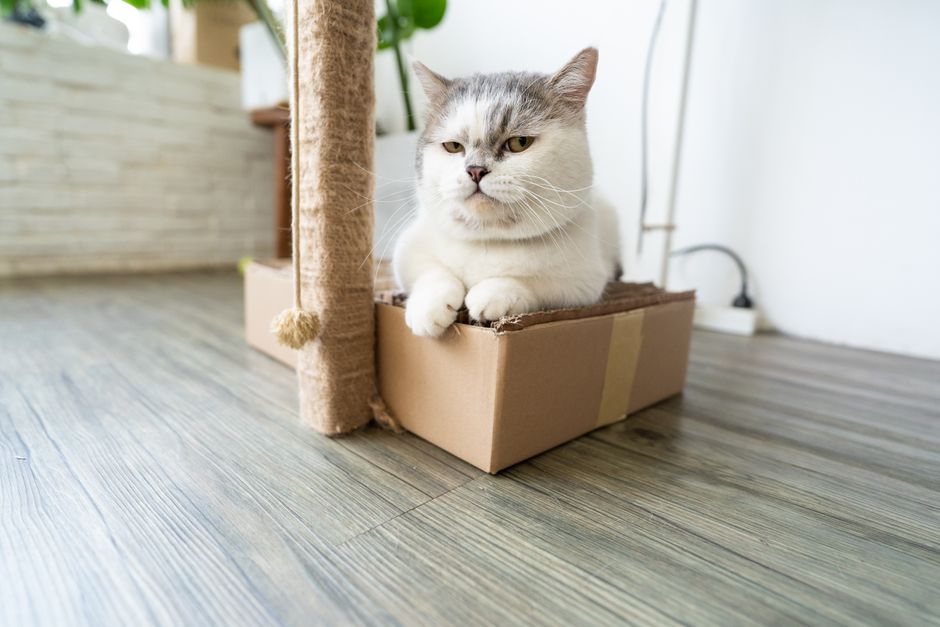
9. Vertical Space and a Cat Tree
Cats like to be up high. iCatCare says shelves and cat trees add "extra dimension" to an indoor cat's home. A Cornell Feline Health Center article also suggests cat-friendly vertical space: high places where cats can retreat.
A cleared shelf works. So does a sturdy cat tree. VCA says cat trees offer climbing, hiding and play in one spot. Put one by a window, and you've covered two ideas at once.
10. A Scratching Post by Her Bed
Scratching is normal, and winter doesn't change that. iCatCare notes that cats often scratch after sleep, so a post near her favorite bed may help. Pick one tall enough for a full stretch. If she still picks the couch, here's how to get her to use the scratching post.
Keep Her Days Warm and Steady
Warm beds and a steady day matter more in winter. The last two ideas cost nothing.
11. A Sunny Nap Spot or Warm Bed
A cat who sleeps more in winter may just be keeping warm. iCatCare notes that cats prefer warm places to sleep. Cats Protection suggests nap spots that are dry and away from drafts. Slide her bed into a patch of afternoon sun.
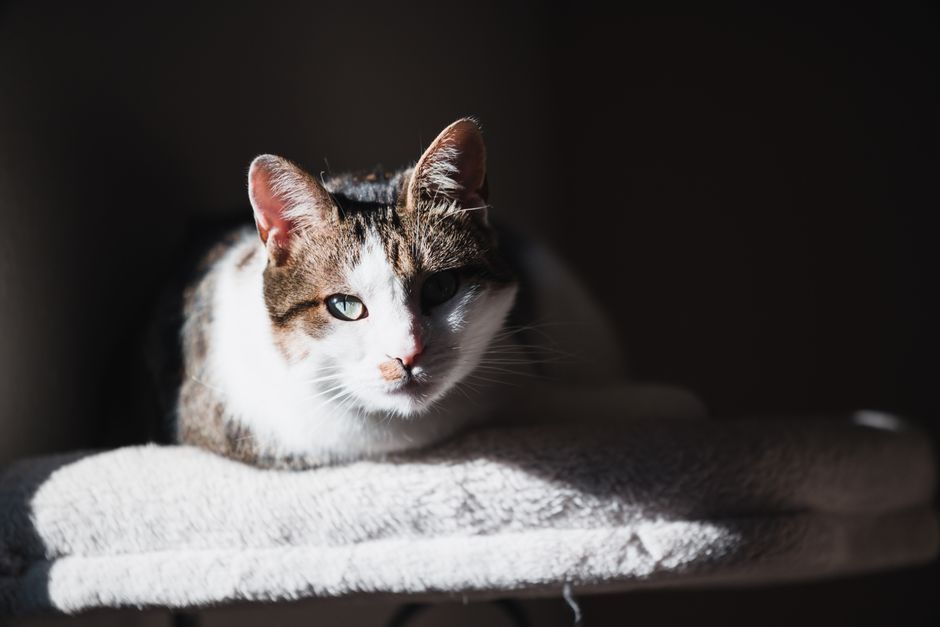
A bought bed is fine. But OSU points out that snug blankets and towels appeal to cats just as much. They're easy to wash, too. Extra sleep plus hiding or eating less is a different story, though. That's a vet visit.
12. A Quiet Routine Through the Holidays
Holiday weeks can turn her day upside down. Cornell veterinarian Leni Kaplan suggests sticking to your pet's normal routine as much as possible. Keep meals and play at the usual times, even with a full house. FelineVMA asks for "positive, consistent, and predictable" time with you, too.
Kaplan also suggests a separate room or space for your pet while you have guests. Set one up with her bed, water, litter box and a box to hide in. Keep her out of rooms with decorations when you can't watch her. Cornell warns that pets may chew or swallow ornaments, lights, wires and ribbon.
If you do one thing tonight, make it this. Play with a wand toy for ten minutes before bed. Then hide a few bites of her dinner around the room. Watch how she takes it. If she perks up over the next few days, boredom was likely part of it. If she stays flat, or shows any sign on the vet list, call your vet.

Cat toys
Fresh toys for the rotation bag
Assorted 3 or 6 packs of kickers, plush animals, crinkle toys, mice and silvervine toys. The store picks the styles, so a pack may include repeats. Toys with cords or yarn are for play together, then put away.
See the cat toys →Questions this guide did not cover
Can I take my indoor cat outside on a harness in winter?
Some cats can, with practice. VCA Animal Hospitals says most cats can learn to walk on a harness and leash with training and patience. Work indoors until she is fully at ease on the leash. Then pick a quiet spot, like your own yard, on a mild day.
Which holiday plants should I keep away from my cat?
Lilies, mistletoe and holly. A Cornell veterinary article warns that lilies are toxic to cats, and that pets should not get at mistletoe or holly. It says poinsettias don't pose a serious hazard. If guests bring flowers, check the bouquet for lilies.
Will a second cat keep my cat from getting bored?
Not always. Cats Protection explains that pet cats come from the African wildcat, a solitary species that thrives alone. A cat who once lived happily with another cat may still not accept a new one. Cats Protection suggests a routine, play and things to explore instead.
Related reading
- How Long Should You Play With Your Cat? A Simple Daily Play Plan
- What Kind of Toys Do Cats Like? A Play Style Guide
About this article
Researched and written by the LitterBond Team. Sources include International Cat Care, VCA Animal Hospitals, the Cornell Feline Health Center, the Feline Veterinary Medical Association (FelineVMA, formerly AAFP) and the ASPCA. Reviewed and updated December 22, 2026. LitterBond does not employ veterinarians; for medical decisions about your individual cat, always consult your veterinarian.


